The Financial Mastery of the Grid: How Red Bull Funds Two Formula One Teams
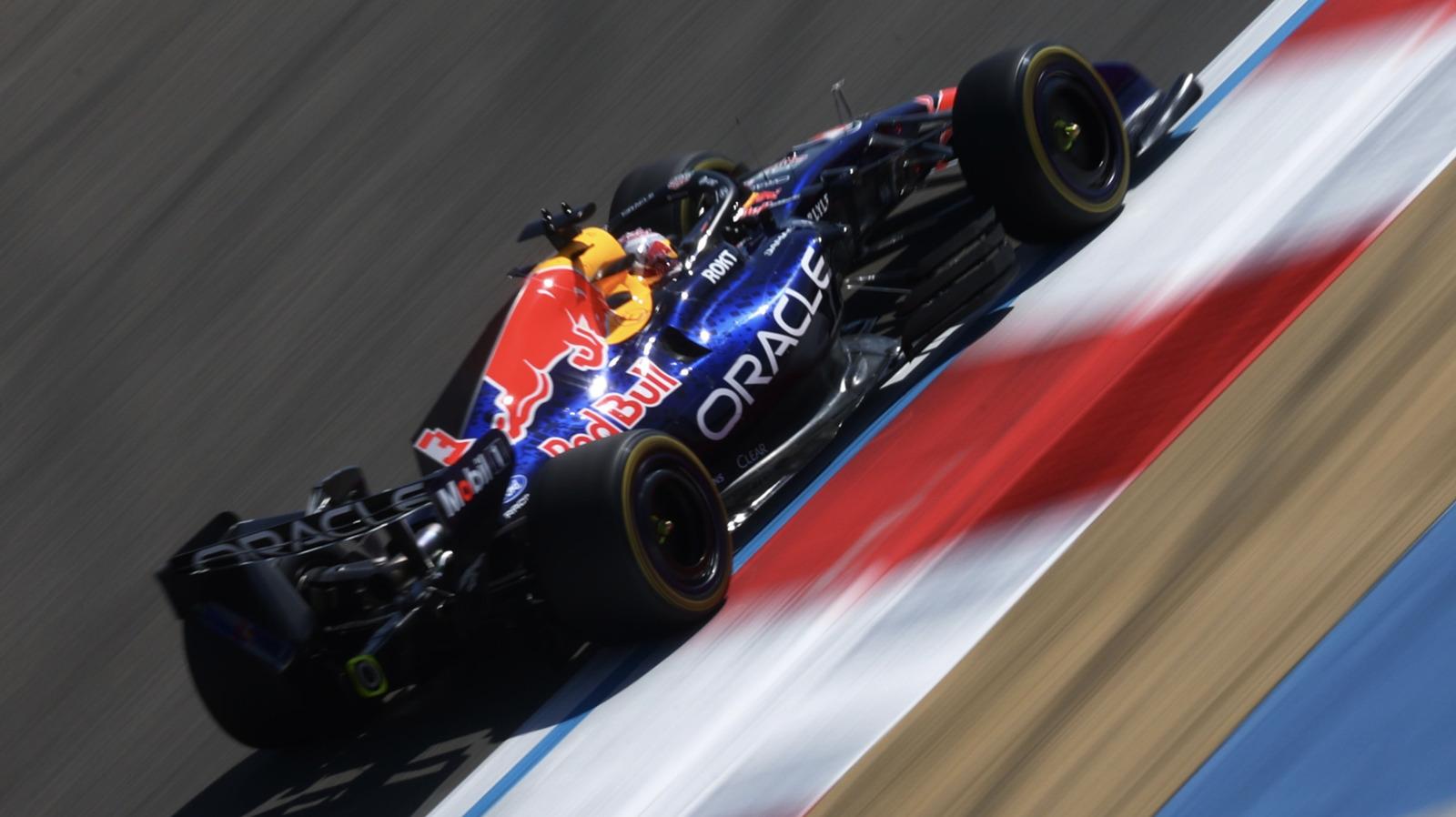
How Red Bull Affords Two F1 Teams in 2026: The Secrets Behind the $1 Billion Empire
Image: How Red Bull Affords Two F1 Teams in 2026: The Secrets Behind the $1 Billion Empire – Performance and Specifications
Advertisement
In the high-stakes world of Formula One, where the entry price for a new team is nearing $600 million and annual operating costs are strictly regulated, one brand stands alone with a dual-ownership model. As we head into the 2026 season—a year defined by radical engine changes and the Red Bull-Ford partnership—many fans are asking: How can a fizzy drinks company afford to run both Oracle Red Bull Racing and Visa Cash App RB (VCARB)?
The short answer? It isn’t just about selling cans of soda anymore. It is a sophisticated web of marketing ROI, cost-cap efficiency, and technical synergy that makes the two-team model not just affordable, but highly profitable. With the 2026 budget cap set around $135 million (plus adjustments), Red Bull has mastered the art of vertical integration.
Advertisement
The Financial Blueprint: Revenue Streams in 2026
To understand the ‘How,’ we must look at the ‘What.’ Red Bull Racing is no longer a ‘customer’ team; it is a full-blown manufacturer. In 2026, the debut of Red Bull Powertrains (RBPT) in collaboration with Ford has shifted the financial landscape. By building their own Power Units, Red Bull has eliminated the multi-million dollar fees previously paid to Renault or Honda, while simultaneously attracting massive American investment.
1. The Sponsorship Goldmine
Oracle’s title sponsorship deal with the main team is rumored to be worth over $100 million annually. Similarly, the rebranding of the junior team to Visa Cash App RB brought in a Title Sponsorship package that rivals some of the top-tier teams. By having two teams, Red Bull offers two different ‘entry points’ for sponsors: the premium championship-winning brand and the lifestyle-focused, ‘cool’ junior brand.
2. The Prize Money Dividend
Under the Concorde Agreement, every team in the top 10 receives a slice of F1’s billion-dollar revenue pie. While Red Bull Racing takes the lion’s share by winning championships, VCARB consistently finishes in the mid-field. Combined, these two teams pull in an estimated $200M to $250M in prize money alone, covering a significant portion of their operational budgets.
Advertisement
Technical Specifications: The 2026 Red Bull-Ford Power Unit
The 2026 regulations focus on a 50/50 split between internal combustion and electric power. Below are the estimated specifications for the power unit that will drive both Red Bull-owned teams.
| Component | Specification (2026 Regulation) | Red Bull-Ford Target |
|---|---|---|
| Engine Type | 1.6L V6 Turbocharged | Ultra-High Thermal Efficiency |
| Electric Power (ERS) | 350kW (approx. 470hp) | Red Bull Powertrains In-house |
| Fuel Type | 100% Sustainable Synthetic Fuel | P1 Fuels / Aramco Partnership |
| Total Power Output | Over 1,000 HP | Confirmed |
| Weight Reduction | -30kg vs 2025 chassis | Active Aerodynamics Integration |
The Comparison: Red Bull Racing vs. Its 2026 Rivals
As we enter the new era, Red Bull faces stiff competition from Ferrari and the newly formed Audi factory team. Here is how the Milton Keynes outfit stacks up against its closest 2026 rivals.
| Feature | Oracle Red Bull Racing | Ferrari (Scuderia) | Audi F1 Team |
|---|---|---|---|
| Power Unit | Red Bull-Ford | Ferrari 066/12 (Est) | Audi Factory PU |
| Lead Driver | Max Verstappen | Lewis Hamilton | Nico Hülkenberg |
| Chassis Strategy | High-Downforce/Active Aero | Low-Drag / Suspension Focus | Weight Management Focus |
| Budget Efficiency | Tier 1 (Maximized) | Tier 1 (High Heritage Cost) | Tier 1 (Startup Heavy) |
Interior Tech and Safety: The 2026 Standards
While F1 cars don’t have ‘interiors’ in the traditional sense, the cockpit tech in 2026 is revolutionary. Red Bull has implemented a new HUD (Heads-Up Display) within the visor of the driver’s helmet, reducing the need to look down at the steering wheel. Safety is also paramount, with the 2026 chassis featuring double-layered side-impact structures and a reinforced ‘Halo 3.0’ designed to withstand 15% more vertical load than previous iterations.
Advertisement
The Synergy Controversy: A-Team and B-Team
A major reason Red Bull can afford two teams is the sharing of non-listed parts. VCARB utilizes the Red Bull Racing gearbox, rear suspension, and hydraulics. This allows the junior team to keep R&D costs low, while Red Bull Racing gains valuable data from four cars on track instead of two. While rivals like McLaren and Mercedes have complained to the FIA about this ‘partnership,’ the 2026 rules still allow for significant technical transfers under strict auditing.
Variant-Wise Pricing: What Does an F1 Operation Cost?
While you can’t ‘buy’ an F1 car at a showroom, the ‘Ex-Showroom’ cost of running these entries per year is staggering. These figures represent the investment required for the 2026 season.
| Entry Variant | Annual Budget (Estimated) | Key Focus Area |
|---|---|---|
| Oracle Red Bull Racing | $145 Million (Cap) + $200M (Exempt) | Championship Title & PU R&D |
| Visa Cash App RB (VCARB) | $135 Million (Cap) + $50M (Exempt) | Mid-field Points & Talent Dev |
| Red Bull Powertrains (RBPT) | $95 Million (PU Cap) | 2026 Engine Reliability |
People Also Ask (FAQ)
1. Why does Red Bull have two F1 teams?
Initially bought to save the Minardi team, Red Bull uses the second team (VCARB) to develop young talent like Max Verstappen and Daniel Ricciardo while doubling their commercial exposure.
Advertisement
2. Is Red Bull-Ford a factory team in 2026?
Yes, Red Bull is now a full manufacturer, designing the chassis and the engine (with Ford’s battery and technical input) in-house.
3. How much did Red Bull pay for their F1 teams?
Red Bull bought Jaguar Racing (RBR) for $1 and Minardi (VCARB) for an estimated $35 million in the early 2000s. Today, they are worth billions.
4. Does the budget cap apply to both teams?
Yes, each team has its own independent $135 million budget cap, though certain technical sharing is permitted.
Advertisement
5. Can Red Bull share data between the two teams?
The FIA strictly monitors data sharing to prevent ‘collusion.’ They can share hardware (gearboxes), but not aerodynamic data or ‘intellectual property.’
6. Is Max Verstappen staying with Red Bull for 2026?
Despite rumors, Verstappen is contracted with Red Bull through 2028, though performance clauses related to the 2026 engine are a major talking point.
7. What happens if the Red Bull-Ford engine fails in 2026?
It is a significant risk. If the engine is uncompetitive, Red Bull could lose their top-tier status, affecting their sponsorship revenue and ability to fund two teams.
Advertisement
8. Do the teams have the same owners?
Yes, both teams are ultimately owned by Red Bull GmbH, the Austrian energy drink parent company.
9. How do fans feel about the two-team model?
Cons: Some fans feel it is unfair ‘collusion.’ Pros: It ensures 20 cars on the grid and provides a seat for talented rookies who otherwise wouldn’t have a spot.
10. Will Audi or Porsche buy the second Red Bull team?
Red Bull has repeatedly stated that VCARB is not for sale, as the strategic value of the two-team model is too high for their marketing goals.
Advertisement
Verdict: Is the Two-Team Strategy Sustainable?
Should Red Bull keep both teams? Absolutely. From a business perspective, the model is bulletproof. The cost cap has turned F1 teams from money-pits into profitable assets. Red Bull’s ability to cross-pollinate engineering talent while dominating the marketing space makes them the most efficient operator on the grid.
Pros:
– Unmatched driver development pipeline.
– Massive sponsorship leverage with two platforms.
– Shared logistical and manufacturing costs.
– Four cars worth of data for the 2026 engine rollout.
Cons:
– Constant political pressure from rival teams.
– Risk of ‘diluting’ the main brand if VCARB performs poorly.
– High complexity in managing two distinct corporate cultures.
Advertisement