The 1989 Mitsubishi Mirage Turbo: A 2026 Retrospective on a Giant Killer
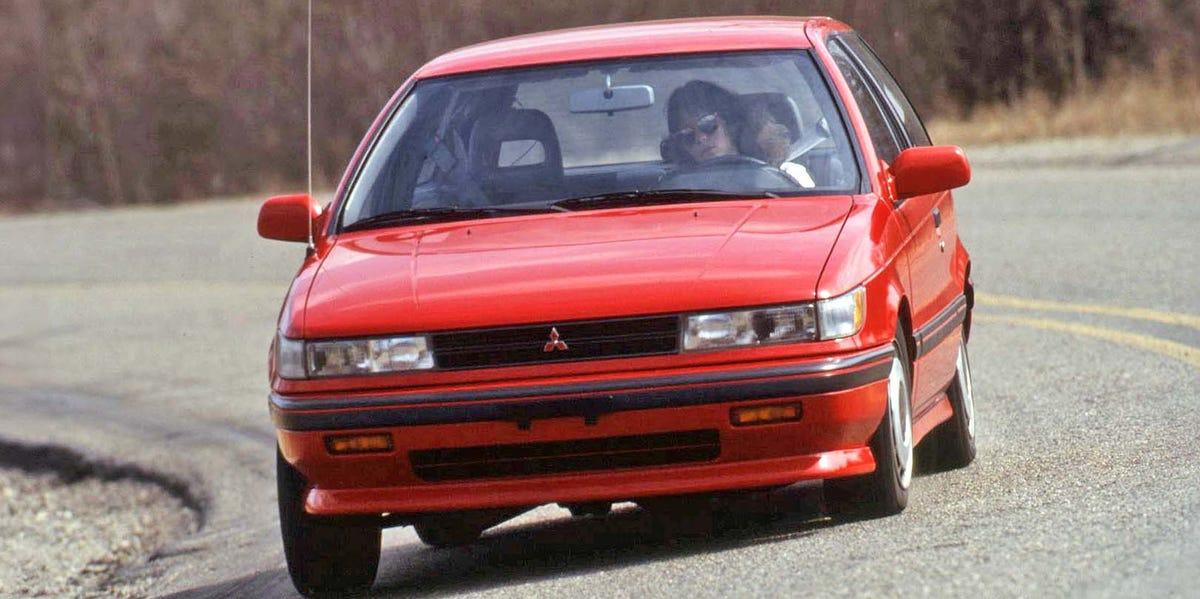
1989 Mitsubishi Mirage Turbo: The Best-Kept JDM Secret You Need in 2026
Image: 1989 Mitsubishi Mirage Turbo: The Best-Kept JDM Secret You Need in 2026 – Performance and Specifications
Advertisement
In the high-octane world of JDM classics, names like the Skyline, Supra, and NSX dominate the headlines and the auction blocks. But for those in the know, there is a ‘Three Diamond’ gem that has remained under the radar for decades. In 2026, as the automotive world pivots almost entirely to electrification, the demand for raw, analog, and turbocharged experiences has reached a fever pitch. Enter the 1989 Mitsubishi Mirage Turbo—a car that was once dubbed the ‘hidden secret’ of the hot hatch world and is now becoming a must-have for serious collectors. If you are looking for an investment that delivers 100% pure driving joy, you’ve found it. Current 2026 Market Value: $14,500 – $26,000 (Condition Dependent).
The Hook: Why Everyone is Talking About This Mirage in 2026
Why are we talking about a 37-year-old Mitsubishi? Because in 2026, the ‘Sleeper’ aesthetic is the ultimate flex. The 1989 Mirage Turbo doesn’t scream for attention with giant wings or neon accents. It looks like a standard commuter car, but under the hood lies the heart of a rally-bred champion. It was the precursor to the legendary Lancer Evolution, and driving one today feels like a masterclass in lightweight engineering and turbo-lag management.
Advertisement
Design and Aesthetics: The Ultimate Sleeper
The 1989 Mitsubishi Mirage Turbo features what enthusiasts call the ‘Boxy-Chic’ design. It’s a three-door hatch that fits perfectly into the 80s aesthetic that is currently dominating car meets in 2026. The only hints of its performance credentials are the subtle ‘Turbo’ decals, the slightly more aggressive front air dam, and the unique alloy wheels. Inside, the cabin is a time capsule of 1989 ergonomics. You get the iconic ‘cockpit’ feel with a dash oriented toward the driver and seats that offer surprising lateral support for a car of this era.
Performance: The 4G61T Legend
At the heart of the Mirage Turbo is the 1.6-liter DOHC 16-valve turbocharged engine, known as the 4G61T. This engine is essentially the smaller sibling of the 4G63T found in the Galant VR-4 and the Lancer Evolution. In 2026, enthusiasts love this motor because it is highly tunable. While it produced 135 horsepower stock—which sounds modest today—in a car that weighs barely 2,400 lbs, it provides a power-to-weight ratio that rivals modern entry-level sports cars. The 0-60 mph sprint is dispatched in just 7.6 seconds, a figure that shamed many V8s of its time.
Detailed Technical Specifications
For the data-driven enthusiast, here is how the 1989 Mirage Turbo stacks up against the modern lens of 2026.
Advertisement
| Feature | Specification |
|---|---|
| Engine | 1.6L 4-Cylinder DOHC 16V Turbo (4G61T) |
| Horsepower | 135 hp @ 6,000 rpm |
| Torque | 141 lb-ft @ 3,000 rpm |
| Transmission | 5-Speed Manual / 4-Speed Automatic |
| Curb Weight | 2,415 lbs (1,095 kg) |
| 0-60 MPH | 7.6 Seconds |
| Top Speed | 121 mph |
| Drivetrain | Front-Wheel Drive (FWD) |
Handling and Braking: Raw and Unfiltered
The Mirage Turbo uses a MacPherson strut front suspension and a trailing-arm rear setup. By 2026 standards, the handling is ‘lively,’ which is a polite way of saying you need to be awake at the wheel. There is a perceptible amount of torque steer when the turbo kicks in at 3,000 RPM, but that is part of the charm. The braking is handled by discs all around, which was a premium feature in 1989, though modern owners often upgrade to larger rotors to handle the increased power of tuned versions.
The 2026 Comparison: How Does It Rank?
In the current market, collectors often compare the Mirage Turbo against its two primary rivals from the golden era of hot hatches.
| Criteria | Mitsubishi Mirage Turbo (1989) | Honda Civic Si (1989) | VW GTI 16V (1989) |
|---|---|---|---|
| Engine Type | Turbocharged I4 | Naturally Aspirated I4 | Naturally Aspirated I4 |
| Power Output | 135 HP | 108 HP | 123 HP |
| Rarity (2026) | Very High | Medium | Low-Medium |
| Tuning Potential | Extreme | High | Medium |
| Collectibility | Rising Fast | Stable | High |
2026 Pricing Guide (Ex-Showroom/Auction)
Finding a clean Mirage Turbo in 2026 is difficult, leading to a significant price gap based on vehicle history and condition.
Advertisement
| Condition Variant | Estimated 2026 Price |
|---|---|
| Concours (Mint/Original) | $24,000 – $28,500 |
| Excellent (Restored) | $18,000 – $22,000 |
| Good (Daily Driver) | $12,000 – $16,000 |
| Project (Needs Work) | $5,000 – $8,500 |
Safety and Tech: A Different Era
By modern 2026 NCAP standards, the Mirage Turbo is a ‘driver-beware’ vehicle. It lacks the 12 airbags, lane-keep assist, and autonomous braking found in modern Mitsubishis. However, it offers something no modern car can: visibility. With thin A-pillars and a massive glasshouse, the situational awareness is incredible. In 2026, many owners are retrofitting these classics with modern ‘Invisible’ safety tech like discreet dash cams and blind-spot sensors hidden in the mirrors.
People Also Ask (FAQ)
1. Is the 1989 Mitsubishi Mirage Turbo reliable?
Yes, if maintained. The 4G61T engine is robust, but the turbochargers and vacuum lines require regular checks after 35+ years.
2. How many Mirage Turbos were imported to the US?
Approximately 1,500 units were brought to the US, making it exceptionally rare compared to the Honda Civic of the same year.
Advertisement
3. Can I swap an Evo engine into a 1989 Mirage?
Yes! This is a popular 2026 ‘restomod’ trend. The 4G63T from an Evo I-III is almost a direct bolt-in swap.
4. What is the fuel economy like?
Expect around 22 MPG in the city and 28 MPG on the highway, though this drops significantly under heavy boost.
5. Are parts still available in 2026?
Mechanical parts are shared with other Mitsubishis, but interior trim and body panels are extremely hard to find.
Advertisement
6. Does it have All-Wheel Drive?
No, the 1989 Mirage Turbo was FWD only, though some enthusiasts conversion-swap the AWD system from a Colt Vista or Galant.
7. What are the common rust spots?
Check the rear wheel arches, the spare tire well, and the sunroof drains.
8. Is it faster than a 1989 GTI?
In a straight line, yes. The Mirage’s turbo gives it a significant edge in torque over the naturally aspirated GTI 16V.
Advertisement
9. What colors did it come in?
The most iconic colors were Rio Red and Malachite Green.
10. Why was it called ‘Three Diamonds in the Rough’?
Because it was a high-performance diamond hidden inside a rough, economy-car exterior.
Verdict: Should You Buy One in 2026?
The 1989 Mitsubishi Mirage Turbo is for the enthusiast who values substance over style. It is a car for the ‘driver’ who wants to feel every vibration and hear every whistle of the turbocharger. While it lacks modern safety and tech, it offers an visceral experience that modern cars cannot replicate.
Advertisement
Pros:
– Incredible power-to-weight ratio.
– Massive tuning potential and Evo-compatible parts.
– High investment potential as JDM supply dwindles.
– The ultimate ‘Sleeper’ street cred.
Cons:
– Extremely rare; finding one is a challenge.
– Lacks modern safety features.
– Interior plastics can be brittle after 37 years.
Final Thoughts: If you find a clean example, buy it. The Mirage Turbo is no longer just a cheap used car; it is a piece of Mitsubishi’s rally heritage that is finally getting the respect it deserves in 2026.
Advertisement