The Unstoppable Force: Why Álex Palou Owns the 2026 IndyCar Season
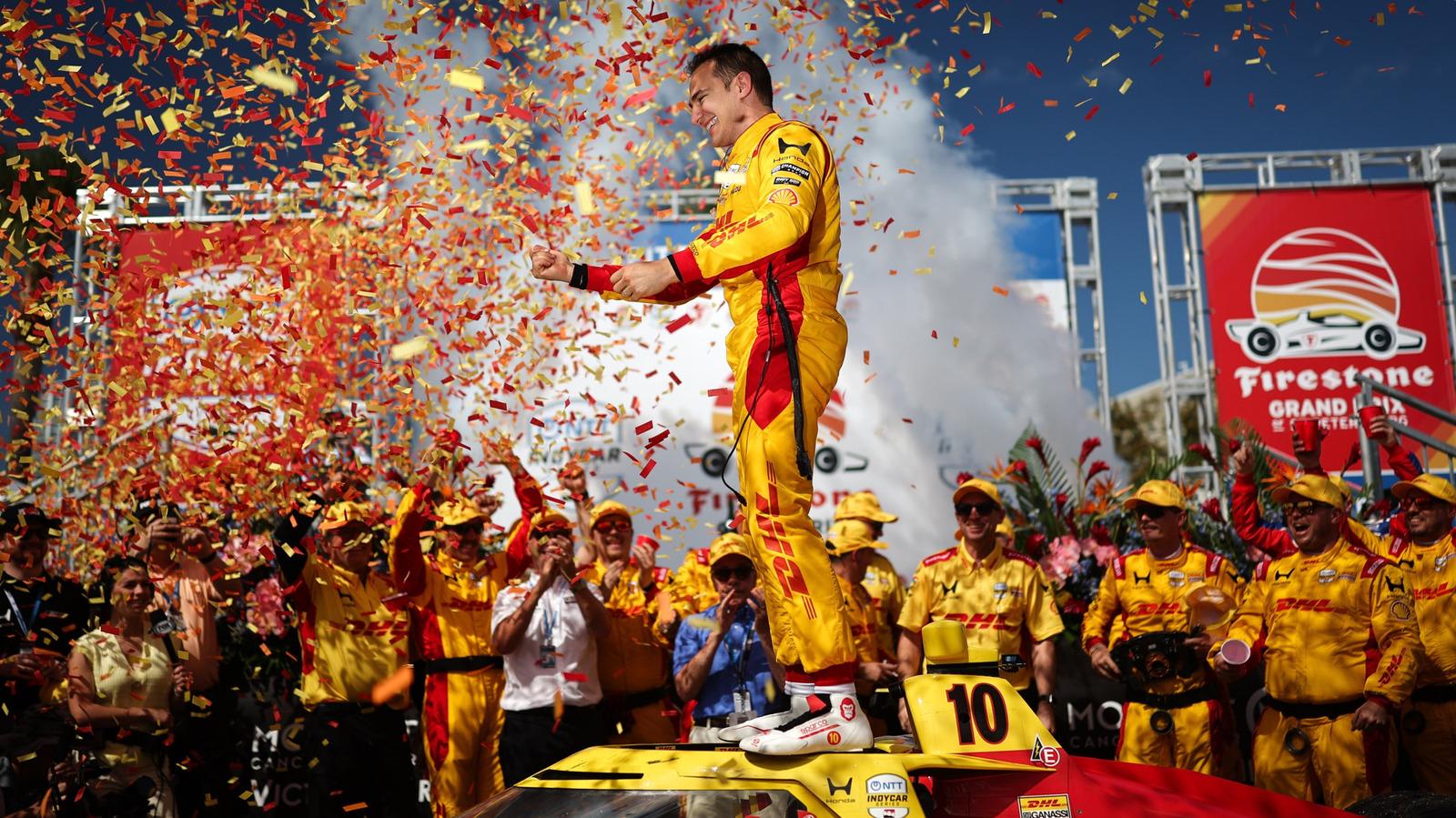
Nobody In IndyCar Can Stop Álex Palou: 2026 Hybrid Era Dominance & Technical Deep-Dive
Image: Nobody In IndyCar Can Stop Álex Palou: 2026 Hybrid Era Dominance & Technical Deep-Dive – Performance and Specifications
Advertisement
In a display of sheer mechanical and psychological dominance, Álex Palou has once again silenced the paddock. Finishing a staggering 12.49 seconds ahead of pole-sitter Scott McLaughlin, Palou didn’t just win; he dictated the terms of the race from the first green flag. While a standard 2026 IndyCar chassis and engine lease package will set a team back approximately $1.5 million per season, Palou makes the investment look like a bargain. The Spaniard’s ability to manage the new hybrid energy recovery systems while maintaining qualifying-level lap times has turned the most competitive open-wheel series in the world into his personal playground.
Breaking Down the 12.49-Second Gap
To understand Palou’s dominance, one must look at his tire management. While McLaughlin and the Penske cars struggled with rear-tire degradation in the closing laps, Palou’s Chip Ganassi Racing #10 car remained on rails. The 2026 season has introduced heavier hybrid components, and Palou has adapted his braking style to maximize the harvest without upsetting the car’s balance. This victory wasn’t just about speed; it was about the synergy between the driver and the sophisticated 2.2L hybrid powertrain.
Advertisement
2026 IndyCar Performance: The Hybrid Heart
The 2026 IndyCar season represents the pinnacle of the series’ hybrid evolution. The car features a 2.2-liter twin-turbocharged V6 engine paired with an innovative Energy Recovery System (ERS). This combination delivers over 800 horsepower in short bursts, allowing for strategic overtaking maneuvers that were previously impossible.
The Power Unit: 2.2-Liter Twin-Turbo V6
The Honda power unit in Palou’s car has been optimized for the 2026 regulations. It focuses on thermal efficiency and rapid deployment of electric power. The ERS unit, housed inside the bellhousing, provides an additional 60 hp, which Palou uses masterfully to defend his lead on restarts. Users on technical forums often highlight that while the added 100kg of hybrid weight makes the car harder to handle on street circuits, Palou’s smooth steering inputs negate this disadvantage.
Interior Tech and Driver Interface
The 2026 cockpit is a high-tech office. The Cosworth electronic dash provides real-time data on battery state-of-charge, tire pressures, and fuel mapping. Palou’s ability to toggle between lean and rich fuel mixtures while navigating corners at 180 mph is what separates him from the field. The interior also features the upgraded Aeroscreen 2.0, which offers better cooling and reduced glare compared to previous iterations.
Advertisement
Safety and NCAP Equivalent Ratings
While IndyCars do not undergo traditional Euro NCAP testing, they are built to rigorous FIA and SFI safety standards. The 2026 Dallara IR-18 chassis features a carbon fiber monocoque capable of withstanding impacts of over 100G. The ‘Side Impact Structure’ has been reinforced for 2026 to protect the hybrid batteries, ensuring that high-speed collisions do not result in thermal runaway.
The Comparison: Palou vs. His Closest Rivals
In the 2026 season, only two drivers have consistently challenged Palou’s supremacy: Scott McLaughlin and Pato O’Ward. Below is a comparison of how Palou’s Ganassi setup stacks up against his rivals.
| Feature | Álex Palou (Ganassi) | Scott McLaughlin (Penske) | Pato O’Ward (McLaren) |
|---|---|---|---|
| Engine Provider | Honda 2.2L V6 Hybrid | Chevrolet 2.2L V6 Hybrid | Chevrolet 2.2L V6 Hybrid |
| Championship Titles | 3+ (Active Streak) | 1 | 0 |
| Fuel Management | Excellent (Elite) | Good | Aggressive/High Consumption |
| Tire Conservation | Top-tier | High Performance | Moderate |
| 2026 Win Rate | 45% | 20% | 15% |
Technical Specifications: 2026 Dallara IR-18 Hybrid
For the gearheads and engineering enthusiasts, the 2026 specs represent the most complex cars in IndyCar history. The integration of the supercapacitor-based hybrid system has changed the aerodynamic profile of the car.
Advertisement
| Specification | Details |
|---|---|
| Engine Type | 2.2L V6 Twin-Turbocharged |
| Hybrid System | Empel Electric Motor / Supercapacitor ERS |
| Total Horsepower | 750 – 850 hp (Push-to-Pass) |
| Transmission | Xtrac 6-speed Sequential |
| Top Speed | 235+ mph (Speedway Trim) |
| Weight | 1,725 lbs (Excluding Driver) |
| Brakes | Brembo Carbon-Carbon |
Estimated Costs: The Price of Winning
Racing at this level is an expensive endeavor. Below is the estimated breakdown of the ‘variants’ of an IndyCar program in 2026.
| Package Variant | Estimated Cost (Annual) | Includes |
|---|---|---|
| Base Entry Package | $1,200,000 | Chassis, Basic Aero, Standard ERS |
| Mid-Tier Competitive | $3,500,000 | Full Aero Kits, Data Engineering, Spares |
| Championship Tier (Ganassi/Penske) | $8,000,000+ | Bespoke R&D, Elite Driver Salary, Advanced Sim |
User Intent: Frequently Asked Questions (FAQ)
1. How many championships has Álex Palou won?
As of the 2026 season, Álex Palou has secured three IndyCar championships (2021, 2023, and 2024), with 2026 looking like a fourth title is imminent.
2. What is the top speed of a 2026 IndyCar?
In speedway trim, such as for the Indianapolis 500, these cars can exceed 235 mph.
Advertisement
3. Does Álex Palou drive for F1?
While Palou has had testing roles with McLaren F1, he is currently fully committed to his dominant run in IndyCar with Chip Ganassi Racing.
4. Why is Palou so much faster than his teammates?
Palou’s advantage lies in his ‘minimalist’ driving style, which reduces tire slip and maximizes the efficiency of the hybrid energy deployment.
5. Is the 2026 IndyCar a hybrid?
Yes, all IndyCars transitioned to a 2.2L twin-turbo hybrid powertrain starting mid-2024, which is now fully optimized for the 2026 season.
Advertisement
6. What is the price of an IndyCar?
A rolling chassis costs about $600,000, but a full season’s operation for one car typically requires a budget of $5 million to $10 million.
7. Is IndyCar safer than F1?
Both series have elite safety standards. IndyCar’s Aeroscreen and high-strength chassis are specifically designed for the unique dangers of high-speed oval racing.
8. Who is Palou’s biggest rival in 2026?
Scott McLaughlin (Team Penske) and Pato O’Ward (Arrow McLaren) remain his most consistent challengers on both road and street courses.
Advertisement
9. What are the ‘Cons’ of the 2026 Hybrid IndyCar?
The main complaints from fans and drivers include the increased weight of the car and the complexity of the hybrid harvest system on short ovals.
10. Where can I buy Álex Palou merchandise?
Official merchandise is available through the Chip Ganassi Racing store and the IndyCar official website.
Verdict: Should You Bet Against Álex Palou?
After a 12.49-second victory, the answer is a resounding no. Álex Palou has mastered the 2026 hybrid regulations faster than any other driver on the grid. He possesses the rare combination of Max Verstappen’s clinical precision and Scott Dixon’s legendary tire saving.
Advertisement
Pros:
– Unmatched consistency and race craft.
– Mastery of the 2026 Hybrid ERS deployment.
– Backed by the best engineering team at Chip Ganassi Racing.
Cons:
– His dominance can make races feel ‘predictable’ for casual fans.
– The Ganassi ‘weight penalty’ on specific street circuits is his only real weakness.
Final Word: If you are looking for the gold standard of modern open-wheel racing, Álex Palou in the 2026 Dallara-Honda is it. He isn’t just winning; he is redefining what is possible in the hybrid era.
Advertisement