The 2026 Formula 1 Season Opener: A Disaster for Aston Martin Honda?
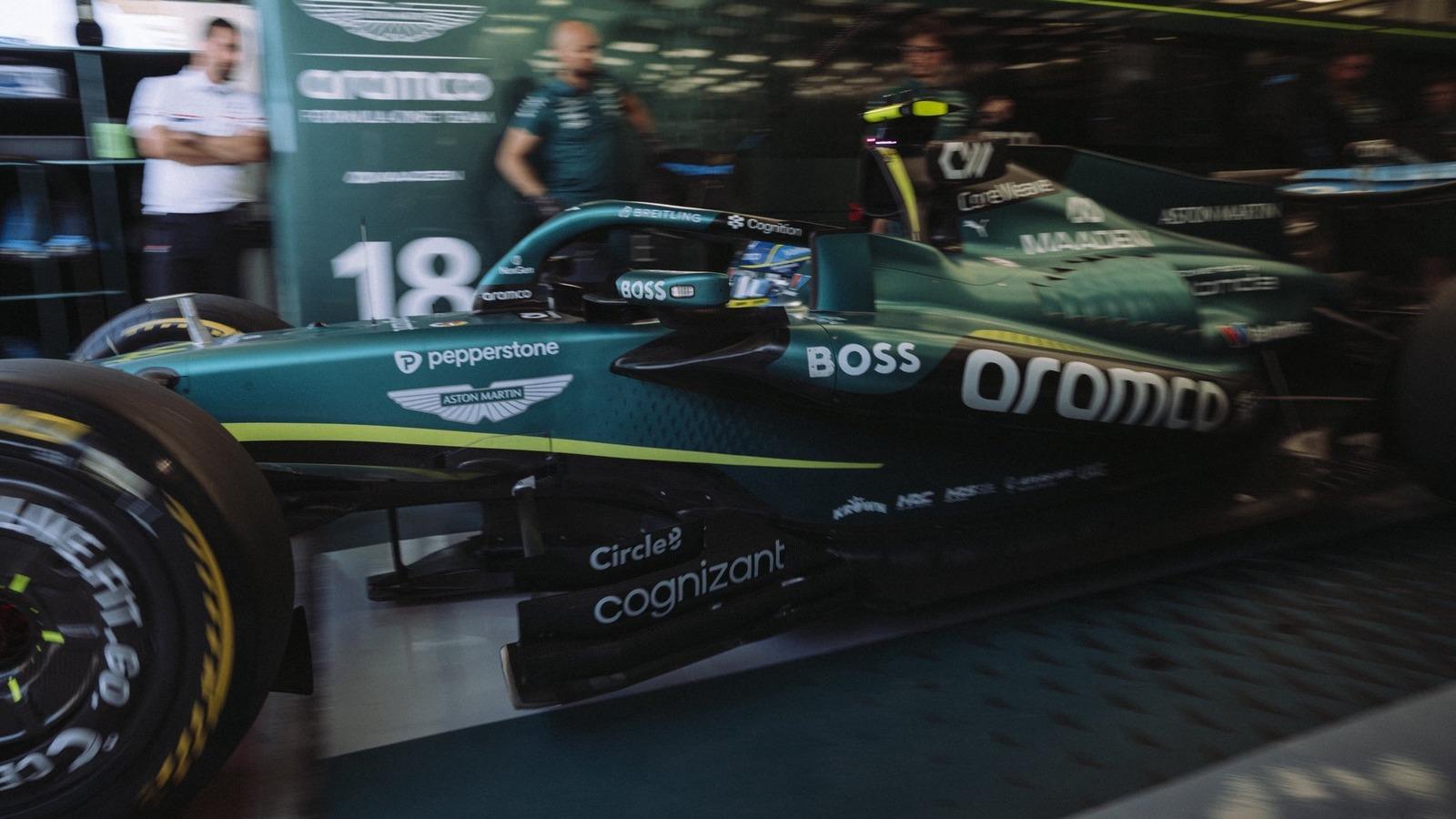
Aston Martin Honda 2026 Crisis: Why They’re Flying to Australia Only to Avoid Fines
Image: Aston Martin Honda 2026 Crisis: Why They’re Flying to Australia Only to Avoid Fines – Performance and Specifications
Advertisement
The 2026 Formula 1 season was supposed to be the dawn of a new era for Lawrence Stroll’s ambitious project. With the official entry of Honda as a works engine partner and the implementation of radical new power unit regulations, the AMR26 was touted as a championship contender. However, news has broken that the team is heading to the Australian Grand Prix with no intention of actually finishing the race. The Aston Martin Honda AMR26 is reportedly suffering from catastrophic vibrations within its turbocharged V6, leading to immediate hybrid battery failure. Despite this, the team is making the trip to Melbourne solely to avoid the massive FIA ‘non-participation’ fines, which could exceed $20 million per car.
The Honda V6 Vibration Crisis: What Went Wrong?
At the heart of the issue is the 2026-spec Honda Power Unit. According to insiders, the high-frequency harmonics produced by the new turbocharged V6 are oscillating at a frequency that the energy store (ES) casing cannot dampen. Within just 5 to 10 laps of high-speed running, the lithium-ion cells suffer internal structural failure. Engineers have described the phenomenon as ‘mechanical resonance suicide.’ While Honda has been a dominant force with Red Bull, the 2026 regulations—which remove the MGU-H—have forced a complete redesign that is currently proving unreliable.
Advertisement
AMR26 Technical Specifications: The Beast on Paper
Despite the reliability woes, the AMR26 remains a marvel of engineering. Designed under the influence of the team’s new technical recruits and the state-of-the-art Silverstone wind tunnel, the car features ‘active aerodynamics’ to compensate for the drag produced by the higher electrical deployment requirements of the 2026 rules.
| Component | Specification (2026 Est.) |
|---|---|
| Engine | 1.6L V6 Turbocharged (Honda Works) |
| Hybrid System | Increased MGU-K Output (350kW) / No MGU-H |
| Chassis | Carbon-fiber composite monocoque |
| Weight | 768 kg (Minimum dry weight) |
| Transmission | 8-speed semi-automatic sequential |
| Top Speed | 345+ km/h (DRS/Active Aero enabled) |
The Performance Gap: How Aston Martin Compares to Rivals
While Aston Martin struggles to keep their batteries from exploding, their rivals appear to have navigated the 2026 transition more smoothly. Red Bull-Ford and Ferrari have already completed full-race simulations in Bahrain, whereas Aston Martin has yet to complete a full 300km race distance without a power unit failure. The ‘active aero’ on the AMR26 is reportedly working well, providing immense downforce in the corners, but the power delivery is inconsistent due to the vibration-induced software de-rating.
The Cockpit and Driver Safety
The 2026 regulations prioritize driver safety more than ever, with reinforced side-impact structures and improved fuel cell protection. For Fernando Alonso and Lance Stroll, the challenge isn’t just speed—it’s ergonomics. The vibrations are so intense that drivers have reported blurred vision at the end of the main straights. Honda is working on a revised mounting system, but it won’t be ready until the European leg of the season starts in Imola.
Advertisement
| Feature | Aston Martin AMR26 | Red Bull-Ford RB22 | Ferrari SF-26 |
|---|---|---|---|
| Power Unit | Honda H001 | Red Bull-Ford Powertrains | Ferrari 067/1 |
| Reliability Rating | Low (Vibration Issues) | High | Medium |
| Battery Tech | Vulnerable to Resonance | Solid-State Hybrid | Liquid-Cooled Lithium |
| Aero Concept | Active Flaps | Adaptive Floor | Variable Rear Wing |
Financial Stakes: The Cost of Participation
The reason Aston Martin is still flying to Albert Park is purely financial. The Concorde Agreement stipulates that any team failing to show up for a scheduled Grand Prix faces a draconian fine and a forfeiture of their share of the prize money (TV rights revenue). For a team that has invested over $500 million in a new campus, skipping a race isn’t an option. They will likely run a few laps in Practice, qualify at the back, and retire early in the race citing ‘technical difficulties.’
| Item | Estimated Cost |
|---|---|
| Entry Fee (FIA) | $1.5 Million + Points Tax |
| Logistics (Per Race) | $2.2 Million |
| Power Unit Supply | $15 Million (Annual) |
| Fine for Non-Attendance | $20 Million+ Per Race |
People Also Ask (FAQ)
1. Why is Honda partnering with Aston Martin in 2026?
Honda wanted to return to F1 officially after their ‘soft exit’ to showcase their carbon-neutral hybrid technology, and Aston Martin needed a works engine partner to move away from being a Mercedes customer.
2. What are the new 2026 F1 engine rules?
The 2026 rules remove the MGU-H (Heat recovery), increase electrical power from the MGU-K to 350kW, and mandate 100% sustainable fuels.
Advertisement
3. Why are the hybrid batteries failing in the AMR26?
Engine vibrations from the Honda V6 are causing structural failure in the battery cells due to harmonic resonance.
4. Can Aston Martin fix the vibration issue?
Engineers are working on counter-balancers and redesigned engine mounts, but a full fix may require a redesign of the engine block or battery casing.
5. How much is the fine for missing an F1 race?
While the exact figure is confidential in the Concorde Agreement, it is estimated to be between $10M and $25M per event, plus loss of commercial rights.
Advertisement
6. Is Fernando Alonso still racing for Aston Martin in 2026?
Yes, Alonso signed a multi-year extension to see through the Honda transition in 2026.
7. Will the Australian GP be cancelled?
No, the race will go on as scheduled. Only Aston Martin is facing these specific reliability hurdles.
8. Does the AMR26 use active aerodynamics?
Yes, all 2026 F1 cars feature active aero to balance drag and downforce for the new engine characteristics.
Advertisement
9. Who is the engine supplier for Red Bull in 2026?
Red Bull is partnering with Ford to create Red Bull-Ford Powertrains.
10. Is Honda better than Mercedes in F1?
Historically, Honda has been more successful in the recent ground-effect era, but the 2026 reset has changed the competitive landscape.
Verdict: Should You Support Aston Martin in 2026?
It is going to be a painful start for the Silverstone-based squad. While the car is visually stunning and aerodynamically advanced, the ‘heart’ of the machine is currently its greatest weakness. For fans of the ‘Green Team,’ the Australian Grand Prix will be an exercise in frustration. However, Honda has a history of solving technical hurdles mid-season. Expect a ‘DNS’ or ‘DNF’ in Australia, but look for a resurgence by the British Grand Prix.
Advertisement
Pros:
- Exceptional aerodynamic package.
- Experienced driver lineup with Alonso and Stroll.
- Official Works status ensures long-term development priority.
Cons:
- Catastrophic engine vibration issues.
- Severe reliability concerns regarding the 2026 hybrid battery.
- High risk of early-season retirements and loss of points.
Advertisement