The Birth of Rivian Advanced Development (RAD): A New Era of Performance
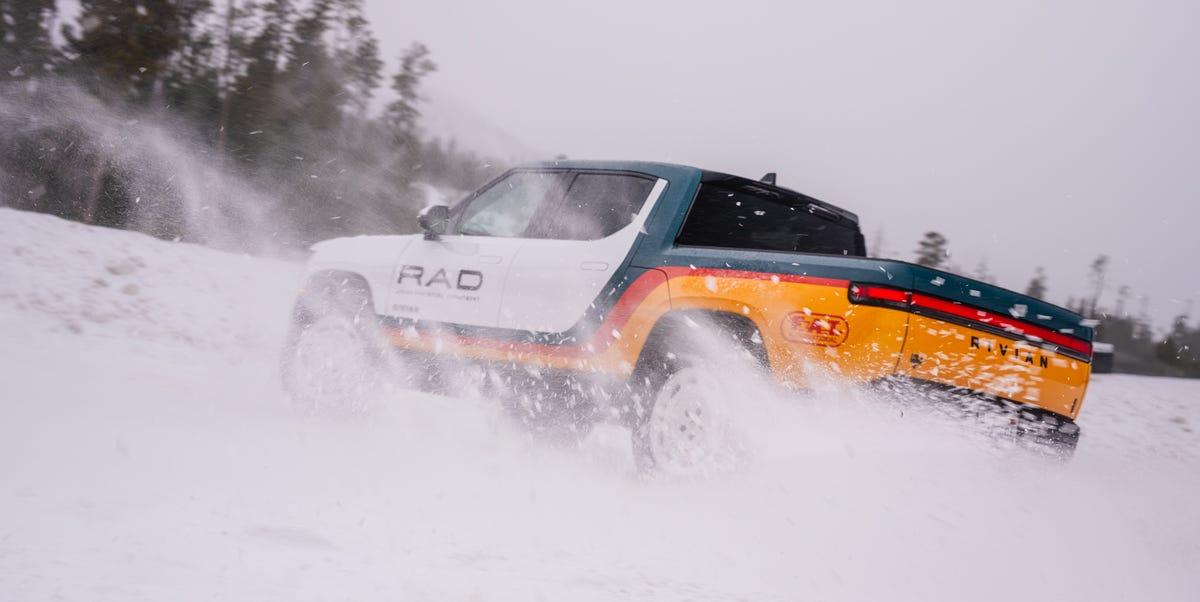
Rivian’s New RAD Division Revealed: 2026 High-Performance EVs to Outpace Tesla?
Image: Rivian’s New RAD Division Revealed: 2026 High-Performance EVs to Outpace Tesla? – Performance and Specifications
Advertisement
Rivian has officially pulled the curtain back on its most ambitious project yet: Rivian Advanced Development (RAD). Long whispered about in the corridors of the Normal, Illinois factory as a ‘skunkworks’ team, the formalization of RAD signals that Rivian is no longer content with just being the king of the trails—they want to dominate the track. Starting at an estimated entry point of $72,000 for standard trims and scaling well beyond $110,000 for RAD-influenced performance packages, the 2026 lineup is set to redefine what an electric adventure vehicle can achieve.
While Rivian has always focused on ‘Electric Adventure,’ the RAD division is specifically tasked with pushing the physical and software limits of their hardware. This move formalizes a group of elite engineers who have been working behind the scenes on projects like the Pikes Peak Hill Climb entries and the ‘Ascend’ quad-motor systems. For 2026, the stakes are higher than ever as Rivian seeks to stave off competition from the Tesla Model X Plaid and the GMC Hummer EV.
Advertisement
2026 Performance and Engineering: The RAD Influence
The Quad-Motor ‘Ascend’ Powertrain
The heart of the 2026 RAD performance strategy lies in the new ‘Ascend’ quad-motor setup. While the current Tri-Motor configurations already offer blistering speed, RAD engineers are optimizing torque vectoring to levels previously seen only in hypercars. We are looking at a projected output of 1,025 horsepower and over 1,100 lb-ft of torque for top-tier 2026 models. Users on enthusiast forums have long complained about the ‘floaty’ feel of heavy EVs at high speeds; RAD addresses this with bespoke damper tuning and active aerodynamics.
Track-Tuned Suspension and Aerodynamics
One of the primary goals of the RAD division is to reduce the ‘wall-to-wall’ body roll that plagues large SUVs. By utilizing a revised kinetic roll control system, the 2026 RAD-tuned R1S is expected to sit lower and bite harder into corners. New carbon-ceramic braking options are also rumored to be in the works to handle the immense kinetic energy of these 7,000-pound beasts. Aerodynamically, expect to see more aggressive front splitters and rear diffusers that aren’t just for show—they provide functional downforce for high-speed stability.
Interior Tech and Safety: The ‘Digital Soul’ of RAD
Software-Defined Performance
In 2026, performance isn’t just about hardware; it’s about lines of code. RAD is heavily involved in the development of ‘Drift Mode’ and ‘Apex Mode’ for the Rivian software suite. These modes allow for granular control over power distribution, letting the driver choose exactly how much rotation they want from the rear axle. Interior-wise, the 2026 models feature a revamped UI with real-time telemetry, G-force meters, and lap timers, all displayed on the ultra-crisp 15.6-inch center touchscreen.
Advertisement
Unmatched Safety Standards
Despite the focus on speed, safety remains a cornerstone. The 2026 Rivian R1S and R1T continue to carry their IIHS Top Safety Pick+ legacy. The RAD division is working to ensure that the increased performance doesn’t compromise the vehicle’s structural integrity. The 2026 models come standard with an updated ‘Driver+’ suite, utilizing 11 cameras and 5 radars to provide Level 2+ autonomous driving capabilities, even at the higher speeds these RAD-tuned machines are capable of reaching.
The Comparison: Rivian RAD vs. The Titans
How does the 2026 Rivian RAD-enhanced lineup compare to its fiercest rivals? The table below breaks down the high-stakes battle between the R1S RAD (Projected), the Tesla Model X Plaid, and the GMC Hummer EV SUV.
| Feature | Rivian R1S (RAD Package) | Tesla Model X Plaid | GMC Hummer EV SUV |
|---|---|---|---|
| 0-60 MPH | 2.4 Seconds (Est.) | 2.5 Seconds | 3.0 Seconds |
| Horsepower | 1,025 hp | 1,020 hp | 830 hp |
| Ground Clearance | 14.9 Inches | 8.9 Inches | 16.0 Inches |
| Towing Capacity | 7,700 lbs | 5,000 lbs | 7,500 lbs |
| Starting Price (2026) | $115,000 (Est.) | $94,990 | $106,000 |
Technical Specifications & Pricing
Below are the full technical specifications for the 2026 Rivian lineup featuring RAD-developed components.
Advertisement
| Specification | Details | ||
|---|---|---|---|
| Battery Options | 105 kWh (Standard), 135 kWh (Large), 149 kWh (Max) | Powertrain | Dual, Tri, or Quad-Motor (Ascend) |
| Range (EPA Est.) | 270 – 420 Miles | ||
| Charging Speed | Up to 220 kW (DC Fast Charging) | ||
| Seating Capacity | 5 or 7 Passengers | ||
| Warranty | 5-year/60,000-mile Limited |
Pricing for the 2026 models reflects Rivian’s move toward the premium sector, with RAD components adding a significant premium for enthusiasts.
| Variant | Estimated Ex-Showroom Price (USD) |
|---|---|
| Rivian R1T Adventure (Dual) | $71,000 |
| Rivian R1S Adventure (Dual) | $76,500 |
| Rivian R1S Ascend (Tri-Motor) | $99,000 |
| Rivian R1S RAD Performance Edition | $118,000 |
| Rivian R2 Performance (Coming Soon) | $55,000 |
Frequently Asked Questions (People Also Ask)
1. What exactly is Rivian RAD?
Rivian RAD (Rivian Advanced Development) is a specialized performance division within Rivian focused on high-end engineering, track performance, and pushing the boundaries of EV speed and handling.
2. Will there be a ‘RAD’ badge on future Rivian cars?
While Rivian hasn’t officially confirmed a sub-brand badge like BMW M, industry insiders expect ‘RAD’ or ‘Ascend’ to become the de facto performance branding for their 2026 and 2027 models.
Advertisement
3. How fast is the 2026 Rivian R1S?
The 2026 R1S with the RAD-optimized Quad-Motor setup is expected to hit 0-60 mph in approximately 2.4 seconds, making it one of the fastest SUVs on the planet.
4. What is the price of the 2026 Rivian R1T?
The 2026 Rivian R1T starts at roughly $71,000 for the Dual-Motor configuration, with performance trims exceeding $100,000.
5. Does the RAD division improve off-road capability?
Yes. While RAD focuses on speed, their torque vectoring improvements significantly enhance rock crawling and sand performance by providing better power distribution to individual wheels.
Advertisement
6. Is the Rivian R2 going to have a RAD version?
Early reports suggest that the Rivian R2 platform is being tested by the RAD team for a high-performance rally-inspired variant expected to launch late in 2026.
7. How does Rivian RAD compare to Tesla Plaid?
Rivian RAD focuses on a balance of off-road utility and track speed, whereas Tesla Plaid is almost exclusively focused on straight-line acceleration and on-road performance.
8. What are the cons of the 2026 Rivian models?
Common complaints include the high price point of the Max Pack batteries, the lack of Apple CarPlay/Android Auto, and the sheer weight of the vehicle affecting tire wear.
Advertisement
9. What is the range of the 2026 Rivian R1S RAD?
Performance-focused models typically see a slight dip in range due to stickier tires and more powerful motors, expected to land around 330-350 miles with the Large pack.
10. Can I upgrade my current Rivian with RAD parts?
Currently, RAD components are integrated into the manufacturing process, and there is no official word on retrofit kits for older R1 models.
Verdict: Should You Buy a 2026 Rivian RAD-Tuned Vehicle?
The formalization of the RAD division proves that Rivian is maturing as an automaker. They aren’t just building trucks anymore; they are building world-class performance machines. If you are looking for a vehicle that can embarrass a supercar at a stoplight on Sunday and take the family camping in the deep woods on Monday, the 2026 Rivian RAD-influenced models are peerless.
Advertisement
Pros
- Incredible 1,000+ HP performance
- Best-in-class off-road and on-road versatility
- Regular OTA updates that improve the vehicle over time
- Iconic, futuristic design language
Cons
- Very high entry price for RAD performance
- Charging network still maturing compared to Tesla
- No physical buttons for climate or mirrors (Software dependent)