The Engineering Shift: Why BMW Moved Away from Traditional Dual Turbos
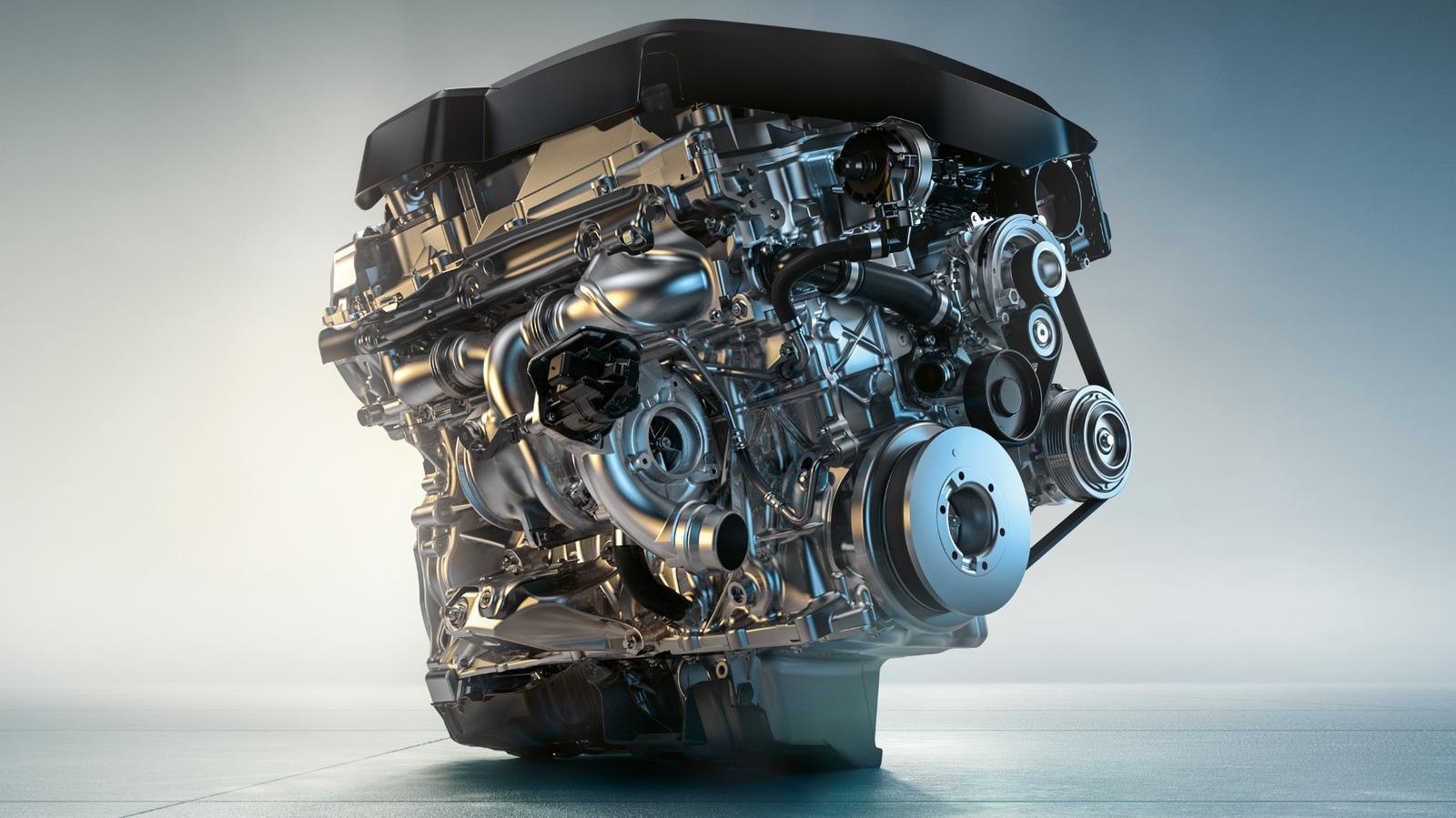
Why BMW Prefers Single Turbos in 2026: Twin-Scroll vs. Twin-Turbo Engineering Explained
Image: Why BMW Prefers Single Turbos in 2026: Twin-Scroll vs. Twin-Turbo Engineering Explained – Performance and Specifications
Advertisement
For decades, the badge of a ‘Twin Turbo’ was the ultimate symbol of automotive prestige. However, as we move through 2026, BMW has doubled down on its ‘TwinPower Turbo’ philosophy—which, despite the confusing name, often refers to a sophisticated single turbocharger setup. With the 2026 BMW M340i priced at approximately ₹73.50 Lakh (ex-showroom) and the X5 40i hovering around ₹98 Lakh, enthusiasts often ask: why pay a premium for fewer turbos?
The answer lies in the evolution of fluid dynamics and thermal management. BMW’s transition from the legendary (but temperamental) N54 twin-turbo engine to the N55 and the current masterpiece, the B58, represents a shift from raw complexity to refined efficiency. In 2026, the single-turbo approach is no longer a cost-saving measure; it is a performance necessity for Euro 7 compliance and linear power delivery.
Advertisement
The Science of Twin-Scroll Technology
What BMW calls ‘TwinPower’ is essentially a single, massive turbocharger fed by two separate exhaust scrolls. In a traditional single turbo, exhaust pulses from different cylinders can interfere with each other, causing turbulence and lag. BMW’s twin-scroll design separates the cylinders (usually 1-3 and 4-6 in an inline-six) so that their exhaust pulses hit the turbine wheel at optimal intervals. This provides the instant ‘punch’ of a small turbo with the high-end flow of a large one.
Packaging and Weight: The 2026 Advantage
Modern BMWs are packed with 48V mild-hybrid systems, cooling lines, and advanced driver assistance sensors. A dual-turbo setup requires twice the plumbing, twice the heat shielding, and significantly more space in the engine bay. By opting for a single twin-scroll unit, BMW engineers have reduced the ‘wet weight’ of the engine while improving the center of gravity. In 2026, where weight is the enemy of efficiency, this reduction is crucial for maintaining the ‘Sheer Driving Pleasure’ identity.
Performance and Reliability: What Users Love and Hate
Based on 2026 owner feedback from Bimmerpost and international forums, the B58 single-turbo engine remains the gold standard for reliability. Users praise the ‘torque-on-demand’ nature, which feels more like a naturally aspirated V8 than a laggy turbo engine. However, some hardcore tuners still miss the N54 era, where swapping dual turbos could result in four-digit horsepower figures more easily.
Advertisement
Pros of the 2026 BMW Single Turbo Setup
- Linear Power: No ‘turbo kick’—just a smooth surge from 1,800 RPM to the redline.
- Thermal Efficiency: Fewer components mean less heat soak, critical for track days.
- Maintenance: Lower complexity results in fewer points of failure (wastegate rattle, oil leaks).
- Hybrid Integration: Seamless pairing with the 48V electric motor for torque filling.
Cons of the 2026 BMW Single Turbo Setup
- Top-End Breathlessness: At extreme RPMs, a single turbo can struggle to move as much air as two dedicated units.
- Tunability Ceiling: Stock single turbos have lower peak boost limits compared to aftermarket twin setups.
Comparing the Titans: 2026 Luxury Performance Engines
How does BMW’s single-turbo strategy stack up against its closest rivals in 2026? The following table compares the heart of the BMW lineup against the best from Stuttgart and Ingolstadt.
| Feature | BMW B58 (3.0L Inline-6) | Mercedes M256 (3.0L Inline-6) | Audi 3.0L V6 TFSI |
|---|---|---|---|
| Turbo Config | Single Twin-Scroll | Single + Electric Supercharger | Single Twin-Scroll |
| Horsepower | 382 hp | 375 hp | 349 hp |
| Torque | 500 Nm | 500 Nm | 500 Nm |
| 0-100 km/h | 4.4 Seconds | 4.7 Seconds | 4.9 Seconds |
| Technology | TwinPower / 48V Hybrid | EQ Boost / Electric Vane | Mild Hybrid / Hot-V |
Technical Specifications: 2026 BMW B58 Engine
The B58 engine remains the backbone of BMW’s 2026 ICE (Internal Combustion Engine) fleet. Here is the technical breakdown of the current specification found in the 340i and X5 models.
| Specification | Details | ||
|---|---|---|---|
| Engine Type | Longitudinal Inline-6, 24-Valve | Displacement | 2,998 cc |
| Turbocharger | Single Twin-Scroll (Honeywell/Garrett) | ||
| Fuel Injection | High-Precision Direct Injection (350 bar) | ||
| Compression Ratio | 11.0:1 | ||
| Valvetrain | Valvetronic and Double-VANOS | ||
| Emission Norms | Euro 7 / BS7 Ready |
2026 BMW Model Pricing (Ex-Showroom)
Here is how the single-turbo ’40i’ variants are priced in the current Indian market context for 2026.
Advertisement
| Model | Variant | Estimated Price (INR) |
|---|---|---|
| BMW 3 Series | M340i xDrive | ₹73,50,000 |
| BMW 5 Series | 540i M Sport | ₹82,00,000 |
| BMW X5 | xDrive40i M Sport | ₹98,50,000 |
| BMW 7 Series | 740i Design Pure Excellence | ₹1,82,00,000 |
Safety and Tech Integration
BMW’s 2026 engines aren’t just about speed; they are deeply integrated into the safety suite. The engine management system (DME) works with the Active Cruise Control to ‘coast’ the engine during deceleration, improving safety and fuel economy. All 2026 BMW models featuring this engine have maintained a 5-Star Euro NCAP rating, thanks in part to the engine’s compact packaging allowing for better crumple zones.
People Also Ask (FAQ)
1. Is BMW TwinPower Turbo the same as Twin Turbo?
No. TwinPower Turbo usually refers to a single turbocharger with twin-scroll technology. Dual Turbo (or Twin Turbo) means there are two separate turbocharger units.
2. Why did BMW stop using the N54 twin-turbo engine?
The N54 was powerful but suffered from reliability issues, including high pressure fuel pump failures and wastegate rattle. The single-turbo N55 and B58 replacements offered better reliability and fuel efficiency.
Advertisement
3. Does the 2026 BMW M3 have a single turbo?
No. The high-performance M models (M2, M3, M4) use the S58 engine, which retains a true dual-turbocharger setup for maximum track performance.
4. Which is better for tuning: Single or Twin Turbo?
Twin turbos generally offer a higher power ceiling, but modern single-turbo BMW engines like the B58 are highly receptive to ‘Stage 1’ tunes, often gaining 60-80 hp with software alone.
5. Does a single turbo have more lag?
In the past, yes. However, BMW’s twin-scroll technology and 48V mild-hybrid torque-fill effectively eliminate noticeable lag in 2026 models.
Advertisement
6. Is the B58 engine reliable for long-term ownership?
Yes, the B58 is widely considered one of the most reliable engines BMW has ever produced, with many 2026 owners reporting zero issues past the 100,000 km mark.
7. Why is it called ‘TwinPower’ if it’s one turbo?
It is a marketing term that refers to the combination of Twin-Scroll technology, Valvetronic variable valve timing, and High-Precision Injection.
8. How does the 48V hybrid system help the turbo?
The 48V starter-generator provides an instant electric boost at low RPMs before the turbo has fully spooled up, creating a seamless power curve.
Advertisement
9. What is the fuel efficiency of the 2026 BMW 3.0L engine?
Depending on the model, it averages between 11-13 km/l on highways, which is impressive for an engine producing nearly 400 horsepower.
10. Will BMW move back to dual turbos for standard cars?
Unlikely. With the shift toward electrification, BMW is focusing on perfecting single-turbo efficiency for its remaining internal combustion engines.
Verdict: Should You Buy a Single-Turbo BMW in 2026?
If you are looking for the perfect balance of daily usability, maintenance-free ownership, and exhilarating performance, the answer is a resounding YES. While the ‘Twin Turbo’ name carries more street cred, the 2026 TwinPower Single-Turbo (B58) is objectively the better engine for 99% of drivers.
Advertisement
Pros: Exceptional reliability, smooth power delivery, great fuel economy for the performance, and a glorious straight-six exhaust note.
Cons: Lacks the extreme top-end ‘insanity’ of the dual-turbo M-cars and has a slightly lower ceiling for professional drag-racing modifications.