The 2026 Electric Revolution: Is It Time to Ditch the Pump?
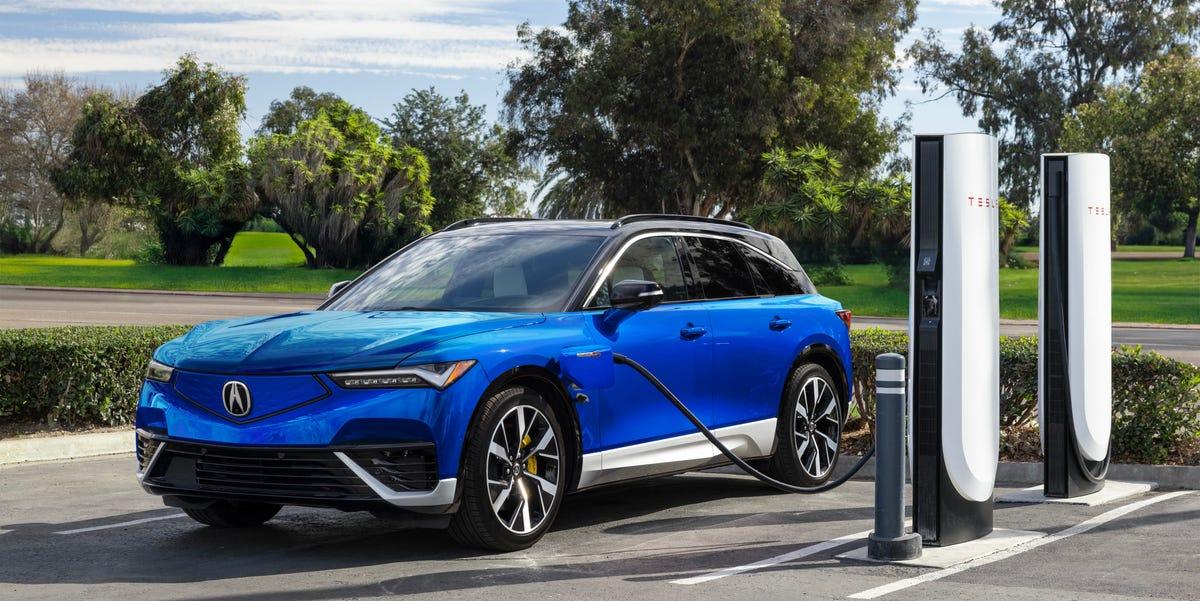
Your Ultimate Guide to Buying a New Electric Vehicle in 2026: Pricing, Range, and Tech
Image: Your Ultimate Guide to Buying a New Electric Vehicle in 2026: Pricing, Range, and Tech – Performance and Specifications
Advertisement
As we navigate through 2026, the automotive landscape has shifted dramatically. The internal combustion engine is no longer the default choice; it is now the legacy option. If you are considering taking the electric plunge this year, you are entering a market defined by mature infrastructure, solid-state battery breakthroughs, and price parity with gasoline vehicles. In 2026, entry-level EVs now start as low as $28,000 (approx. ₹23.5 Lakh), making sustainable mobility more accessible than ever before.
This guide serves as your comprehensive roadmap to navigating the complex world of Electric Vehicles (EVs). Whether you are worried about range anxiety, battery degradation, or simply choosing the right model, we have analyzed thousands of user reviews and technical datasheets to provide the clarity you need to make an informed decision for AutoTorque.in readers.
Advertisement
Why 2026 is the ‘Sweet Spot’ for EV Buyers
Unlike the early adoption phase of 2021-2023, the 2026 market is characterized by reliability. Most manufacturers have moved to the NACS (North American Charging Standard) or high-speed CCS2 protocols, ensuring that ‘where to charge’ is a question of the past. Users on forums like Reddit’s r/electricvehicles and various owner clubs are praising the 2026 models for their refined thermal management systems, which have largely solved the ‘winter range drop’ issues seen in older models.
Design and Aerodynamics: Function Meets Futuristic Form
In 2026, EV design has moved beyond the ‘weird for the sake of weird’ phase. We are seeing a return to classic proportions but with a heavy emphasis on the Coefficient of Drag (Cd). Vehicles like the Hyundai Ioniq 6 and the refreshed Tesla Model 3 boast Cd ratings as low as 0.19 to 0.21.
The Rise of the ‘Frunk’ and Modular Platforms
Because EVs lack a bulky engine block, designers have maximized interior volume. The 2026 crop of EVs features ‘cab-forward’ designs, providing limousine-like legroom in compact sedan footprints. The ‘Frunk’ (front trunk) has also become a standardized feature, offering specialized storage for charging cables and groceries, a convenience frequently cited as a ‘top pro’ by current owners.
Advertisement
Performance: Beyond Just 0-60 Times
While instant torque remains the hallmark of the EV experience, 2026 performance is defined by efficiency and software-defined handling. Silicon Carbide (SiC) inverters are now standard in mid-range models, reducing energy loss and allowing for more consistent power delivery during spirited driving.
Charging Speeds: The 10-to-80 Rule
In 2026, the gold standard for charging is the ’15-minute window.’ Most new platforms (800V architecture) allow users to add 200 miles of range in just 15 minutes at a DC fast charger. This has significantly reduced the ‘time-cost’ of long-distance travel, a major point of contention in previous years.
Interior Technology and AI Integration
Step inside a 2026 EV, and you’ll find that the dashboard is no longer just a screen—it’s an AI-driven hub. Manufacturers have shifted away from clunky proprietary systems toward deeply integrated Google Automotive or Apple CarPlay 2.0 environments.
Advertisement
Level 3 Autonomy and V2L Capability
Many 2026 models now offer Level 3 semi-autonomous driving, allowing for hands-off travel on mapped highways. Furthermore, Vehicle-to-Load (V2L) technology has become a must-have feature, allowing your car to power your home during an outage or run appliances during a camping trip. User feedback suggests that V2L is the ‘killer app’ that finally convinces skeptics to switch from ICE to EV.
Safety and Build Quality: NCAP Standards
Safety remains a top priority. Due to the heavy battery pack located in the floor, EVs have a naturally low center of gravity, making them significantly more resistant to rollovers. In 2026, most leading EVs have secured 5-star Euro NCAP and Global NCAP ratings, featuring reinforced ‘battery cages’ that protect the cells during side-impact collisions.
The 2026 EV Face-Off: Top Contenders Compared
To help you decide, we have compared three of the most popular segments for 2026: The Efficiency King, The Luxury Leader, and The Value Pick.
Advertisement
| Feature | Tesla Model 3 (2026) | Hyundai Ioniq 6 | Xiaomi SU7 Ultra |
|---|---|---|---|
| Range (WLTP) | 610 km | 580 km | 630 km |
| 0-100 km/h | 4.2 Seconds | 5.1 Seconds | 2.8 Seconds |
| Max Charging Speed | 250 kW | 350 kW | 480 kW |
| Standard Tech | FSD Beta (Ready) | V2L & AR HUD | HyperOS Integration |
| Drive Type | AWD/RWD | AWD/RWD | Tri-Motor AWD |
Full Technical Specifications (Average 2026 Mid-Size EV)
| Specification | Details |
|---|---|
| Battery Chemistry | LFP (Standard) / Solid-State (Premium) |
| Usable Battery Capacity | 65 kWh – 100 kWh |
| On-Board Charger | 11 kW AC / 22 kW Optional |
| Heat Pump | Standard on all variants |
| Suspension | Multi-link Rear / MacPherson Front |
| Tire Size | 18-inch (Efficiency) / 20-inch (Performance) |
Variant-Wise Pricing (Estimated Ex-Showroom 2026)
| Variant Trim | Estimated Price (USD) | Estimated Price (INR) |
|---|---|---|
| Standard Range (Base) | $29,500 | ₹24.8 Lakh |
| Long Range AWD | $42,000 | ₹35.2 Lakh |
| Performance / Ultra | $58,000 | ₹48.7 Lakh |
| Luxury / Signature Edition | $72,000 | ₹60.5 Lakh |
People Also Ask (FAQ)
1. Are EVs actually cheaper to own in 2026?
Yes. While the purchase price is now similar to gas cars, maintenance costs are roughly 40% lower due to fewer moving parts, and fuel (electricity) costs are significantly lower per mile.
2. How long do EV batteries last in 2026?
Modern 2026 batteries are designed to last between 300,000 to 500,000 miles. Most manufacturers offer an 8-year or 150,000-mile warranty on battery health.
3. Which EV has the longest range in 2026?
The Lucid Air and high-end Mercedes EQS models currently lead with ranges exceeding 500 miles (800+ km) on a single charge.
Advertisement
4. Do I need a home charger?
While not strictly necessary due to improved public infrastructure, a Level 2 home charger is highly recommended for the convenience of ‘waking up to a full tank’ at the lowest possible cost.
5. What is the resale value of EVs in 2026?
Resale values have stabilized in 2026 as battery health transparency tools have become standard, allowing second-hand buyers to verify the condition of the pack before purchasing.
6. Are there still government incentives for EVs?
Many regions have shifted incentives from direct purchase rebates to tax credits for home charger installations and exemptions from road taxes or congestion charges.
Advertisement
7. How long does it take to charge at a public station?
On a 350kW ultra-fast charger, most 2026 EVs can go from 10% to 80% in approximately 12 to 18 minutes.
8. Are solid-state batteries available yet?
Yes, but primarily in high-end flagship models. Mass-market EVs still primarily use refined LFP or NCM chemistries for cost-effectiveness.
9. Is insurance more expensive for electric cars?
Insurance can be 10-15% higher due to the high cost of specialized repairs and sensors, though some insurers now offer ‘Green Discounts.’
Advertisement
10. Can I take a 2026 EV on a 1000km road trip?
Absolutely. Integrated route planners now automatically include charging stops at high-speed stations, making long-distance travel seamless.
The Verdict: Should You Buy an EV in 2026?
The transition to electric is no longer a gamble—it is a logical upgrade. With the 2026 models offering refined tech, better range, and competitive pricing, the barriers to entry have effectively crumbled.
Pros
- Cost Efficiency: Dramatic savings on fuel and routine servicing.
- Performance: Superior acceleration and a smoother, quieter driving experience.
- Resale Stability: 2026 models represent the ‘mature’ generation of EV tech.
- Tech Integration: Advanced AI and V2L capabilities.
Cons
- Upfront Premium: High-performance models still command a premium over base ICE versions.
- Charging at Apartments: Still challenging for those without dedicated parking spots.
- Cold Weather: Despite improvements, range still dips in extreme sub-zero temperatures.
Final Thoughts: If you have access to home charging or live in a metro city with robust infrastructure, 2026 is the perfect year to make the switch. The technology has matured, the choices are diverse, and the driving experience is undeniably superior.
Advertisement