The Price of Impatience: Understanding Tailgating in 2026
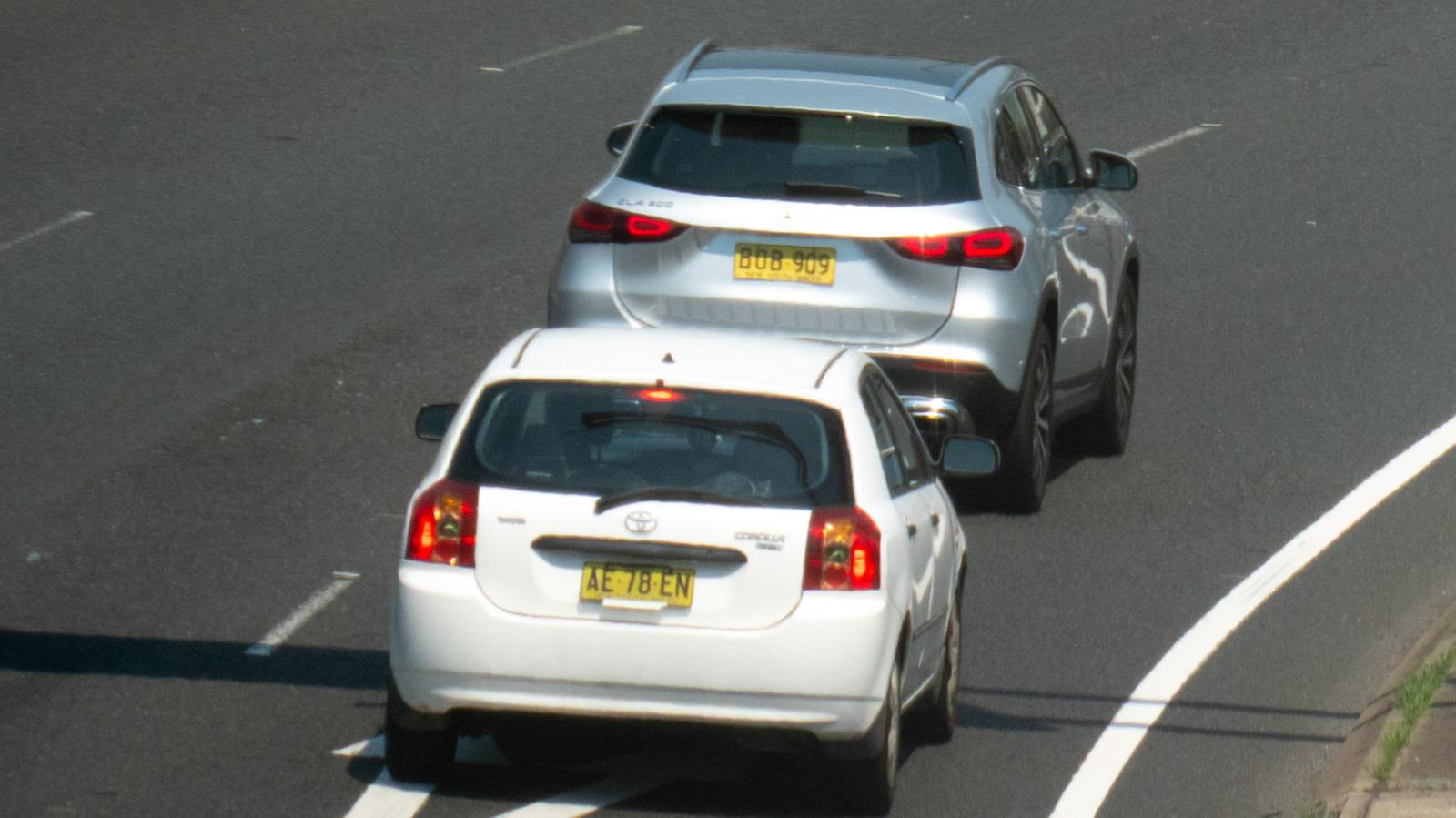
When Does Following A Car Become Tailgating? 2026 Guide to Safe Distances & ADAS
Image: When Does Following A Car Become Tailgating? 2026 Guide to Safe Distances & ADAS – Performance and Specifications
Advertisement
In 2026, the price of tailgating isn’t just a potential fender bender; it is a minimum fine of ₹5,000 to ₹15,000 depending on your jurisdiction, and an almost certain 25% spike in your insurance premiums. Whether you are driving a legacy internal combustion engine (ICE) vehicle or a new-age Electric Vehicle (EV) equipped with Level 3 Autonomous driving, the laws of physics—and the law of the land—remain the same. Tailgating is defined as following another vehicle at a distance that does not allow enough space to stop in an emergency. But where exactly is that line drawn? In this guide, we dive deep into the technical, legal, and safety aspects of following distances in the modern era.
The Science of the ‘Safe Gap’: Why Seconds Matter
Tailgating is often a subjective experience for drivers, but for traffic enforcement cameras and Advanced Driver Assistance Systems (ADAS), it is a matter of precise calculation. In 2026, most modern vehicles use LIDAR and RADAR to maintain a ‘time-gap’ rather than a ‘distance-gap.’ This is because the distance required to stop varies wildly based on your speed.
Advertisement
The 3-Second Rule in 2026
The classic ‘2-second rule’ has been officially upgraded to the ‘3-second rule’ by safety organizations globally in 2026. This is due to the increased weight of modern EVs, which can lead to longer braking distances despite advanced regenerative braking systems. To apply this, pick a stationary object (like a sign or a bridge). When the car ahead passes it, you should be able to count to three before you reach the same spot. If you reach it sooner, you are officially tailgating.
The Impact of Vehicle Weight on Stopping Distances
Modern cars in 2026 are safer but heavier. A typical electric SUV weighs nearly 300-500kg more than its 2010 counterpart. This added mass increases kinetic energy significantly. While carbon-ceramic brakes and high-performance tires help, they cannot defy physics. If the vehicle in front of you performs an emergency stop, a heavy vehicle following at a 1-second interval will inevitably collide.
The Technology of 2026: ADAS vs. Human Error
With the widespread adoption of ADAS (Advanced Driver Assistance Systems) in 2026, cars are now smarter at detecting tailgating than humans are. Systems like Adaptive Cruise Control (ACC) and Forward Collision Warning (FCW) are now standard on even entry-level hatchbacks.
Advertisement
| Feature | Function | Benefit |
|---|---|---|
| Adaptive Cruise Control (ACC) | Uses RADAR to maintain a set time-gap from the car ahead. | Eliminates accidental tailgating by auto-adjusting speed. |
| LIDAR Collision Avoidance | High-precision laser scanning of the road ahead. | Detects hazards in low-visibility where humans fail. |
| Predictive Braking | Pre-charges brakes when a sudden gap reduction is sensed. | Reduces reaction time by 0.5 seconds. |
Sensor Limitations in Adverse Weather
While 2026 sensor technology is incredible, it isn’t foolproof. Heavy rain, dense fog, or snow can ‘blind’ optical cameras and even degrade RADAR signals. In these conditions, ‘following’ often becomes ‘tailgating’ much faster because the car’s automated systems might require an extra 10-20 meters to accurately judge distance. Drivers are advised to increase the gap to 5 or 6 seconds during monsoons.
The Legal Definition and Fines
Law enforcement in 2026 utilizes AI-integrated CCTV cameras that calculate the gap between vehicles in real-time. If your vehicle is found following at less than a 0.8-second interval at speeds above 60 km/h, an automated e-challan is generated. In many regions, this is categorized as ‘Reckless Driving,’ which carries heavier penalties than a simple speeding ticket.
Comparing Safe Following Distances by Speed
The following table outlines the minimum safe distance required at various speeds, accounting for both human reaction time and mechanical braking distance in 2026 model vehicles.
Advertisement
| Speed (km/h) | Reaction Distance (m) | Braking Distance (m) | Total Safe Gap (m) |
|---|---|---|---|
| 40 km/h | 11m | 9m | 20m |
| 60 km/h | 17m | 20m | 37m |
| 80 km/h | 22m | 36m | 58m |
| 100 km/h | 28m | 56m | 84m |
| 120 km/h | 33m | 81m | 114m |
People Also Ask (FAQ)
1. What is the legal definition of tailgating?
Tailgating is defined as following another vehicle more closely than is reasonable and prudent, having due regard for speed, traffic, and road conditions.
2. How many seconds should I stay behind a car?
In 2026, the recommended safe following distance is at least 3 seconds on dry roads and 6 seconds on wet or icy roads.
3. Can I get a ticket for tailgating?
Yes, modern AI traffic cameras can now detect following distances and issue automated fines for tailgating.
Advertisement
4. Does Adaptive Cruise Control prevent tailgating?
Yes, ACC is designed to maintain a safe, pre-set distance from the vehicle ahead, significantly reducing the risk of tailgating.
5. Is tailgating considered aggressive driving?
Yes, in most jurisdictions, persistent tailgating is legally classified as a form of aggressive driving or road rage.
6. What should I do if someone is tailgating me?
Do not ‘brake check’ them. Maintain a steady speed or safely pull over/change lanes to let them pass.
Advertisement
7. How does vehicle weight affect tailgating?
Heavier vehicles (like EVs or SUVs) require a longer distance to stop, meaning they must maintain a larger gap to avoid tailgating risks.
8. Does tailgating save fuel/battery?
While ‘drafting’ can technically reduce wind resistance, the safety risk far outweighs the negligible energy savings in passenger vehicles.
9. Can sensors fail to detect a car ahead?
Yes, specifically on sharp curves or in extreme weather, sensors may momentarily lose track of the lead vehicle.
Advertisement
10. What is a ‘Brake Check’?
A brake check is when a lead driver slams on their brakes to scare a tailgater. This is illegal and dangerous for both parties.
Verdict: Should You Rely on Your Car’s Sensors?
The evolution of safety tech in 2026 has made tailgating easier to avoid, but it hasn’t eliminated the human factor. While ADAS can help maintain a gap, the driver remains responsible for adjusting to road conditions. Pros: Enhanced safety, lower stress with ACC, fewer insurance claims. Cons: Sensor over-reliance can lead to complacency, high repair costs for sensors if a collision does occur. Final Thought: Always maintain the 3-second rule; it’s the cheapest insurance policy you’ll ever have.
Advertisement