While you commonly see inline-fours, V6s, or V8s in 2026, the automotive landscape was once a playground for experimental engineering. The V4 engine, characterized by its compact dimensions and unique firing order, remains one of the most misunderstood yet fascinating configurations in history. In an era where 2026 hybrids are seeking ultimate space efficiency, we look back at the pioneers that dared to be different. Whether it was the rally-bred Lancia or the utilitarian Saab, these oddballs proved that four cylinders don’t always have to stand in a straight line.
The Engineering Logic: Why the V4 Disappeared
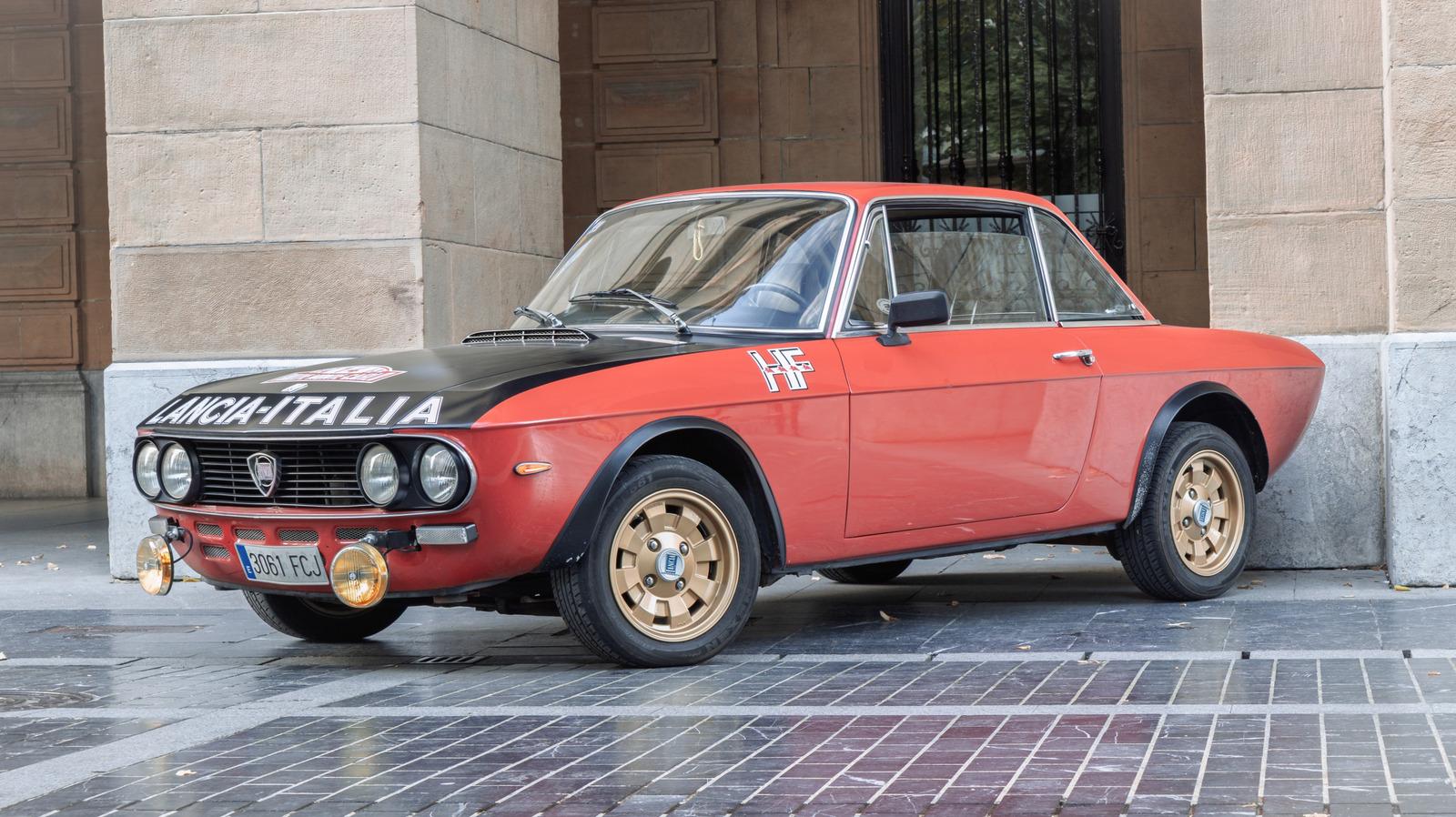
5 Oddball Cars With V4 Engines: The 2026 Engineering Retrospective
Advertisement
Image: 5 Oddball Cars With V4 Engines: The 2026 Engineering Retrospective – Performance and Specifications
In 2026, the average cost of a high-performance compact engine ranges from $5,000 to $12,000. Historically, the V4 was an expensive gamble. Manufacturers chose it for its length—it could fit into engine bays where an inline-four simply couldn’t. However, the inherent secondary vibrations and the complexity of two cylinder heads eventually led to its decline in favor of the cheaper, smoother inline-four.
Advertisement
1. Lancia Fulvia: The Italian Masterpiece
The Lancia Fulvia is perhaps the most famous V4-powered car. Its narrow-angle V4 (only 12 to 13 degrees) allowed for a single cylinder head, combining the benefits of a V-engine and an inline-engine. In the 2026 collector’s market, these vehicles are seeing a 15% price surge due to their mechanical purity.
2. Saab 96: The Swedish Rally Legend
Originally powered by a two-stroke, Saab eventually turned to Ford’s Taunus V4 engine. This transformed the 96 into a rally powerhouse. Users often praise its reliability but complain about the weight distribution compared to modern 2026 lightweight alloy engines.
3. Ford Taunus: The Workhorse
Ford of Europe utilized the V4 extensively in the 1960s. It was short, punchy, and allowed for front-wheel-drive configurations that were ahead of their time. However, the ‘vibration’ issues are a common ‘Con’ cited in owner forums even decades later.
Advertisement
4. ZAZ Zaporozhets: The Soviet Solution
The ZAZ-965 and 968 featured air-cooled V4 engines mounted in the rear. These were rugged machines designed for the harsh terrains of the USSR. While safety ratings (NCAP) didn’t exist in their prime, modern simulations suggest they would struggle against 2026 safety standards.
5. Porsche 919 Hybrid: The Modern V4 Titan
Bringing the V4 into the 21st century, the Porsche 919 Le Mans prototype used a 2.0-liter V4 turbo. This remains the gold standard for V4 performance, proving that with modern balancing tech, the V4 can outperform any inline configuration.
Technical Specifications Comparison
| Feature | Lancia Fulvia (1.3S) | Saab 96 V4 | Porsche 919 (Legacy) |
|---|---|---|---|
| Engine Type | Narrow-angle V4 | 60-degree V4 | 90-degree V4 Hybrid |
| Displacement | 1298cc | 1498cc | 2000cc |
| Horsepower | 90 hp | 65 hp | 500+ hp (ICE only) |
| Top Speed | 170 km/h | 145 km/h | 340+ km/h |
| Valvetrain | DOHC | OHV | DOHC 16V |
The 2026 Perspective: V4 vs Rivals
How does a conceptual modern V4 stack up against the dominant powertrains of 2026? The table below compares the engineering efficiency.
Advertisement
| Metric | Modern V4 Concept | Inline-4 Hybrid (2026) | Electric Drive Unit |
|---|---|---|---|
| Packaging Size | Ultra-Compact | Moderate | Small/Modular |
| Manufacturing Cost | High | Low | Medium |
| Vibration Level | Moderate (High without shafts) | Low | Zero |
| 2026 Market Share | <1% | 45% | 40% |
Variant-Wise Pricing (Historical Adjusted to 2026 Value)
| Model Variant | Condition | Estimated 2026 Price (Ex-Showroom) |
|---|---|---|
| Lancia Fulvia HF 1.6 | Concours | ₹65,00,000 |
| Saab 96 V4 | Restored | ₹18,00,000 |
| Ford Taunus Transit | Vintage | ₹12,50,000 |
| Porsche 919 (Chassis) | Museum Grade | ₹15,00,00,000+ |
People Also Ask (FAQ)
1. Are V4 engines still made in 2026?
Primarily in motorcycles (Ducati, Honda) and specialized racing applications, though some 2026 range-extender concepts explore the V4 format.
2. Why are V4 engines so rare in cars?
The cost of having two cylinder heads and two exhaust manifolds makes them more expensive than inline-fours.
3. Is a V4 better than an I4?
It is shorter and has a stronger crankshaft, but it is wider and more complex to balance.
Advertisement
4. Which was the first V4 car?
The Mors 12hp in 1901 is widely considered one of the earliest examples.
5. Can I swap a V4 into a modern car?
Yes, but the custom fabrication for engine mounts and cooling in 2026 chassis is cost-prohibitive.
6. What are the common problems with V4 engines?
Vibration, overheating of the rear cylinders, and timing gear wear are frequently discussed in forums.
Advertisement
7. Does Ford still use V4 engines?
No, Ford moved to the I4 and EcoBoost platforms decades ago.
8. Is the Porsche 919 V4 road legal?
No, it is a dedicated race car, though it influenced 2026 hybrid road tech.
9. Are V4 engines fuel-efficient?
Historically no, but with 2026 direct injection, they could rival modern standards.
Advertisement
10. What is the loudest V4 car?
The Lancia Fulvia Rally spec is renowned for its unique, high-pitched mechanical raspy note.
Verdict: Should You Buy a V4 Classic in 2026?
Buying a V4-powered car in 2026 is a statement of engineering appreciation. While they are more ‘finicky’ than your standard Toyota or Maruti, they offer a soul that modern 2026 EVs lack.
Pros
- Incredible space-saving design
- Unique engine note that stands out in 2026
- High investment potential for Lancia models
- Compact enough for easy garage storage
Cons
- Difficult to find specialized mechanics in 2026
- Parts for Saab/ZAZ are becoming extremely rare
- Secondary vibration issues
Advertisement