The Ultimate Green Hack: A Car Powered by Discarded Vapes
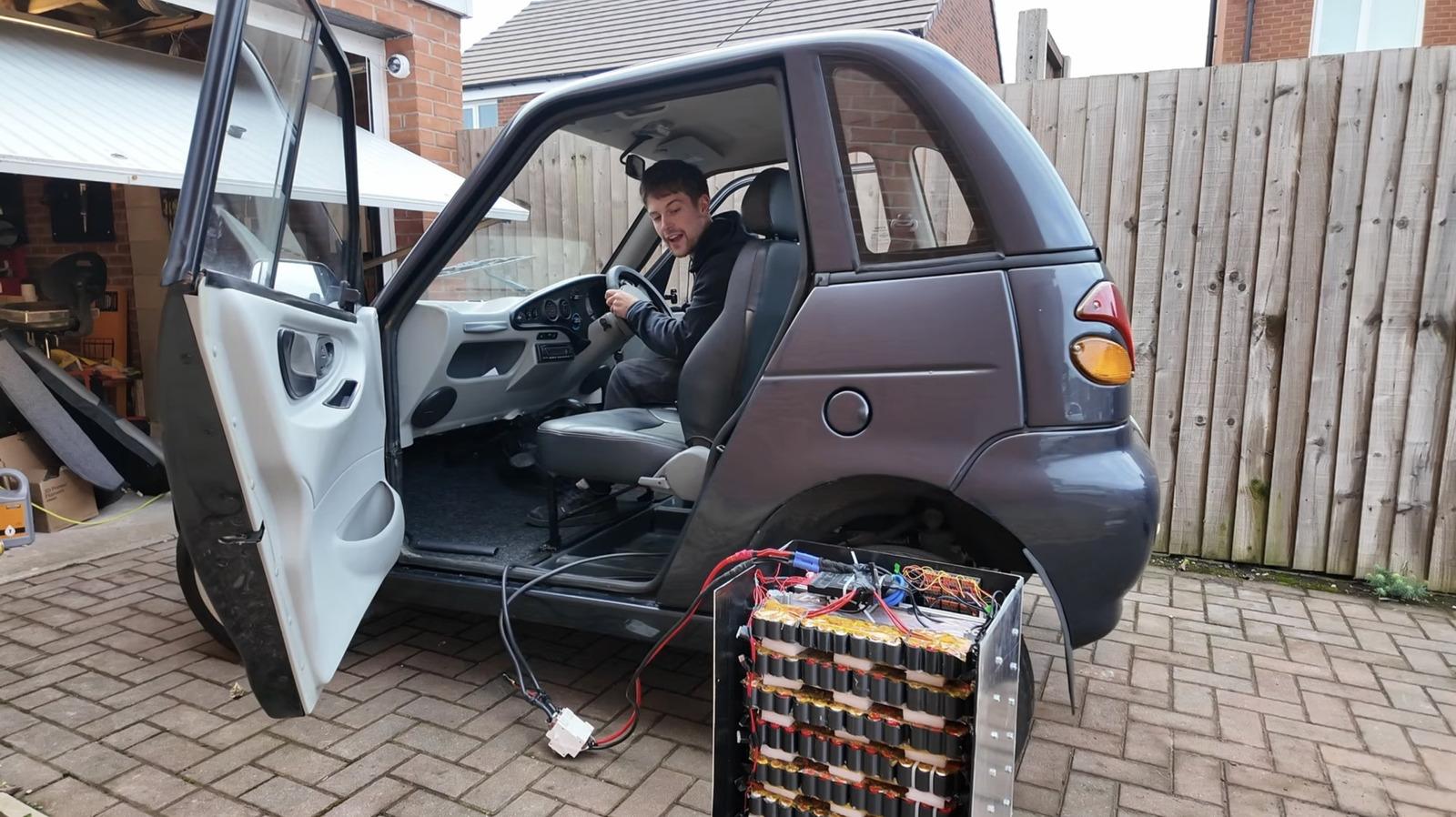
This Car Is Powered By Vapes: The 2026 G-Wiz DIY Evolution and ‘Free Energy’ Reality
Image: This Car Is Powered By Vapes: The 2026 G-Wiz DIY Evolution and ‘Free Energy’ Reality – Performance and Specifications
- Advertisement -
In the world of electric vehicles, the quest for sustainability often leads to some bizarre engineering marvels. But nothing beats the current 2026 fascination with the ‘Vape-Powered’ G-Wiz. If you are looking to get into the EV game for under ₹1,50,000 ($1,800), the secondary market for old REVA G-Wiz units is booming, specifically for hobbyists attempting to power them using thousands of salvaged lithium-ion batteries from disposable vapes. While the price of a used donor vehicle is incredibly low, the technical debt and safety risks are high. This isn’t just about ‘free energy’; it’s about a radical approach to recycling in a world overflowing with electronic waste.
Why Vapes? The Science of the 18650 and Li-Po Cells
Disposable vapes contain high-quality lithium-polymer or lithium-ion cells. When people throw them away, they are discarding perfectly functional energy storage. DIY enthusiasts have discovered that by harvesting roughly 2,000 to 3,000 of these cells, they can create a battery pack capable of propelling a micro-car like the G-Wiz. However, this isn’t a ‘plug and play’ solution. It requires meticulous voltage matching and a sophisticated Battery Management System (BMS) to prevent the entire project from turning into a Roman candle.
- Advertisement -
2026 Performance: How Does the Vape-G-Wiz Actually Drive?
The performance of a vape-powered G-Wiz in 2026 depends entirely on the health of the salvaged cells. On average, these DIY builds are achieving a range of 60-80 km on a single charge. While the original G-Wiz was limited by heavy lead-acid batteries, the move to vape-sourced lithium cells significantly reduces the vehicle’s weight, improving off-the-line torque, though the top speed remains a modest 45-50 km/h. It is strictly an urban runabout, designed for city streets where speed limits are low and parking is a nightmare.
Design and Practicality: Small, Quirky, and Controversial
The G-Wiz has always been a ‘love it or hate it’ vehicle. Its footprint is smaller than a standard parking spot, making it the king of urban maneuverability. In 2026, many owners are retrofitting these with modern LED lighting and digital instrument clusters to mask the aging plastic interiors. However, the cramped seating remains—while it is technically a 2+2, the rear seats are better suited for groceries than humans.
Safety and NCAP: A Major Point of Concern
We must address the elephant in the room: Safety. The original G-Wiz (REVAi) famously struggled in crash tests. It was classified as a quadricycle rather than a car, meaning it didn’t have to meet the same stringent NCAP standards as a Volkswagen or a Tata. In 2026, DIY vape-car builds are even more precarious. Adding thousands of uncertified, hand-soldered batteries into a chassis with minimal crumple zones is a recipe for concern. There is no official Global NCAP rating for these ‘vape-mods,’ but experts suggest a 0-star expectation in any high-speed collision.
- Advertisement -
The Comparison: 2026 Micro-EV Rivals
How does a salvaged, vape-powered G-Wiz stack up against the legitimate entry-level EVs of 2026? Let’s look at the MG Comet and the Tata Tiago EV.
| Feature | G-Wiz (Vape Mod 2026) | MG Comet EV (2026) | Tata Tiago EV (2026) |
|---|---|---|---|
| Battery Type | Salvaged Li-ion (Vapes) | Prismatic LiFePO4 | Liquid-cooled LFP |
| Range (Est.) | 70 km | 230 km | 315 km |
| Top Speed | 50 km/h | 100 km/h | 120 km/h |
| Safety Rating | Unrated (High Risk) | 4-Star (Expected) | 4-Star (GNCAP) |
| Price (Approx) | ₹1.5 Lakh (DIY) | ₹7.99 Lakh | ₹8.69 Lakh |
Technical Specifications: The 2026 ‘Vape-Mod’ Edition
The following table outlines the technical specifications for a standard G-Wiz unit converted with a 72V vape-battery array.
| Specification | Details |
|---|---|
| Motor Type | 3-Phase AC Induction (Upgraded) |
| Peak Power | 13 kW |
| Peak Torque | 52 Nm |
| Charging Time | 8-10 Hours (Standard Wall Socket) |
| Brakes | Front Disc / Rear Drum |
| Tyre Size | 145/70 R13 |
| Kerb Weight | 380 kg (Reduced due to Li-ion) |
Variant-Wise Pricing (Market Estimates for 2026)
| Variant | Ex-Showroom / Market Price |
| Used G-Wiz Donor Unit | ₹45,000 – ₹65,000 |
| Battery Hardware (BMS + Wiring) | ₹30,000 |
| Labor/Conversion Costs | ₹50,000 |
| Total DIY Vape-Build | ₹1,25,000 – ₹1,45,000 |
People Also Ask (FAQ)
1. Can you really power a car with vapes?
Technically, yes. Disposable vapes contain lithium batteries. By connecting thousands of them in a series-parallel configuration, you can create a high-voltage pack capable of running an electric motor.
- Advertisement -
2. Is the G-Wiz legal to drive in 2026?
In many regions, the G-Wiz is still legal as a ‘quadricycle.’ However, heavy modifications to the powertrain may require re-registration or an RTO fitness certificate.
3. How many vapes does it take to power a car?
A standard G-Wiz conversion typically requires between 2,500 and 3,500 individual vape cells to achieve a functional 72V system with decent amp-hours.
4. Are vape batteries dangerous?
Yes, if handled incorrectly. Soldering or spot-welding used batteries of varying health can lead to thermal runaway and fires. This is a project only for experienced engineers.
- Advertisement -
5. What is the range of a vape-powered EV?
Depending on the pack size, most DIY builds report a range between 50 and 80 kilometers per charge.
6. Is it cheaper than buying a new EV?
Initial costs are much lower (around ₹1.5 lakh vs ₹8 lakh), but the lack of warranty, safety, and reliability makes it more of a hobbyist project than a practical daily driver.
7. How do you charge a vape-powered car?
Most builders use a standard 15A home socket connected to a custom-integrated charger that manages the salvaged lithium pack.
- Advertisement -
8. Does the G-Wiz have air conditioning?
Most original G-Wiz units do not have AC to save energy. Some 2026 modders add 12V portable units, but they significantly drain the battery.
9. Where can I find thousands of discarded vapes?
Modders usually source them from vape shops’ recycling bins or electronics waste centers.
10. Can I use this for highway driving?
No. With a top speed of 50 km/h and zero safety tech, the G-Wiz is strictly prohibited on most highways and expressways.
- Advertisement -
Verdict: Should You Build a Vape-Powered G-Wiz?
The idea of a car powered by vapes is an incredible testament to human ingenuity and the potential of battery recycling. However, for the average consumer, it is not a viable alternative to a modern EV. It is a dangerous, time-consuming, and technically demanding project.
Pros: Extremely low running costs, incredible urban parking, massive ‘cool factor’ in the maker community, and high environmental recycling impact.
Cons: Severe safety risks, very slow charging, lack of modern amenities, and the constant fear of a battery fire if a single salvaged cell fails.
- Advertisement -
Final Thought: If you are a battery engineer looking for a challenge, go for it. If you just want to get to work safely, buy an MG Comet.