The Strategic Shift: Why Porsche is Merging the Panamera and Taycan
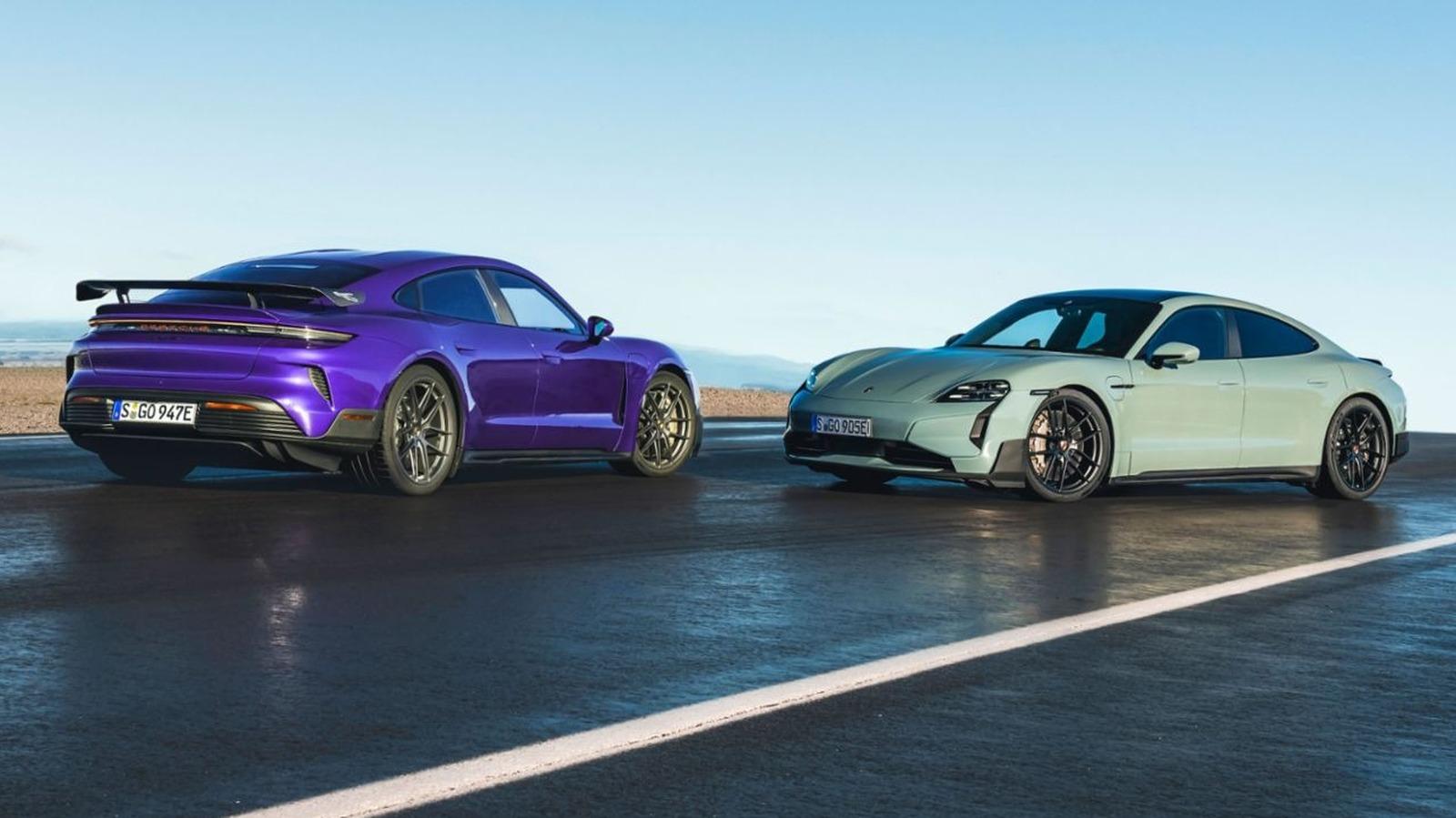
Porsche Panamera-Taycan Merger 2026: The End of Overlap and the Rise of a Unified Flagship
Image: Porsche Panamera-Taycan Merger 2026: The End of Overlap and the Rise of a Unified Flagship – Performance and Specifications
- Advertisement -
The automotive landscape is undergoing a seismic shift, and Porsche is at the epicenter of this evolution. Recent reports suggest that the Zuffenhausen-based manufacturer is contemplating a radical move: merging the Panamera and the Taycan into a single, unified model line. For enthusiasts and investors alike, this isn’t just a cost-cutting measure—it’s a strategic realignment. With the 2026 roadmap coming into focus, Porsche is prioritizing efficiency to remain profitable in an increasingly expensive EV market. The entry price for this new unified flagship is expected to hover around $105,000 (approx. ₹1.2 Crore Ex-Showroom), ensuring it remains firmly in the ultra-luxury segment.
Design Language: Merging Aesthetics for 2026
The current challenge for Porsche is the ‘identity overlap’ between the Panamera and the Taycan. Both are four-door luxury sedans with similar footprints. For the 2026 merger, Porsche is expected to lean into the ‘SSP Sport’ platform. This will allow for a lower center of gravity while maintaining the muscular haunches that Panamera fans love.
- Advertisement -
Aerodynamic Excellence
By combining the two models, Porsche can focus its R&D on a single, ultra-efficient drag coefficient. Expect active aero-flaps from the 911 GT3 RS to make an appearance on the higher trims of the unified sedan to maximize both downforce and range.
The Lighting Revolution
The 2026 model will likely feature the HD Matrix LED tech seen in the new Cayenne, but with a slimmer, more aggressive profile inspired by the Mission X concept. This ‘unification’ means the distinct ‘four-point’ DRLs will become more integrated into the functional air intakes.
Performance and the New SSP Sport Platform
Performance remains Porsche’s ‘North Star.’ By moving to the SSP (Scalable Systems Platform), Porsche can offer both hybrid and full-electric powertrains on the same production line. This ‘penny-pinching’ measure actually benefits the consumer by providing more choice without compromising the chassis’ rigidity.
- Advertisement -
Powertrain Diversity
The merger will likely see the 4.0-liter V8 Twin-Turbo hybridize even further, potentially reaching outputs of 750hp+, while the all-electric variants (the spiritual successors to the Taycan Turbo S) will aim for the 1,000hp mark using dual-motor and tri-motor configurations.
Charging and Battery Tech
2026 updates suggest an 800-volt architecture capable of 350kW charging. This means a 10-80% charge in under 15 minutes, addressing one of the biggest ‘cons’ cited by current Taycan owners on forums like Rennlist.
Interior Tech: The Porsche Driver Experience
Inside, the merger will see a total elimination of physical buttons. Following the 2024 Panamera refresh, the 2026 unified model will feature up to three screens: a 12.6-inch curved instrument cluster, a central infotainment hub, and an optional 10.9-inch passenger display.
- Advertisement -
Software and Connectivity
Porsche is moving away from the basic VW group software to a bespoke ‘Porsche Infotainment’ skin built on Android Automotive OS. This will allow for deeper integration with Apple CarPlay, including climate control and navigation within the Apple ecosystem.
Sustainable Luxury
In response to user feedback regarding ‘eco-friendly’ interiors, Porsche is introducing ‘Race-Tex’ materials combined with recycled ocean plastics, ensuring the interior feels as premium as the leather-bound classics but with a modern, sustainable footprint.
Safety and NCAP Ratings
While the unified 2026 model has yet to be crashed by Euro NCAP, Porsche’s track record with the Taycan and Panamera (both 5-star equivalent performers) suggests top-tier safety. The new model will feature an enhanced InnoDrive system, which uses high-res LIDAR for Level 3 autonomous driving capabilities on highways.
- Advertisement -
Comparison: The 2026 Luxury Sedan Showdown
| Feature | Porsche Unified Flagship (2026) | Mercedes-Benz EQS (2026) | BMW i7 M70 (2026) |
|---|---|---|---|
| Platform | SSP Sport (Multi-Energy) | EVA2+ (EV Only) | CLAR (Multi-Energy) |
| 0-100 km/h | 2.2 – 3.4 seconds | 3.3 – 5.5 seconds | 3.7 – 4.5 seconds |
| Max Range (WLTP) | 680 km | 750 km | 610 km |
| Charging Speed | 350 kW DC | 200 kW DC | 195 kW DC |
| Price Start (Est.) | $105,000 | $104,000 | $110,000 |
Technical Specifications & Pricing
Table 1: Technical Specifications (Projected)
| Specification | Details |
|---|---|
| Wheelbase | 2,950 mm |
| Drive Type | AWD (Dual Motor) / RWD (Single Motor) |
| Suspension | 2-Chamber Air Suspension (PASM) |
| Transmission | 2-Speed Automatic (Rear), 1-Speed (Front) |
| Battery Capacity | 105 kWh (Net) |
Table 2: Variant-wise Pricing (Ex-showroom Est.)
| Variant | Estimated Price (INR) | Estimated Price (USD) |
|---|---|---|
| Base E-Hybrid | ₹1.75 Crore | $105,000 |
| 4S Electric | ₹1.90 Crore | $125,000 |
| Turbo E-Hybrid | ₹2.40 Crore | $170,000 |
| Turbo S Electric (Flagship) | ₹2.85 Crore | $210,000 |
People Also Ask (FAQ)
- Is Porsche discontinuing the Panamera? Not exactly; it is likely being merged with the Taycan to form a single luxury sedan line.
- Will the 2026 Porsche be fully electric? It is expected to offer both High-Performance Hybrid and Full Electric (BEV) options.
- What is the range of the 2026 Porsche EV? Estimates suggest a WLTP range of approximately 650-700 km.
- Why is Porsche merging these models? To reduce R&D costs and eliminate internal competition between two similar four-door models.
- Does the 2026 model have a V8? Yes, top-spec Hybrid variants are expected to retain the 4.0L V8.
- How fast can the 2026 Porsche charge? It will support up to 350kW DC fast charging.
- What is the SSP Sport platform? It is VW Group’s next-gen platform specifically tuned for Porsche’s performance needs.
- Will it have rear-wheel steering? Yes, rear-axle steering will be standard on Turbo and higher trims.
- Is the interior screen-heavy? Yes, it adopts the ‘Porsche Driver Experience’ with up to three digital displays.
- When is the official launch? An official reveal is expected in late 2025, with sales starting in 2026.
Verdict: Should You Buy It?
The Pros: Unmatched brand prestige, best-in-class handling, and the flexibility of choosing between a V8 Hybrid or a cutting-edge EV. The 2026 merger fixes the ‘identity crisis’ Porsche’s sedan lineup currently suffers from.
The Cons: Depreciation on high-end luxury EVs remains steep. The removal of physical buttons may alienate traditionalists who prefer tactile feedback.
Final Word: If you want the most versatile luxury sedan on the planet that doesn’t compromise on Porsche DNA, waiting for the 2026 unified model is a smart move. It promises to be the most refined version of Porsche’s four-door vision yet.
- Advertisement -