The Super Clipping Crisis: Formula 1’s Newest Performance Bottleneck
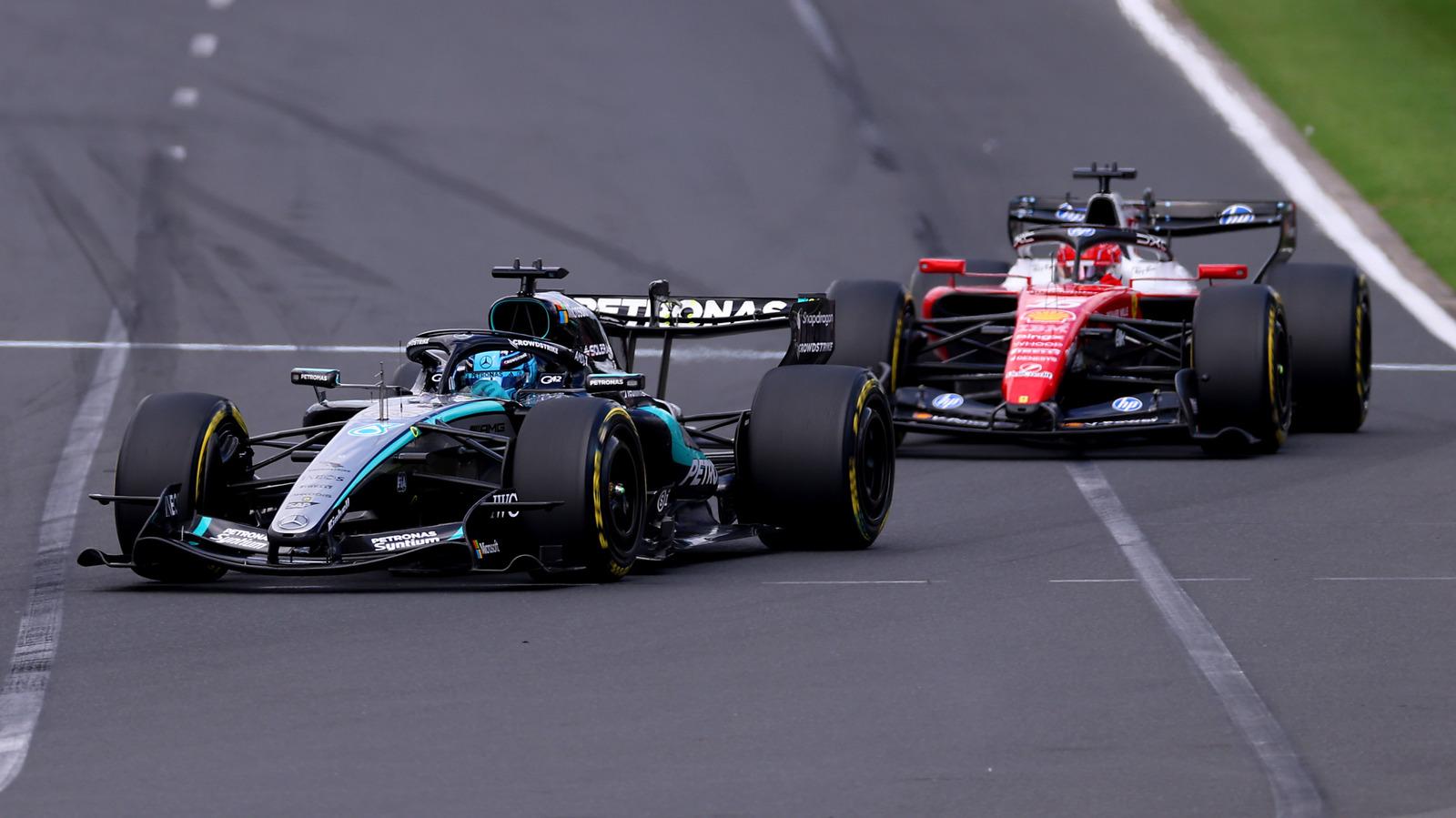
Super Clipping in Formula 1: Why 2026 Regulations Could Change Racing Forever
Image: Super Clipping in Formula 1: Why 2026 Regulations Could Change Racing Forever – Performance and Specifications
- Advertisement -
The 2025 Australian Grand Prix served as a wake-up call for the FIA and power unit manufacturers. As cars screamed down the Albert Park straights, a phenomenon known as ‘Super Clipping’ became the most hated term in the paddock. Essentially, ‘clipping’ occurs when the Energy Recovery System (ERS) runs out of juice before the end of a straight, causing a sudden drop in power. With the 2026 regulations looming, which demand a 50/50 split between internal combustion and electric power, the fear is that ‘Super Clipping’ will become a permanent fixture rather than a rare anomaly. While an F1 car doesn’t have a sticker price, the development costs for these 2026 power units are capped at roughly $135 million per year, making every kilowatt of energy worth millions.
The Science of Super Clipping: Why 160hp Suddenly Disappears
Super clipping is not just a minor dip in performance; it is a mechanical ‘wall.’ In current 2025 specifications, the MGU-K provides 120kW (roughly 160hp). When the battery is depleted or the software determines that the energy is better spent elsewhere, that 160hp shuts off instantly. In Australia, drivers reported feeling like they had ‘hit the brakes’ while still at full throttle. This creates a dangerous speed delta between cars, especially when the car behind still has ERS deployment available.
- Advertisement -
2026 Design and Active Aerodynamics
To combat the energy deficit expected in 2026, the FIA is introducing ‘Active Aerodynamics.’ This ‘Design’ shift involves moveable front and rear wings that reduce drag on straights (Z-mode) and increase downforce in corners (X-mode). This is a direct response to the energy limitations of the 2026 power unit, which will see the MGU-H (Motor Generator Unit – Heat) removed entirely, putting more pressure on the MGU-K to harvest energy under braking.
Interior Tech: The Steering Wheel Battleground
The ‘Interior’ of an F1 car—the cockpit—is where the war against super clipping is fought. Drivers now have more ‘Override’ modes than ever before. For 2026, the steering wheel tech will include a ‘Manual Override Mode,’ allowing drivers to deploy extra electrical power to overtake, similar to a ‘Push-to-Pass’ system. However, using this tech incorrectly leads to immediate super clipping, leaving the car vulnerable for the rest of the lap.
Safety and FIA Standards
While F1 cars do not undergo traditional NCAP safety ratings, they must pass the FIA’s rigorous static and dynamic crash tests. The 2026 chassis regulations focus heavily on battery safety. Because the 2026 power units rely so heavily on electrical storage, the battery casing must withstand immense G-forces to prevent thermal runaway in the event of a high-speed collision on the straights—exactly where super clipping is most likely to cause concertina-effect accidents.
- Advertisement -
Comparison: The 2026 F1 Power Unit vs. Rivals
How does the future F1 power unit stack up against other elite racing disciplines? Below is a comparison of the energy profiles for 2026.
| Feature | Formula 1 (2026 Specs) | WEC Hypercar (LMH) | Formula E (Gen 3 Evo) |
|---|---|---|---|
| ICE Power Output | ~400 kW (535 hp) | ~500 kW (670 hp) | N/A (Full Electric) |
| Electric Power Output | 350 kW (470 hp) | 200 kW (268 hp) | 350 kW (470 hp) |
| Total Hybrid Ratio | ~50% Electric | ~30% Electric | 100% Electric |
| Fuel Type | 100% Sustainable Fuel | Renewable Bio-fuel | N/A |
| Energy Harvesting | MGU-K Only | Front/Rear Axle | Dual Motor (Front/Rear) |
Technical Specifications and Pricing
While you cannot buy a 2026 Power Unit at a dealership, the cost of supply for customer teams is strictly regulated. Below are the technical targets for the upcoming era.
| Component | Specification Target | Estimated Cost (Unit) |
|---|---|---|
| Engine Type | 1.6L V6 Turbocharged | $15,000,000 (Lease) |
| MGU-K Output | 350 kW | Included in Lease |
| Battery Capacity | 4 MJ (per lap) | Included in Lease |
| Top Speed (Est) | 340 – 355 km/h | N/A |
| Fuel Flow Limit | 3,000 MJ/h (Energy based) | Market Rate |
Variant Comparison: The 2026 PU Manufacturers
For the 2026 season, the grid will see a variety of manufacturers, each with a different approach to solving the super clipping dilemma.
- Advertisement -
| Manufacturer | Key Innovation | Team Pairing |
|---|---|---|
| Ferrari | High-discharge Battery Tech | Scuderia Ferrari |
| Mercedes-AMG | Thermal Efficiency Optimization | Mercedes / McLaren |
| Red Bull-Ford | Integrated ERS Packaging | RBR / VCARB |
| Audi | Extreme Harvesting Efficiency | Sauber (Audi Works) |
| Honda (HRC) | Lightweight Energy Cells | Aston Martin |
People Also Ask (FAQ)
1. What is super clipping in F1?
Super clipping is a term used when a car’s Energy Recovery System (ERS) depletes entirely before the end of a long straight, resulting in a sudden 160hp loss of power.
2. Why was super clipping so bad in Australia?
The Albert Park circuit has four DRS zones. This allows cars to reach higher top speeds, which drains the battery faster than it can be recharged, leading to premature energy depletion.
3. How will 2026 rules affect super clipping?
The 2026 rules increase the reliance on electric power to 350kW. Without the MGU-H to assist, engineers fear that cars will ‘clip’ much earlier on straights unless aero drag is significantly reduced.
- Advertisement -
4. Can drivers stop clipping?
Drivers can manage clipping by ‘lifting and coasting’ before corners or by changing ERS deployment maps on the steering wheel, though this costs lap time.
5. What is the ‘Manual Override’ in 2026?
It is a new feature for 2026 that allows a trailing driver to use more electrical energy at high speeds to facilitate overtaking, similar to a tactical boost.
6. Is the MGU-H being removed in 2026?
Yes, the MGU-H is being removed to simplify the engines, reduce costs, and encourage new manufacturers like Audi to enter the sport.
- Advertisement -
7. How much does an F1 engine cost in 2026?
Customer teams are expected to pay around $15 million to $20 million per season for a power unit supply lease.
8. Will 2026 F1 cars be slower?
Simulations suggest they may be slower in corners due to increased weight, but active aero will attempt to keep straight-line speeds comparable to current cars.
9. What fuel will 2026 F1 cars use?
They will use 100% carbon-neutral sustainable fuels, a major shift from current E10 blends.
- Advertisement -
10. Why is the 50/50 power split controversial?
Critics argue that generating 50% of the power electrically is difficult over a full lap, potentially leading to ‘tractor-like’ performance at the end of long straights if the battery runs dry.
Verdict: Is the 2026 Regulation Shift Good for Racing?
The 2026 shift is a bold move toward sustainability, but it presents a massive engineering hurdle. ‘Super clipping’ is the primary enemy of exciting racing. If the FIA gets the active aero and energy deployment rules right, we will see more tactical racing. If they get it wrong, cars will be sitting ducks on every long straight.
Pros
- Increased sustainability with 100% green fuel.
- More electrical power (350kW) makes ERS management more critical.
- Active aero introduces a new layer of strategy.
- Attracts new manufacturers like Audi and Ford.
Cons
- Significant risk of ‘Super Clipping’ ruining wheel-to-wheel battles.
- Higher car weight due to larger batteries.
- Complexity of ‘Manual Override’ may confuse casual fans.
- Removal of MGU-H may change the iconic F1 engine sound.
- Advertisement -