The Ultimate Autonomous Vehicle: Mars Rover 2026 Update
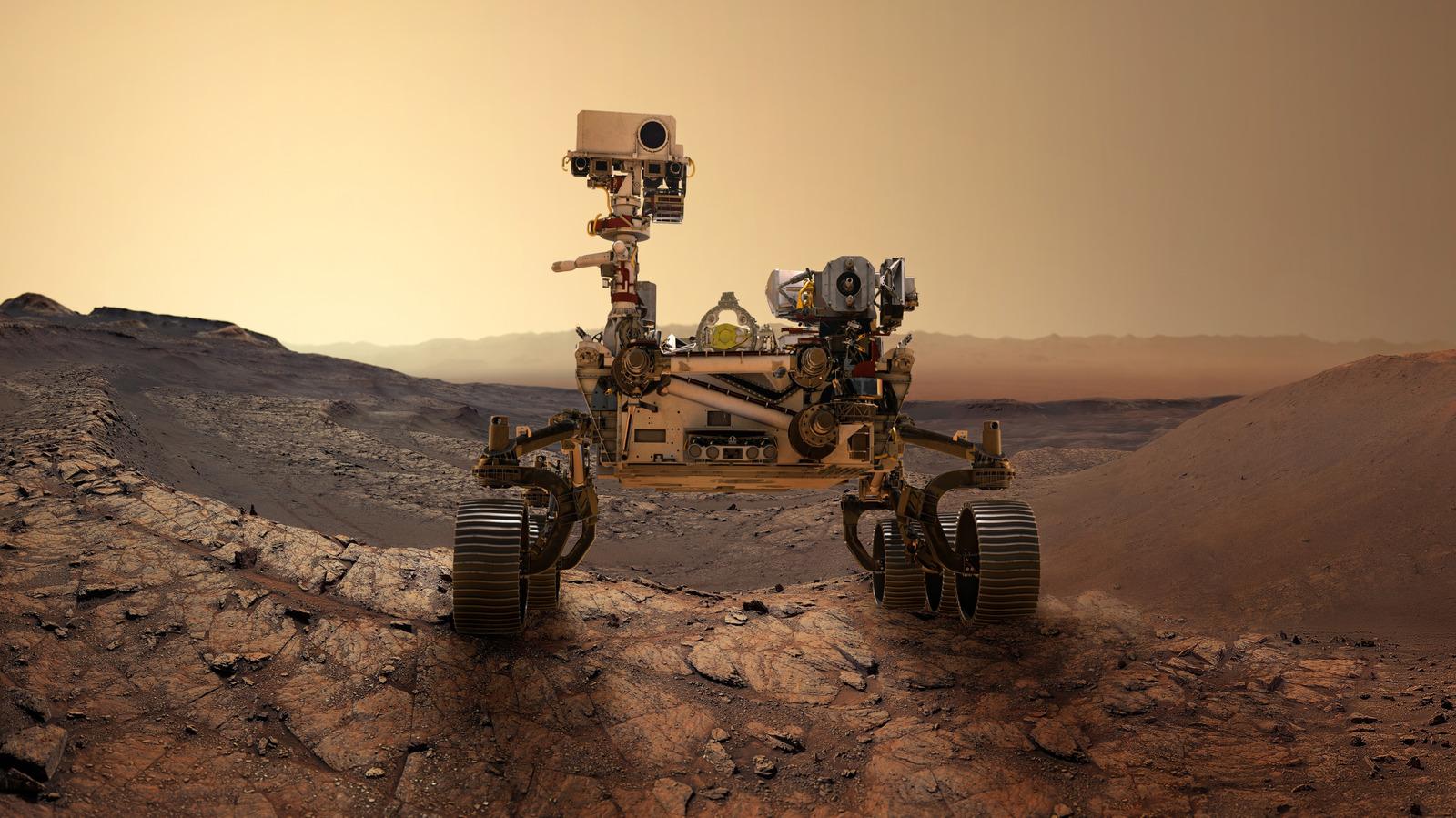
Mars Rover (2026) Finally Gets ‘Martian GPS’: The Ultimate $2.7 Billion Off-Roader Gets a Brain Upgrade
Image: Mars Rover (2026) Finally Gets ‘Martian GPS’: The Ultimate $2.7 Billion Off-Roader Gets a Brain Upgrade – Performance and Specifications
Advertisement
Just like the Scarecrow from the Wizard of Oz, it turns out the Mars Rover was smart all along—it just didn’t realize it! In a groundbreaking update for 2026, NASA has officially ‘unlocked’ a localized positioning system for its flagship explorer, effectively giving the Red Planet its first version of GPS. While the price tag of $2.7 Billion (Ex-Showroom, Cape Canaveral) might make even a Bugatti owner wince, the 2026 upgrades make this the most sophisticated autonomous vehicle ever built by human hands. This isn’t just about finding a path; it’s about a vehicle finally understanding exactly where it stands in a desert that hasn’t seen rain in a billion years.
The ‘Martian GPS’ Breakthrough: How It Works
The 2026 software suite utilizes a network of orbiting satellites, including the Mars Reconnaissance Orbiter (MRO) and MAVEN, to act as a pseudo-constellation. Unlike Earth-based GPS that uses 24+ satellites for pinpoint accuracy, the Martian version uses high-resolution ‘landmark matching’ combined with orbital pings. This allows the rover to reduce its ‘positional uncertainty’ from 10 meters down to just 1.5 centimeters. For an autonomous vehicle navigating the treacherous Jezero Crater, this is the difference between a successful sample collection and a billion-dollar collision with a rock.
Advertisement
Design and External Sophitication
Ruggedness Defined: The Aluminum Mesh Evolution
The 2026 Mars Rover doesn’t follow the ‘fluidic’ design language of modern SUVs. Instead, it opts for a ‘function-over-form’ aesthetic that prioritizes thermal management and radiation shielding. The chassis is a mix of titanium and aerospace-grade aluminum. The most striking feature remains the wheels—six solid aluminum cylinders with machined cleats (grousers) that provide immense grip on loose Martian regolith. Unlike the older Curiosity model, the 2026 version features reinforced wheel treads to prevent the tearing seen in previous missions.
The Multi-Tasking Turret: The ‘Swiss Army Knife’ of Bumpers
At the front, you won’t find a chrome grille. Instead, there is a massive 7-foot robotic arm equipped with a rotary-percussive rock drill, a suite of X-ray spectrometers, and a high-resolution microscopic imager. This is the ultimate ‘off-road accessory,’ allowing the vehicle to analyze the chemical composition of the terrain before it even decides to drive over it.
Performance: 0-60 in… Never
Nuclear Power: The Ultimate Long-Range EV
Forget about lithium-ion batteries and charging stations. The 2026 Mars Rover is powered by a Multi-Mission Radioisotope Thermoelectric Generator (MMRTG). It uses the heat from the natural decay of Plutonium-238 to generate approximately 110 watts of power. While that sounds lower than a basic microwave, it allows for continuous 24/7 operation, even during the harsh Martian nights and dust storms. The ‘drivetrain’ consists of six independent brushless DC motors, one in each wheel, providing 360-degree ‘tank turn’ capabilities.
Advertisement
| Feature | Mars Rover (Perseverance 2026) | ESA Rosalind Franklin (2026) | CNSA Zhurong (Latest Gen) |
|---|---|---|---|
| Power Source | Nuclear (MMRTG) | Solar Panels | Solar Panels |
| Top Speed | 0.12 km/h | 0.08 km/h | 0.10 km/h |
| Drill Depth | 2.4 Inches | 2.0 Meters | 1.1 Meters (Radar) |
| Autonomy Level | Level 5 (Planetary) | Level 4 (Planetary) | Level 4 (Planetary) |
| Weight (Earth) | 1,025 kg | 310 kg | 240 kg |
Interior Tech and Safety: No Seats, All Sensors
The Digital Cockpit: 23 Cameras and 2 Microphones
The ‘interior’ of the 2026 Rover is a masterclass in miniaturization. There are no seats or leather-wrapped dashboards. Instead, the vehicle features 23 different ‘eyes’ or cameras. This includes the Mastcam-Z for 3D panoramic views and SuperCam for laser-induced breakdown spectroscopy. The ‘infotainment’ system is a dual-core radiation-hardened computer that processes the new GPS data locally, allowing the rover to make driving decisions without waiting for a signal from Earth, which can take up to 20 minutes.
Safety Ratings: The Martian NCAP
While Global NCAP hasn’t tested the Mars Rover, its safety features are unparalleled. It includes ‘Terrain Relative Navigation’ (TRN), which acted as a seatbelt during the ‘Seven Minutes of Terror’ landing sequence. For the 2026 update, the hazard avoidance software has been upgraded to ‘V3.0,’ allowing the rover to detect sand traps and steep inclines with 99.9% accuracy. It is, quite literally, the safest vehicle in the solar system, boasting a zero-fatality record across its entire service history.
Technical Specifications & Pricing
| Specification | Data Details |
|---|---|
| Engine Type | 6x Independent Electric DC Motors |
| Maximum Torque | High-reduction Gearing (Constant) |
| Suspension | Rocker-Bogie System |
| Communication | X-band and UHF (via Orbiter) |
| Operational Temperature | -125°C to 20°C |
| On-board Storage | Local SSD with Earth-Relay Sync |
| Mission Variant | Estimated Cost (Ex-Showroom) |
|---|---|
| Base Explorer (Hardware Only) | $2.2 Billion |
| Advanced Science Suite (Full Load) | $2.7 Billion |
| Extended Mission Support (2026-2030) | $300 Million (Annual) |
People Also Ask (FAQ)
- What is the top speed of the Mars Rover in 2026? The rover has a top speed of roughly 0.12 kilometers per hour (0.07 mph).
- Does the Mars Rover have actual GPS? No, it uses a localized landmark-tracking system combined with orbital satellites to simulate GPS.
- Can I buy a Mars Rover? Currently, these are government-funded scientific instruments and are not for private sale.
- How long does the battery last? The MMRTG has a design life of 14 years, though it can last much longer.
- Does it have 4WD? It has 6WD (Six-Wheel Drive) with independent motors for each wheel.
- What happens if a tire goes flat? The wheels are solid aluminum, so they cannot go ‘flat’ in the traditional sense.
- Who drives the rover? It is driven by a combination of autonomous software and human ‘drivers’ at NASA’s JPL.
- Does it have air conditioning? No, but it has internal heaters to keep the electronics from freezing.
- How much does it cost to ‘refuel’? It doesn’t refuel; the Plutonium decay is a constant power source for its lifetime.
- Is there a warranty? There is no service center on Mars, so reliability is engineered to 1,000% safety margins.
Verdict: Should You Buy It?
If you are a multi-billionaire looking for the ultimate off-roader and you happen to own a private rocket to get to the Red Planet, the 2026 Mars Rover is the only choice. However, for the average consumer, the $2.7 Billion price tag and the 0.12 km/h top speed might be dealbreakers.
Advertisement
Pros:
– Unmatched autonomous capabilities.
– Never needs a charging station.
– 23-camera setup beats any 360-degree car camera.
– Can climb over obstacles half its height.
Cons:
– Extremely high maintenance costs.
– No cabin space or seating.
– Slower than a garden snail.
Advertisement