The Electric Evolution: 2026 Range Rover Velar EV Makes its Debut on Road
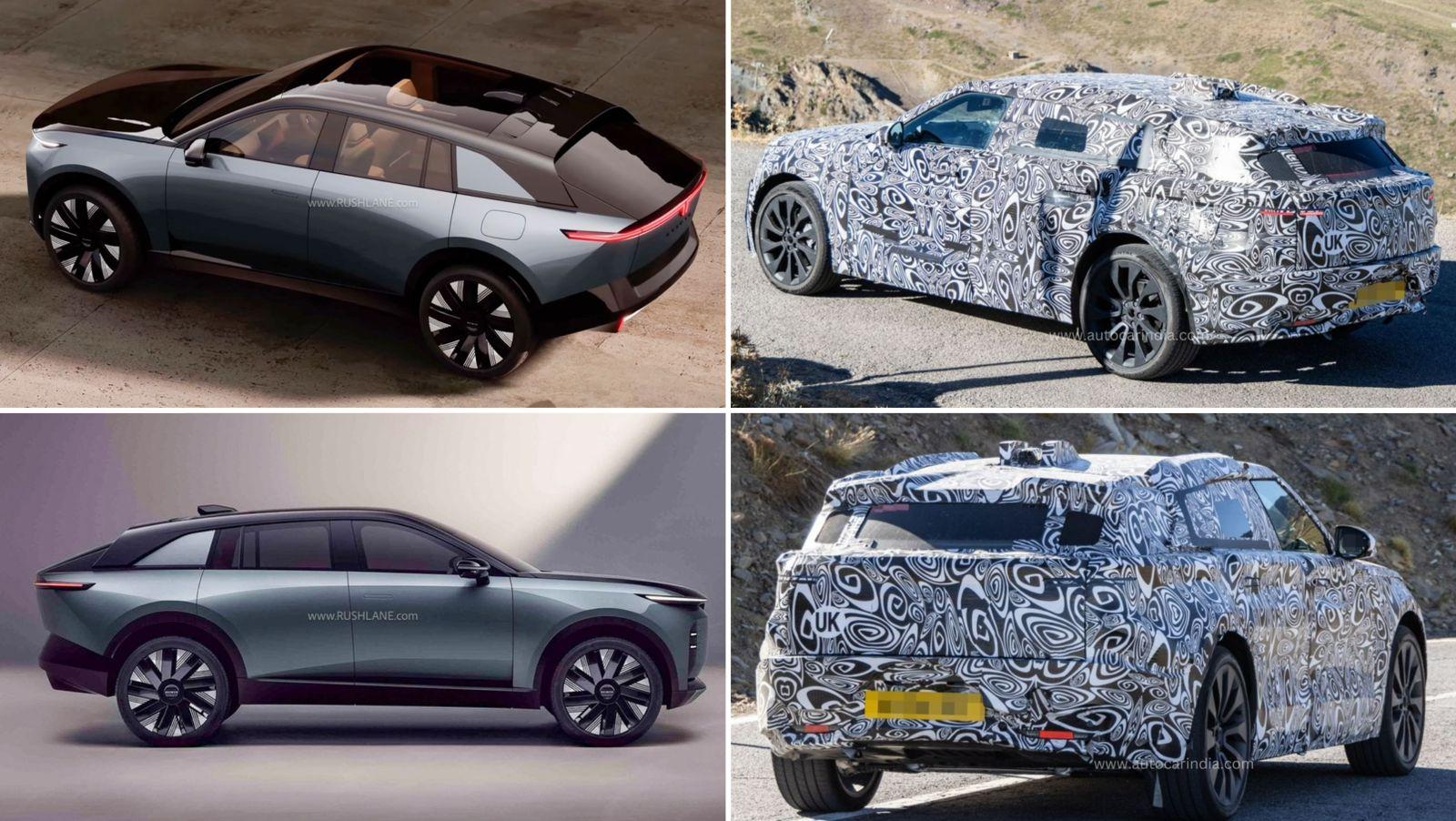
2026 Range Rover Velar EV Spied: Tata Avinya Inspiration & 800V EMA Platform Explained
Image: 2026 Range Rover Velar EV Spied: Tata Avinya Inspiration & 800V EMA Platform Explained – Performance and Specifications
Advertisement
The silence from Jaguar Land Rover (JLR) regarding their electric future has finally been broken by the high-voltage hum of the 2026 Range Rover Velar EV. Recently spotted undergoing cold-weather testing, the next-generation Velar is not just a powertrain swap; it is a total reimagining of the luxury SUV. With an estimated starting price of ₹95 Lakhs (Ex-showroom), the Velar EV is set to challenge the status quo of the premium electric segment. The most striking revelation? Its silhouette bears a haunting resemblance to the Tata Avinya concept, signaling a deep-rooted technical synergy between Tata Motors and JLR.
The Tata Avinya Connection: Shared DNA and Design
The spy shots captured in Europe suggest a departure from the traditional boxy SUV stance. Instead, the 2026 Velar EV adopts a low-slung, aerodynamic profile that enthusiasts are calling ‘Avinya-esque.’ This isn’t a coincidence. Both the Range Rover Velar EV and the production version of the Tata Avinya will sit atop the JLR-sourced EMA (Electrified Modular Architecture) platform.
Advertisement
Aerodynamics and Exterior Aesthetics
The test mules reveal a heavily raked windshield and a tapering roofline designed to cut through the air with minimal resistance. This focus on drag coefficients is essential for maximizing the range of the 800V battery system. Key design features include flush-fitting door handles, ultra-slim LED matrix headlamps, and a closed-off grille that mirrors the minimalist philosophy seen in the Avinya design language.
The EMA Platform: The 800V Game Changer
Underneath the skin, the EMA platform represents a massive leap forward. Unlike the current MLA platform used for the Range Rover Electric, the EMA is ‘electric-first.’ This allows for a completely flat floor, a longer wheelbase, and significantly more cabin space despite a similar footprint to the outgoing internal combustion engine (ICE) model.
Performance, Range, and Charging Capabilities
Performance is where the Velar EV intends to outshine its rivals like the Porsche Macan EV. The 800V architecture enables ultra-fast charging, capable of adding 150-200 miles of range in just 15 minutes at a 350kW DC fast charger.
Advertisement
| Feature | Specification (Estimated) |
|---|---|
| Battery Pack | 85 kWh – 105 kWh Li-ion |
| Driving Range (WLTP) | Up to 640 km (400 miles) |
| Drivetrain | Dual Motor AWD (Standard) |
| 0-100 km/h | Under 4.2 Seconds |
| Max Charging Speed | 350 kW DC Fast Charging |
Off-Road DNA in an Electric Age
Despite being an EV, JLR engineers insist the Velar will maintain its Range Rover pedigree. Expect sophisticated air suspension, Terrain Response 3 software specifically tuned for electric torque delivery, and a water-wading depth that remains class-leading.
Interior Luxury and Next-Gen Tech
Inside, the Velar EV will likely debut the ‘Pivi Pro 2’ infotainment system. We expect a sustainable interior approach, moving away from traditional leathers toward high-end recycled textiles and Kvadrat wool blends, much like the concepts seen in the Tata Avinya’s interior roadmap.
Safety and Autonomous Features
With the EMA platform, JLR is targeting a 5-star Euro NCAP rating. The vehicle will come equipped with a redundant Lidar-based ADAS system, offering Level 3 autonomous driving capabilities on highways. Safety features will include 360-degree ‘ClearSight’ vision and a central airbag system for front occupants.
Advertisement
Comparison: 2026 Range Rover Velar EV vs Rivals
The premium electric SUV space is becoming crowded. Here is how the Velar EV stacks up against its primary German and Italian competition.
| Model | Range (WLTP) | Platform Architecture | Estimated Price (INR) |
|---|---|---|---|
| Range Rover Velar EV | 640 km | 800V EMA | ₹95 Lakh – ₹1.2 Cr |
| Porsche Macan EV | 613 km | 800V PPE | ₹1.65 Crore |
| Audi Q6 e-tron | 625 km | 800V PPE | ₹85 Lakh – ₹1.0 Cr |
Variant-Wise Pricing (Estimated Ex-Showroom)
| Variant | Expected Price (Ex-Showroom) | Key Feature |
|---|---|---|
| Velar EV S | ₹95,00,000 | 85kWh Battery, 19-inch Wheels |
| Velar EV Dynamic SE | ₹1,05,00,000 | Sportier Bumpers, Meridian Sound |
| Velar EV Dynamic HSE | ₹1,15,00,000 | Panoramic Roof, 21-inch Alloy Wheels |
| Velar EV Autobiography | ₹1,30,00,000 | 22-inch Wheels, Massaging Seats |
People Also Ask (FAQ)
- When is the Range Rover Velar EV launch date? The global debut is expected in late 2025, with an India launch likely in mid-2026.
- What is the range of the 2026 Velar EV? It is expected to offer between 500 km to 640 km depending on the battery size.
- Is the Velar EV based on the Tata Avinya? No, but both use JLR’s EMA platform and share design philosophies regarding aerodynamics.
- What is the 800V EMA platform? It is JLR’s Electrified Modular Architecture that supports ultra-fast charging and advanced software.
- Will there be a petrol version of the new Velar? No, the next-generation Velar is expected to be a pure EV model globally.
- How fast can the Velar EV charge? Using a 350kW DC charger, it can go from 10% to 80% in approximately 18-22 minutes.
- What is the expected price in India? Prices are expected to range from ₹95 Lakhs to ₹1.30 Crore.
- Does it have 4WD? Yes, the EMA platform typically supports a dual-motor All-Wheel Drive configuration.
- Where will the Velar EV be manufactured? It will be produced at JLR’s Halewood plant in the UK.
- Will it have air suspension? Yes, high-end variants will feature adaptive air suspension as standard.
Verdict: Should You Wait for the 2026 Velar EV?
The 2026 Range Rover Velar EV is shaping up to be the most technologically advanced vehicle JLR has ever produced. By leveraging the EMA platform shared with Tata Motors, JLR is ensuring that the Velar stays competitive in charging speeds and range.
Pros:
Advertisement
- Stunning, futuristic design inspired by Avinya.
- Revolutionary 800V charging speeds.
- Spacious interior due to the dedicated EV platform.
Cons:
- Lack of traditional ICE engine options for enthusiasts.
- Higher starting price point than the current generation.
If you are in the market for a luxury electric SUV that prioritizes design and tech over raw off-road aggression, the Velar EV is definitely worth the wait.
Advertisement