The £100,000 Gamble That Defined Formula 1
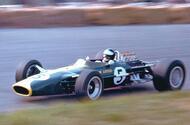
Ford F1 Return 2026: Can the Red Bull Partnership Reclaim the Legendary Cosworth DFV Glory?
Image: Ford F1 Return 2026: Can the Red Bull Partnership Reclaim the Legendary Cosworth DFV Glory? – Performance and Specifications
Advertisement
In the world of Formula 1, where billion-dollar budgets are now the norm, the story of the Ford-Cosworth DFV (Double Four Valve) stands as the greatest ‘value for money’ investment in sporting history. For just £100,000, Ford of Britain’s PR chief Walter Hayes secured a legacy that includes 155 race wins and 12 drivers’ titles. As Ford prepares to rejoin the grid in 2026 in partnership with Red Bull Powertrains, the automotive world is asking: Can lightning strike twice?
The Hook: Why the 2026 Return Matters Today
Ford isn’t just returning as a sponsor; they are entering a technical partnership to develop the next generation of hybrid power units. While the original DFV was a mechanical masterpiece of simplicity, the 2026 unit will be a complex beast split 50/50 between internal combustion and electric power. With Audi joining and Honda partnering with Aston Martin, Ford’s return to the pinnacle of motorsport is the most anticipated comeback of the decade.
Advertisement
Design and Engineering: From the DFV to the 2026 Hybrid
The original DFV, designed by Keith Duckworth, was revolutionary because it was designed as a stressed member of the chassis. This meant the engine itself held the car together, a design philosophy still used today. The 2026 unit, however, focuses on sustainability and massive electrical recovery.
Technical Prowess: The ‘Double Four Valve’ Architecture
The DFV was a 3.0-litre V8 that produced roughly 400bhp at its debut in 1967. By the time it retired, it was pushing nearly 500bhp. In contrast, the 2026 Ford-Red Bull unit will utilize a 1.6-litre V6 Turbo paired with an MGU-K (Motor Generator Unit-Kinetic) that provides 350kW of electrical energy—nearly tripling the electrical output of current F1 cars.
Safety and Regulations: Meeting 2026 Standards
Modern F1 isn’t just about speed; it’s about surviving the speed. The 2026 cars will feature revised ‘Active Aerodynamics’ to compensate for the high-drag nature of the new energy recovery systems. Ford’s role in the Red Bull partnership focuses heavily on battery cell technology and power electronics, ensuring the system remains stable under the extreme G-forces and heat of Grand Prix racing.
Advertisement
The Comparison: Ford vs. The Titans of 2026
To understand where Ford stands, we must look at their primary rivals for the 2026 season: Ferrari and Mercedes. These manufacturers have continuous experience with hybrid units, while Ford is re-entering after a long hiatus since the Jaguar F1 days.
| Feature | Ford-Red Bull (2026) | Ferrari (2026) | Mercedes-AMG (2026) |
|---|---|---|---|
| Engine Type | 1.6L V6 Turbo Hybrid | 1.6L V6 Turbo Hybrid | 1.6L V6 Turbo Hybrid |
| Fuel Type | 100% Sustainable Synthetic | 100% Sustainable Synthetic | 100% Sustainable Synthetic |
| Electrical Split | ~50% (350kW) | ~50% (350kW) | ~50% (350kW) |
| Chassis Partner | Oracle Red Bull Racing | Scuderia Ferrari | Mercedes-AMG PETRONAS |
| Historical Pedigree | 155 Wins (DFV Era) | 240+ Wins | 125+ Wins (Modern Era) |
Table 1: Technical Specifications of the DFV vs. 2026 PU
| Specification | Cosworth DFV (1967) | Ford-RBPT Unit (2026 Est.) |
|---|---|---|
| Configuration | 90-degree V8 | V6 Turbo Hybrid |
| Displacement | 2,993cc | 1,600cc |
| Valvetrain | 4 Valves per Cylinder | 4 Valves per Cylinder |
| Weight | 168 kg | ~150 kg (ICE only) |
| Max RPM | 9,000 RPM | 15,000 RPM (Limited) |
| Cost to Build | £100,000 (Development) | $140 Million (Cap limit) |
People Also Ask (FAQ)
1. When did Ford last win an F1 race?
Ford’s last win as an engine supplier was with Giancarlo Fisichella for Jordan at the 2003 Brazilian Grand Prix.
2. Why did Ford choose Red Bull for 2026?
Red Bull Powertrains offers Ford a ‘plug-and-play’ entry where Ford can contribute battery technology without building a factory from scratch.
Advertisement
3. What made the Cosworth DFV so successful?
Its reliability, light weight, and the fact that Ford sold it to any team meant it populated almost the entire grid, maximizing its win potential.
4. Will the 2026 F1 cars be slower?
While they may have lower top speeds on straights due to drag, the instant torque from the 350kW MGU-K will make acceleration significantly faster.
5. What is the ‘Double Four Valve’ meaning?
It refers to the engine having two banks of cylinders, each with four valves per cylinder.
Advertisement
6. How much is Ford investing in the 2026 project?
While exact figures are private, industry experts suggest Ford’s technical and marketing contribution exceeds $30 million annually.
7. Is Ford building the whole engine?
No, it is a co-development. Red Bull handles the internal combustion (ICE), while Ford focuses on the battery and electric motor systems.
8. Who were the famous drivers of the DFV?
Jim Clark, Jackie Stewart, Graham Hill, Emerson Fittipaldi, and James Hunt all won titles with the DFV.
Advertisement
9. Will 2026 F1 cars use E5 or E10 fuel?
Neither. They will move to 100% carbon-neutral, fully sustainable synthetic fuels.
10. Can I buy a car with a DFV engine?
Not for the road. The DFV was a pure racing engine, though some track-only ‘continuation’ cars use them today.
Verdict: Should You Be Excited for Ford’s Return?
Ford’s return isn’t just a marketing exercise; it is a bridge between their greatest historical achievement and their future as an EV leader. The legacy of the Cosworth DFV proves that Ford knows how to win when they empower the right engineers. While the 2026 regulations represent a massive technical hurdle, the pairing with a championship-winning team like Red Bull suggests that Ford is once again hitting the F1 jackpot.
Advertisement
Pros
- Incredible historical pedigree and brand trust.
- Partnership with the current dominant force (Red Bull).
- Focus on cutting-edge battery tech relevant to road EVs.
Cons
- New technical regulations carry high failure risks.
- Immense competition from established giants like Ferrari and Mercedes.
- No recent experience in the V6 Turbo Hybrid era.