The Future of the Night: Denmark’s Red Streetlight ‘Model’ in 2026
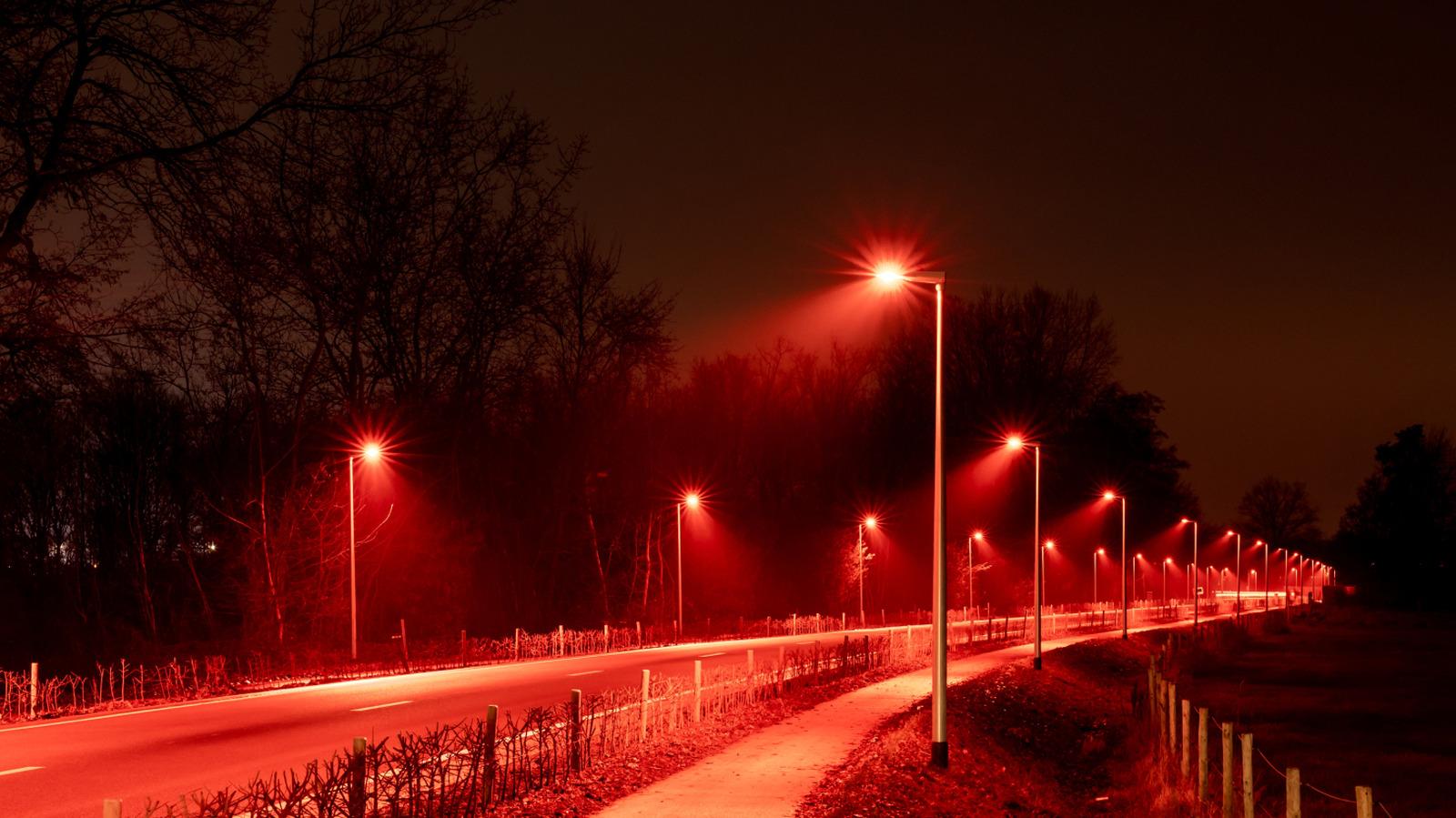
Denmark’s Red Streetlight Revolution: 2026 Tech Review & Impact Analysis
Image: Denmark’s Red Streetlight Revolution: 2026 Tech Review & Impact Analysis – Performance and Specifications
Advertisement
Driving through the municipality of Gladsaxe, just northwest of Copenhagen, feels less like a standard commute and more like a scene from a sci-fi thriller. The familiar, harsh white glow of traditional LEDs has been replaced by an eerie, atmospheric crimson hue. This isn’t for aesthetics; it is the 2026 rollout of Denmark’s Red LED Infrastructure System. For city planners looking to modernize, the ‘entry price’ for this high-tech implementation is approximately $650 to $900 per luminaire unit, depending on the integrated smart sensors. While the price point is higher than standard white LEDs, the ‘performance’ metrics for biodiversity and energy conservation are off the charts.
Design and Engineering: The 623nm Narrowband Breakthrough
The core of Denmark’s red streetlights lies in their spectral design. Unlike traditional bulbs that emit a broad spectrum of light (including the disruptive blue and green wavelengths), these units utilize narrowband LEDs peaking at precisely 623 nanometers. This specific wavelength was selected after years of testing by the Danish Road Directorate to ensure it sits outside the peak sensitivity range of nocturnal mammals.
Advertisement
1. Protecting the Pond Bat (Myotis dasycneme)
In 2026, urban planners are no longer just looking at human safety; they are looking at ‘Ecological Safety.’ The primary ‘consumer’ of this design is the Pond Bat. Standard white lights act as a barrier to these creatures, disrupting their echolocation and feeding patterns. The red light spectrum, however, is perceived as ‘darkness’ by most bat species, allowing them to hunt and navigate naturally while providing humans with enough contrast to avoid obstacles.
2. Optical Uniformity and Glare Reduction
The 2026 ‘facelift’ for these lights includes advanced microlens arrays. These lenses ensure that light is directed precisely onto the road surface and pedestrian paths, with near-zero ‘light spill’ into the sky or adjacent windows. This directionality is a key performance metric for the Lighting Metropolis – Green Mobility program.
Performance and Smart Infrastructure
This isn’t just a bulb swap; it’s a full infrastructure upgrade. The units installed in Gladsaxe are essentially ‘Smart Nodes’ on a city-wide network. Performance-wise, they offer 70% higher energy efficiency compared to the high-pressure sodium lamps they replaced.
Advertisement
3. 5G and IoT Integration
Each streetlight pole acts as a hub for 2026-standard connectivity. They are equipped with 5G nodes, Wi-Fi hotspots, and microphones capable of detecting ‘anomalous noises’ like car crashes or glass breaking, which instantly alerts emergency services. This makes them a ‘safety feature’ that goes far beyond simple illumination.
4. Adaptive Dimming and Motion Sensors
To maximize energy savings, the lights operate on a ‘performance on demand’ basis. Using high-precision motion sensors, the red glow remains at a dimmed 20% intensity until a pedestrian or vehicle is detected, at which point it ramps up to 100% brightness in milliseconds. This ‘dynamic output’ is a major selling point for 2026 municipal budgets.
5. Maintenance and Lifespan
The 2026 LED modules are rated for 100,000 hours of operation. In a municipal context, this equates to roughly 20-25 years of service with minimal maintenance, significantly reducing the ‘total cost of ownership’ compared to previous lighting generations.
Advertisement
Safety and Visibility: The Wildlife-NCAP Factor
While we traditionally look at Euro NCAP for vehicle safety, Denmark is pioneering what experts call ‘Ecological NCAP.’ These streetlights have been rated for their impact on local flora and fauna, achieving a ‘5-star’ rating for bat-habitat preservation. For human safety, initial concerns about ‘red light fatigue’ have been debunked; 2026 survey data shows that drivers actually experience less eye strain under red light because it preserves rhodopsin in the eyes, maintaining better ‘night vision’ in unlit peripheral areas.
The Comparison: Red LED vs. The Competition
| Feature | Denmark Red LED (2026) | Standard White LED | High-Pressure Sodium (Old) |
|---|---|---|---|
| Wavelength | 623nm (Narrowband) | Full Spectrum (Blue-rich) | Amber (Broadband) |
| Wildlife Impact | Minimal (Bat-Friendly) | Severe (Disrupts Ecosystem) | Moderate |
| Energy Efficiency | High (85% Savings) | High (75% Savings) | Low |
| Human Visibility | High Contrast / Low Color | Excellent Color Clarity | Poor Color Clarity |
| Smart Integration | 5G, IoT, Motion Sensors | Limited / Standard | None |
Table 1: 2026 Full Technical Specifications
| Specification | Details |
|---|---|
| Peak Wavelength | 620 – 650 nm |
| Luminous Flux | 4,500 – 8,000 Lumens (Adjustable) |
| Power Consumption | 18W – 45W per unit |
| Operating Temp | -40°C to +50°C |
| Ingress Protection | IP66 (Dust & Water Tight) |
| CRI (Color Rendering) | Low (Optimized for Contrast) |
Table 2: Estimated Implementation Costs (Ex-Factory 2026)
| Variant | Features Included | Price per Unit (Est.) |
|---|---|---|
| Eco-Basic | Red LED, IP66, Standard Dimming | $450 |
| Smart-City Pro | Red LED, Motion Sensors, IoT Link | $650 |
| Ultra-Future Hub | Red LED, 5G Node, AI Microphones | $950 |
People Also Ask: 10 Burning Questions Answered
- Why are Denmark’s streetlights red? They are designed to protect local bat species that are highly sensitive to white light.
- Do red streetlights help bats? Yes, studies show bats are as active under red light as they are in total darkness.
- Are red streetlights safe for drivers? Yes, they provide high contrast and preserve the driver’s natural night vision.
- How much do red LED streetlights cost in 2026? Units range from $450 to $950 depending on smart features.
- Where in Denmark can I see them? The Gladsaxe municipality, specifically along Frederiksborgvej.
- Can humans see color under red light? Color rendering is poor; most objects will appear in shades of red and black.
- Do red streetlights save more energy than white LEDs? Yes, when paired with 2026 motion-sensing tech, they can save up to 10% more than static white LEDs.
- What is the wavelength used? Approximately 623nm.
- Are other cities adopting this? Yes, parts of the Netherlands and Sweden are trialing similar systems in 2026.
- Do they affect sleep? Red light is better for human circadian rhythms as it doesn’t suppress melatonin like blue-rich white light does.
Verdict: Should Your City Switch to Red?
Denmark’s red streetlight initiative is a masterclass in ‘Compromise Infrastructure.’ It balances the hard requirements of human safety with the soft requirements of ecological preservation.
Pros:
– Unbeatable biodiversity protection (Bats, Insects).
– Superior night vision preservation for humans.
– Massive energy savings via 2026 smart sensors.
– Zero light pollution for stargazers.
Advertisement
Cons:
– Higher upfront installation cost compared to ‘dumb’ white LEDs.
– Poor color rendering (hard to identify vehicle colors).
– Psychological adjustment period for residents.
Final Thought: If you live near a sensitive ecosystem or want a city that leads in 2026 sustainability metrics, the ‘Red Model’ is the gold standard.
Advertisement