The Forgotten Power: Why External Combustion Engines Didn’t Rule the Roads
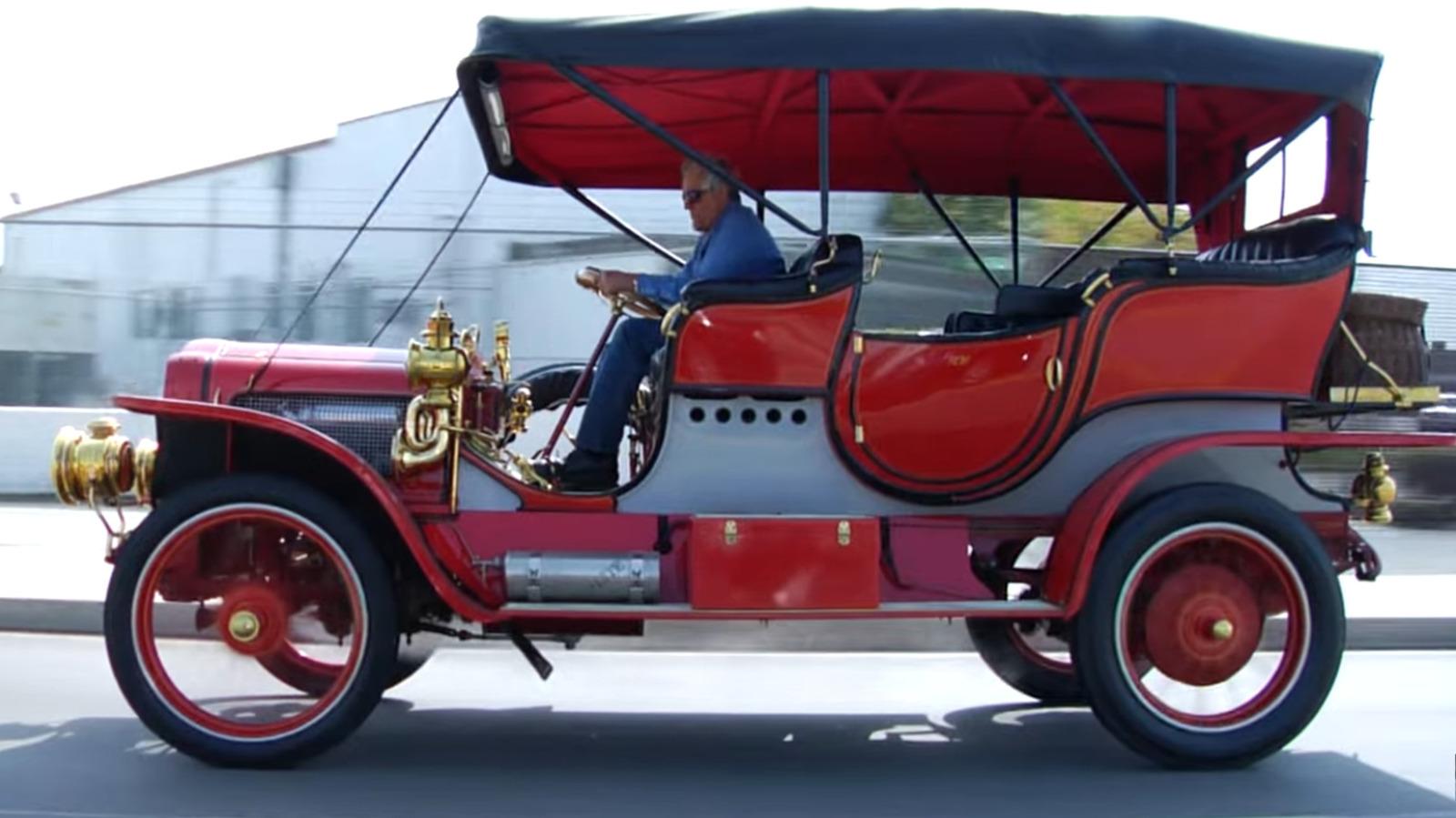
External Combustion Engines: Why Steam and Stirling Power Failed & 2026’s Modern Verdict
Image: External Combustion Engines: Why Steam and Stirling Power Failed & 2026’s Modern Verdict – Performance and Specifications
Advertisement
In the early 1900s, the automotive landscape was a wild frontier. Before the Internal Combustion Engine (ICE) became the undisputed king of the highway, a silent, powerful, and incredibly torque-heavy rival occupied the roads: the External Combustion Engine (ECE). While we often think of steam engines as relics of the Victorian era, modern 2026 engineering debates are once again looking at external combustion—specifically Stirling engines—as potential range extenders for EVs. But why did they fail in the first place, and is there any hope for a ‘Steam-Punk’ revival today? With current EV conversion kits for classics costing upwards of $30,000 (approx. ₹25 Lakhs), many enthusiasts are asking if a simpler external combustion solution was the ‘road not taken’.
The Mechanics of Steam: How External Combustion Works
Unlike a modern gasoline engine where the explosion happens inside the cylinder, an external combustion engine separates the fuel-burning process from the working fluid. In a steam car, a boiler heats water to create high-pressure steam, which then drives the pistons. In a Stirling engine, a sealed gas is heated and cooled to create expansion and contraction. This separation allows these engines to run on almost any fuel—from kerosene and vegetable oil to powdered coal—because the engine doesn’t ‘care’ what creates the heat.
Advertisement
The Glory Days: Stanley Steamer and Doble
At the turn of the 20th century, the Stanley Steamer was the fastest car in the world. In 1906, it set a record of 127 mph—a speed unthinkable for internal combustion at the time. The Doble Steam Car, produced later, was so advanced it could start from cold in under 30 seconds and offered luxury and performance that rivaled Rolls-Royce. However, the complexity of managing high-pressure boilers and the massive weight of water tanks eventually led to their downfall.
The 2026 Perspective: Stirling Engines as Range Extenders
In 2026, as the world moves toward carbon neutrality, the external combustion engine is seeing a niche resurgence. Engineers are testing Stirling engines as ‘Range Extenders’ for electric vehicles. Because a Stirling engine can burn green hydrogen or biofuels continuously at a constant temperature, it produces near-zero NOx emissions compared to the intermittent explosions of a traditional ICE. However, the thermal lag—the time it takes for the engine to respond to throttle inputs—remains a significant hurdle for direct-drive applications.
Why External Combustion Didn’t Stick: The Fatal Flaws
If steam cars were fast, quiet, and didn’t need a transmission (thanks to 100% torque at 0 RPM), why did they lose? The answer lies in three main areas: convenience, complexity, and the ‘Electric Starter.’ When Cadillac introduced the electric starter in 1912, it eliminated the dangerous hand-crank of gasoline cars. Suddenly, the 20-minute ‘warm-up’ time of a steam car became an unacceptable burden for the modern driver.
Advertisement
Technical Hurdles and Thermal Efficiency
While an ECE can use any fuel, it isn’t necessarily efficient at converting that heat into movement. Modern ICE engines hover around 35-40% efficiency, whereas historical automotive steam plants struggled to hit 15%. Furthermore, the ‘Condenser’—the radiator used to recycle water—had to be massive. If you didn’t recycle the water, you’d have to stop every 30-50 miles to refill your tank, much like an early EV charging stop.
Safety Concerns: Boilers on Wheels
Public perception also played a role. The idea of sitting on top of a high-pressure boiler that could theoretically explode (though Doble boilers were famously safe) was a hard sell compared to the controlled explosions of a gasoline engine. In 2026, safety regulations like Global NCAP have made it virtually impossible to package a high-pressure thermal system in a way that passes modern crash tests without adding immense weight.
Comparison: External Combustion vs. Modern Rivals (2026 Standards)
| Feature | External Combustion (Steam/Stirling) | Internal Combustion (Petrol/Diesel) | Electric (EV) |
|---|---|---|---|
| Torque Delivery | Instant (Max at 0 RPM) | Delayed (Requires RPM) | Instant (Max at 0 RPM) |
| Transmission | Not Required | 6-10 Speeds Required | Single Speed / None |
| Warm-up Time | 5 to 20 Minutes | 30 Seconds | Instant |
| Fuel Flexibility | Any Heat Source (Biofuel, Gas, Coal) | Strict (Petrol/Diesel Only) | Electricity (Grid Dependent) |
| Complexity | Very High (Boilers/Pumps) | High (Valves/Timing) | Low (Motor/Battery) |
Technical Specifications: The 2026 ‘Neo-Steam’ Concept
| Parameter | Specification (Estimated Range Extender) |
|---|---|
| Max Power Output | 45 kW (60 hp) – Continuous |
| Torque | 180 Nm (as a generator) |
| Working Fluid | Helium or Hydrogen (Sealed Stirling) |
| Fuel Consumption | 2.5L / 100km (Bio-Ethanol) |
| Emissions | Ultra-Low (Steady State Combustion) |
| Weight | 110 kg (Excluding Battery) |
Pricing and Availability in 2026
| Variant | Estimated Cost (Conversion/Kit) | Target Audience |
|---|---|---|
| Stirling Gen-Set (Base) | ₹4,50,000 | EV Range Extension |
| Steam Retro-fit Kit (Classic) | ₹12,00,000 | Vintage Collectors |
| Industrial ECE Powerplant | ₹25,00,000+ | Commercial Off-grid |
People Also Ask (FAQ)
1. Is a steam car an external combustion engine?
Yes, a steam car is the most famous example of an external combustion engine because the fuel is burned outside the cylinders to heat water.
Advertisement
2. Why don’t we use Stirling engines in cars today?
Stirling engines have high ‘thermal inertia,’ meaning they don’t change speed quickly. This makes them poor for city driving but excellent for constant-speed power generation.
3. Are external combustion engines more efficient than ICE?
Generally, no. For automotive use, the weight of the heat exchangers and the loss of heat during transfer make them less efficient than modern direct-injection gasoline engines.
4. Can an external combustion engine run on solar power?
Absolutely. Stirling engines are frequently used in solar thermal plants because they only require a temperature difference to operate.
Advertisement
5. Did Jay Leno own a steam car?
Yes, Jay Leno is a famous proponent of steam power and owns several Doble and Stanley Steamers, often praising their silence and torque.
6. What happened to the Cyclone Steam Engine?
The Cyclone engine was a modern attempt to revive steam in the 2000s. While technically successful in trials, it lacked the funding to compete with the rapid advancement of EV technology.
7. Are steam engines dangerous?
Modern ‘monotube’ boilers are very safe and contain very little water at any one time, preventing the catastrophic explosions seen in 19th-century industrial boilers.
Advertisement
8. Can external combustion engines reduce pollution?
Yes. Because the fuel burns continuously rather than in ‘bangs,’ the combustion is much more complete, significantly reducing carbon monoxide and unburnt hydrocarbons.
9. Is steam power coming back in 2026?
While not for mainstream cars, steam and Stirling technology are being integrated into 2026 waste-heat recovery systems in heavy shipping and long-haul trucking.
10. Why did Ford never make a steam car?
Henry Ford focused on the mass production of the Internal Combustion Engine (Model T) because it was cheaper to manufacture and faster to start than the steam technology of that era.
Advertisement
Verdict: Should You Wait for an External Combustion Car?
In 2026, the verdict is clear: The External Combustion Engine is a fascinating piece of history with a niche future in green energy, but it will not replace your daily driver. While its ability to run on ‘anything’ and its silent, transmission-free operation are seductive, the sheer convenience of EVs and the efficiency of modern Hybrids have left steam in the rearview mirror.
Pros
- Incredible torque for heavy towing.
- Extremely quiet operation.
- Ability to burn carbon-neutral biofuels easily.
- Longer engine lifespan due to lower internal pressures.
Cons
- Slow start-up times (even in 2026 prototypes).
- Extreme weight and packaging issues.
- High manufacturing costs for heat-resistant materials.
- Lack of refueling/servicing infrastructure.