The Legend of the 1957 Aurora Safety Car: Visionary or Nightmare?
1957 Aurora Safety Car: How This Bizarre Whale Predicted 2026’s Safest Vehicles
Image: 1957 Aurora Safety Car: How This Bizarre Whale Predicted 2026’s Safest Vehicles – Performance and Specifications
Advertisement
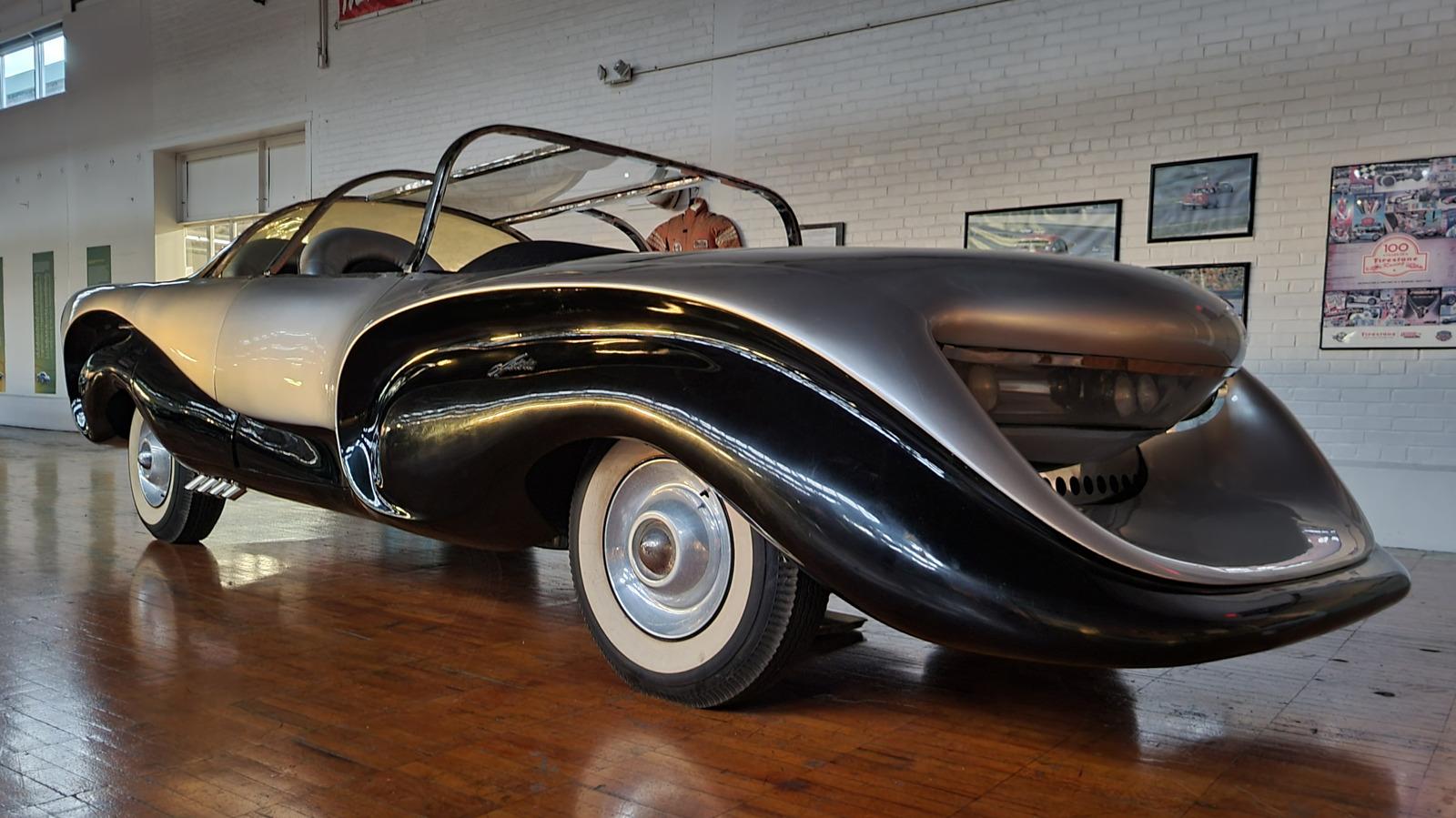
When Father Alfred A. Juliano, a Catholic priest with a penchant for design, unveiled the 1957 Aurora Safety Car, the world didn’t know whether to applaud or run for cover. It was a vehicle designed with one singular goal: to be the safest car in the world. However, its radical aesthetics—often described as a ‘gaping maw’ or a ‘mechanical whale’—overshadowed its groundbreaking innovations. Today, as we look toward the 2026 automotive landscape dominated by AI-driven safety and rigid NCAP standards, the Aurora’s legacy feels more relevant than ever. Historically priced at a staggering $30,000 in 1957 (nearly $320,000 in today’s currency), it was a luxury safety statement that never quite reached the masses.
The Radical Exterior: Design or Distraction?
The first thing anyone notices about the Aurora is its front end. The scoop-like front bumper wasn’t just for show; it was designed to pick up pedestrians rather than crush them under the wheels. The 2026 iterations of pedestrian safety tech in cars like the Volvo EX90 use sensors to achieve this, but Juliano used pure geometry. The body was made entirely of fiberglass, a revolutionary choice at the time that predated the widespread use of lightweight composites in modern performance vehicles.
Advertisement
Safety Innovations: Decades Ahead of NCAP
If we were to put the Aurora through a modern 2026 Euro NCAP crash test, it might surprise you. It featured a built-in roll cage, side-impact bars, and a collapsible steering column—features that didn’t become industry standard for decades. Most notably, the interior featured seats that could swivel 180 degrees to face the rear just before an impact, distributing the force across the occupant’s back rather than their chest and neck.
Interior Tech and Driver Ergonomics
The ‘bubble top’ roof wasn’t just a stylistic choice from the Jet Age; it offered 360-degree visibility, a major talking point in 2026 visibility audits. The dashboard was padded with thick foam, anticipating the soft-touch materials used in modern luxury EVs. While it lacked the OLED screens of 2026, its focus on ‘human-centric’ layout was a precursor to modern ergonomic design.
Comparing the Vision: Aurora (1957) vs. 2026 Safety Leaders
How does a 1950s prototype stack up against the peak of 2026 safety technology? Below is a comparison of the Aurora with the projected 2026 leaders in vehicle safety.
Advertisement
| Feature | 1957 Aurora Safety Car | 2026 Volvo EX90 | 2026 Tesla Model X |
|---|---|---|---|
| Primary Safety Tech | Mechanical Geometry / Swivel Seats | LiDAR / AI Collision Avoidance | Autopilot / Full Self-Driving |
| Chassis Material | Fiberglass / Steel Shell | Boron Steel / Recycled Aluminum | Reinforced Battery Pack / Steel |
| Pedestrian Safety | Scoop Bumper (Physical) | Automatic Emergency Braking (AEB) | Active Hood / External Sensors |
| NCAP Potential | 3-Star (Conceptual) | 5-Star (Expected) | 5-Star (Expected) |
| Visibility | Bubble Roof (360 Degree) | HD Cameras & Digital Mirrors | Panoramic Windshield |
Technical Specifications and Performance
Underneath that strange fiberglass skin, the Aurora was built on a modified 1953 Buick chassis. While the performance wasn’t ‘sporty’ by today’s standards, it was engineered for stability and shock absorption.
| Specification | Details |
|---|---|
| Engine Type | Buick V8 / Cadillac Engine Options |
| Horsepower | Approximately 125-150 hp |
| Body Material | Resin-infused Fiberglass |
| Wheelbase | 125 Inches |
| Top Speed | Approx 90 mph (Estimated) |
| Braking System | Four-wheel Hydraulic Drums |
| Safety Features | Roll cage, Swivel seats, Padded Dash |
Variant and Valuation History
Since only one prototype was ever fully realized, there are no ‘variants’ in the traditional sense, but its valuation has fluctuated wildly among collectors.
| Era | Status/Variant | Estimated Value (Ex-Showroom/Auction) |
|---|---|---|
| 1957 | Original Prototype | $30,000 (Original Cost) |
| 1993 | Pre-Restoration (Barn Find) | $10,000 – $15,000 |
| 2026 | Fully Restored Museum Grade | $1,500,000 – $2,500,000 (Priceless Legend) |
People Also Ask (FAQ)
1. What is the 1957 Aurora Safety Car?
It was a prototype vehicle designed by Father Alfred A. Juliano to be the world’s safest automobile, featuring several safety firsts like a roll cage and swivel seats.
Advertisement
2. Why does it look like a whale?
The ‘whale-like’ front end was actually a safety scoop designed to minimize injury to pedestrians by lifting them up rather than running them over.
3. How much did the Aurora cost in 1957?
It was priced at $30,000, which made it one of the most expensive cars in the world at the time.
4. Where is the Aurora Safety Car now?
After being abandoned for decades, it was restored by Andy Saunders and is currently part of a private collection, often appearing in automotive museums.
Advertisement
5. Did the Aurora ever enter mass production?
No. The Aurora Motor Company went bankrupt after the prototype failed to gain investors during its disastrous 1957 debut tour.
6. What engine was in the Aurora?
The prototype used a Buick engine, though Juliano intended to offer various American V8 engines for production models.
7. How does it compare to 2026 safety standards?
While it lacks electronics, its mechanical safety features like the roll cage and side-impact protection align with the physical requirements of modern 2026 NCAP tests.
Advertisement
8. Is the Aurora street-legal?
As a historical prototype, it can be registered under specific classic car laws, though it lacks modern essentials like airbags and ABS.
9. Who was Alfred A. Juliano?
He was a Catholic priest and a trained artist/designer who dedicated his life and fortune to creating a safer car.
10. Can I buy a modern version of the Aurora in 2026?
No, there are no plans for a production revival, though its design philosophy influences modern ‘safety-first’ concepts.
Advertisement
Verdict: Is the Aurora a Masterpiece?
In 2026, we value cars that think for us. The 1957 Aurora was a car that tried to protect us through pure physical ingenuity. While it was a commercial failure and an aesthetic outlier, its contribution to the safety conversation is undeniable. If you are a collector or a student of automotive history, the Aurora is the ultimate ‘what if’ story.
Pros
- Groundbreaking safety features decades ahead of their time.
- Unique fiberglass construction that prevented rust.
- Unmatched 360-degree visibility via the bubble roof.
- High historical and investment value.
Cons
- Deeply polarizing and widely considered ‘ugly’ design.
- Extremely high original cost led to financial ruin.
- Performance was sluggish due to the heavy chassis and experimental body.
- Only one exists, making it impossible for the average enthusiast to own.