The Legend of the Tri-Five: Why These Three Years Defined American Motoring
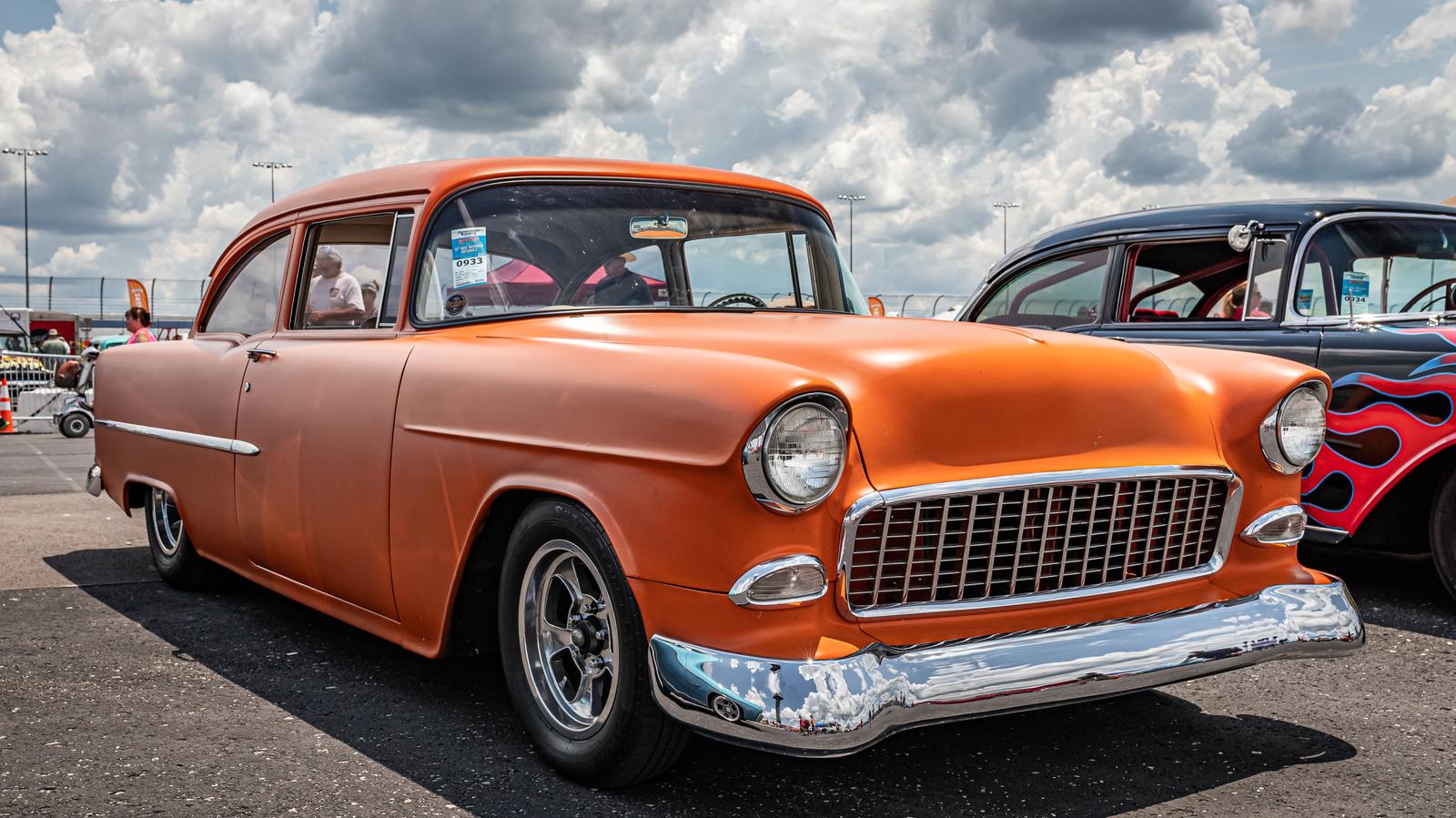
Why the 1955-1957 Tri-Five Chevy Remains the Ultimate Collector’s Icon in 2026: Pricing, Specs, and Market Trends
Image: Why the 1955-1957 Tri-Five Chevy Remains the Ultimate Collector’s Icon in 2026: Pricing, Specs, and Market Trends – Performance and Specifications
- Advertisement -
In the world of classic car restoration, few names carry as much weight as the ‘Tri-Five.’ If you are looking to enter the high-stakes world of classic American muscle in 2026, expect to pay anywhere from $45,000 for a decent driver to upwards of $275,000 for a concours-level 1957 Nomad or a high-end EV-restomod. The term ‘Tri-Five’ refers specifically to the 1955, 1956, and 1957 Chevrolet models—the 150, 210, Bel Air, and the iconic Nomad wagon. These three years represented a tectonic shift for General Motors, moving away from the stodgy, pre-war aesthetics of the early 1950s into a bold, chrome-laden future that still captures hearts today.
1955: The Motoramic Revolution
The 1955 Chevrolet was a ‘clean sheet’ design. It introduced the ‘Motoramic’ styling, which was lower, sleeker, and featured a Ferrari-inspired grille. Most importantly, 1955 marked the debut of the Small Block V8 engine (the 265 cubic inch), which would go on to become the most successful engine architecture in history. In 2026, the ’55 is often the favorite of the hot-rodding community due to its lightweight feel and aggressive stance.
- Advertisement -
1956: The Refined Middle Child
For 1956, Chevy smoothed out the edges. The grille was widened to a full-width design, and the rear fenders featured more prominent ‘Speedline’ styling. It also introduced the beautiful four-door hardtop ‘Sport Sedan’ body style. While often overlooked between the revolutionary ’55 and the flamboyant ’57, the 1956 model is currently seeing a surge in 2026 auction values as collectors seek ‘under-the-radar’ value.
1957: The King of the Fins
The 1957 Chevy is the poster child for the 1950s. With its massive tail fins, twin rocket-style hood spears, and the introduction of the 283 cubic inch V8 with optional ‘Ramjet’ fuel injection (producing one horsepower per cubic inch), it was a mechanical marvel. In today’s market, the ’57 Bel Air remains the gold standard for investment-grade classics.
Technical Specifications and Performance
While originally designed for the leaded-fuel era, the 2026 perspective on Tri-Fives often involves modern upgrades. However, understanding the base DNA is crucial for any buyer. Below are the specifications for the peak-year 1957 Bel Air.
- Advertisement -
| Feature | 1957 Chevrolet Bel Air (Original Specs) | 2026 Restomod Standards |
|---|---|---|
| Engine | 283 cu in (4.6L) Small Block V8 | 6.2L LT4 Supercharged V8 / EV Crate Motor |
| Horsepower | 220 – 283 hp | 650+ hp |
| Transmission | 3-Speed Manual / 2-Speed Powerglide | 6-Speed Automatic / Direct Drive (EV) |
| Brakes | 4-Wheel Drum Brakes | 6-Piston Wilwood Disc Brakes |
| 0-60 MPH | ~9.0 Seconds | ~3.4 Seconds |
Interior, Tech, and Safety in the Modern Era
Stepping inside a stock Tri-Five is a lesson in minimalism: a sweeping metal dashboard, a massive thin-rimmed steering wheel, and a ‘bench’ seat that offers zero lateral support. However, in 2026, the trend has shifted toward ‘Luxury-Restomods.’ These vehicles retain the classic exterior but feature custom Italian leather interiors, 12-inch touchscreen infotainment systems hidden behind motorized panels, and modern HVAC systems.
Safety and NCAP Concerns
It is important to note that an original Tri-Five has a zero-star safety rating by modern standards. With no crumple zones, a non-collapsible steering column, and a frame that was designed long before computer-aided engineering, they are inherently risky. Modern builders in 2026 address this by swapping the entire body onto ‘Art Morrison’ or ‘Roadster Shop’ chassis, which include modern suspension geometry and improved rigidity.
The 2026 Rivalry: Tri-Five vs. The Competition
If you aren’t set on a Chevy, the 1950s offered other heavy hitters. Here is how the Tri-Five stacks up against its historical and modern-auction rivals.
- Advertisement -
| Criteria | 1955-57 Chevy Tri-Five | 1955-57 Ford Fairlane/T-Bird | 1955-57 Plymouth Belvedere/Fury |
|---|---|---|---|
| Parts Availability | Excellent (10/10) | Good (7/10) | Poor (4/10) |
| Modability | Infinite | Moderate | Difficult |
| Avg. 2026 Price | $65,000 – $180,000 | $40,000 – $120,000 | $35,000 – $95,000 |
| Icon Status | High (The American Standard) | High (The Stylish Alternative) | Medium (The ‘Forward Look’ Cult Classic) |
2026 Variant-Wise Pricing (Market Valuation)
Prices vary wildly based on the number of doors and the trim level. ‘Post’ cars (with a B-pillar) are generally cheaper than ‘Hardtops’ (no pillar).
| Model Variant | Condition: Good (Driver) | Condition: Concours (Show) |
|---|---|---|
| Chevy 150 (2-Door Sedan) | $42,000 | $78,000 |
| Chevy 210 (2-Door Hardtop) | $55,000 | $95,000 |
| Chevy Bel Air (Convertible) | $95,000 | $210,000 |
| Chevy Nomad (Wagon) | $88,000 | $185,000 |
| EV-Converted Restomod | $150,000 | $350,000+ |
People Also Ask (FAQ)
1. What exactly constitutes a Tri-Five Chevy?
A Tri-Five consists of any Chevrolet passenger car model produced in the years 1955, 1956, and 1957. This includes the 150, 210, Bel Air, and Nomad.
2. Why are they so popular in 2026?
Their popularity stems from the ‘timeless’ design, the ease of maintenance due to the small-block V8, and a massive secondary market where you can literally build a brand-new car from a catalog.
- Advertisement -
3. Which year is the most valuable?
Generally, the 1957 model is the most valuable, specifically the Bel Air Convertible and the Nomad wagon.
4. Can you daily drive a Tri-Five?
Only if it has been updated with modern disc brakes, electronic ignition, and radial tires. Original drum brakes and bias-ply tires are dangerous in modern traffic.
5. What is the ‘Nomad’?
The Nomad was a high-end, two-door station wagon variant of the Bel Air. It is considered one of the most beautiful wagons ever made.
- Advertisement -
6. What are common rust issues?
Check the ‘eyebrows’ over the headlights, the rocker panels, the floor pans under the mats, and the trunk floor. These are notorious for rot.
7. How many engines were available?
Originally, they came with an Inline-6 (Blue Flame) or the 265/283 V8s. In 2026, most have been swapped for 350 or LS-series V8s.
8. Is a 1958 Chevy a Tri-Five?
No. In 1958, Chevrolet completely redesigned the frame and body, moving to a larger, longer, and heavier platform.
- Advertisement -
9. What is the difference between a 150 and a Bel Air?
The 150 was the base fleet model with minimal chrome. The 210 was mid-range. The Bel Air was the luxury trim with maximum ‘brightwork’ and premium interiors.
10. Are Tri-Fives a good investment?
Yes. They have consistently appreciated for 40 years. While the market for some 50s cars is cooling, the Tri-Five remains the ‘blue chip’ stock of the classic car world.
Verdict: Should You Buy One in 2026?
Buying a Tri-Five Chevy is less about transportation and more about owning a piece of industrial art. If you want a car that will turn every head at the gas station and hold its value better than most modern luxury SUVs, the answer is a resounding YES. However, be prepared for the ‘classic car tax’—maintenance and parts are plentiful but quality labor for these machines is becoming a premium skill.
- Advertisement -
Pros
- Incredible styling that never goes out of fashion.
- Infinite customization options.
- Strong resale value and ‘Blue Chip’ collector status.
- Massive community support and club network.
Cons
- Original safety features are non-existent.
- High entry price for quality examples.
- Rust is a constant battle on unrestored frames.
- Fuel economy is poor on original V8 engines.