The Golden Era of Choice: Why Detroit Offered a Plethora of Powerplants
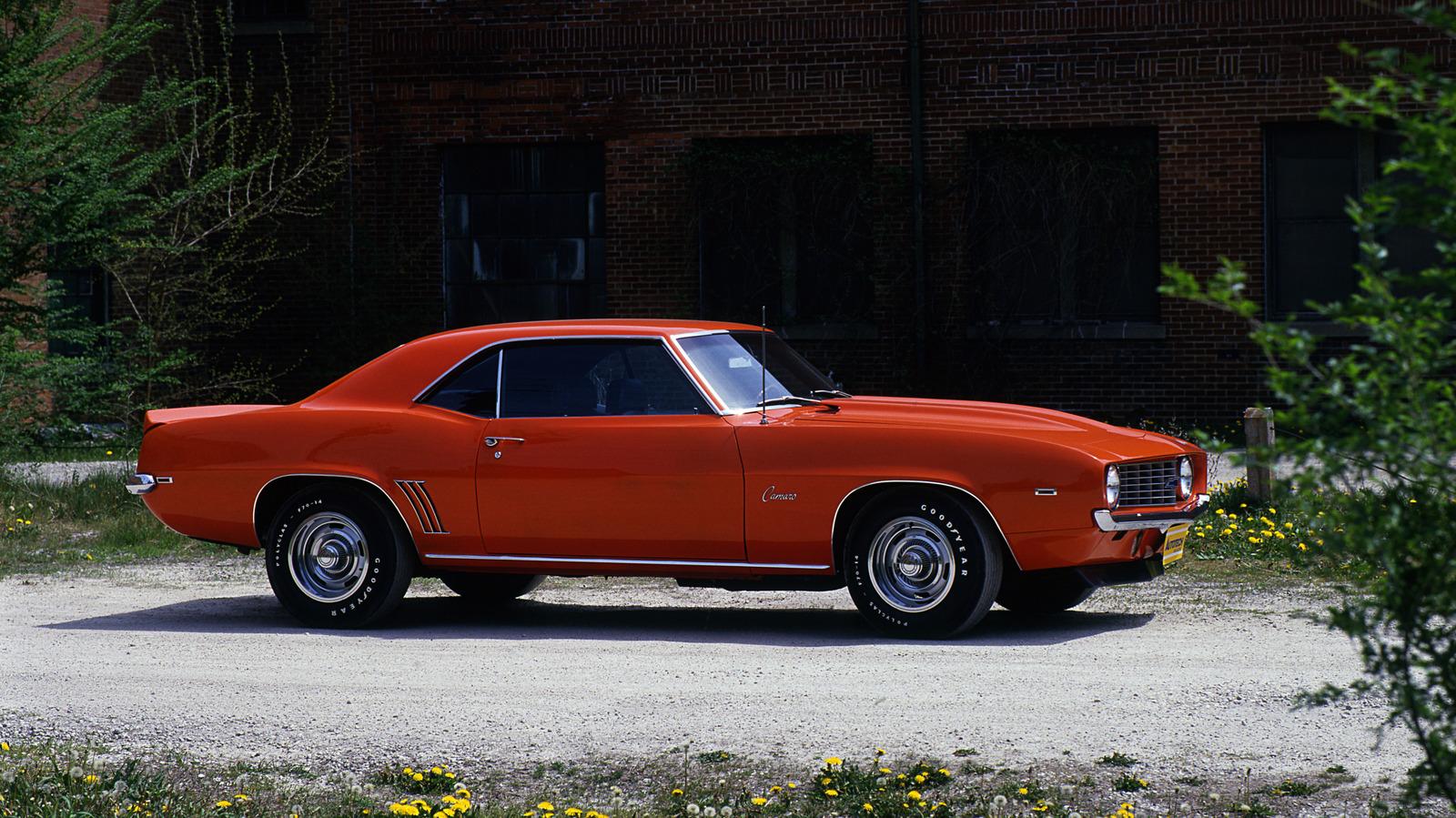
Why Old American Cars Had So Many Engine Options: A 2026 Historical & Performance Deep-Dive
Image: Why Old American Cars Had So Many Engine Options: A 2026 Historical & Performance Deep-Dive – Performance and Specifications
Advertisement
In the high-octane landscape of 2026, where modular electric platforms and streamlined hybrid powertrains dominate the market, enthusiasts often look back at the 1960s and 70s with disbelief. Why did a single model, like the 1969 Camaro, offer nearly a dozen different engine configurations? The answer lies in a perfect storm of marketing strategy, low production costs, and a lack of regulatory oversight that defined the American automotive industry. While modern 2026 performance vehicles like the Ford Mustang Dark Horse or the Dodge Charger Daytona SRT focus on software-defined performance, the ‘muscle car’ era was all about physical displacement.
Today, a 2026 flagship performance car might start at $55,000 (approx. ₹46 Lakhs) and offer only two motor choices. In contrast, the ’60s allowed buyers to climb a ‘power ladder’ for just a few hundred dollars per rung. This article explores the mechanics of that era and compares it to the streamlined efficiency of the 2026 automotive market.
Advertisement
The Marketing Strategy: A Ladder for Every Budget
The primary reason for the abundance of engine options was the ‘step-up’ marketing model. Manufacturers wanted to get customers into the showroom with a low ‘advertised price’ (usually a thrifty Inline-6) and then upsell them to a Small Block V8, and eventually, a Big Block monster.
1. Economic Feasibility of Iron Castings
In the mid-20th century, increasing an engine’s displacement was relatively simple. Since engines were largely made of cast iron without complex overhead cams or turbocharging plumbing, manufacturers could ‘bore’ or ‘stroke’ a block to create a new displacement tier without redesigning the entire engine bay. This allowed for the massive variety we saw in the 1960s.
2. The Absence of Stringent Emissions Testing
Unlike 2026, where every single engine and transmission combination must undergo rigorous EPA and Euro 7 emissions certification (costing millions), the ’60s were a ‘Wild West.’ Engineers could tweak a carburetor or change a camshaft and sell it as a new ‘Performance Pack’ without waiting for government approval. Today, the cost of certifying ten different engines for one car would be financially ruinous.
Advertisement
3. The ‘Insurance vs. Image’ Battle
By 1970, insurance companies began penalizing high-horsepower cars. To counter this, manufacturers offered ‘underrated’ engine options. They would list a 400-cubic-inch V8 at a lower horsepower rating on paper to help buyers save on insurance, while secretly offering ‘COPO’ (Central Office Production Order) engines for those who knew which boxes to check on the order form.
Modern Context: 2026 Performance Landscape vs. The Classics
In 2026, the ‘engine option’ has been replaced by ‘over-the-air (OTA) performance unlocks.’ While the 1969 Ford Mustang offered engines ranging from a 200ci I6 to a 429ci V8, the 2026 lineup is streamlined for aerodynamics and global safety standards.
| Feature | The 1960s Era (Golden Age) | The 2026 Era (Modern Performance) |
|---|---|---|
| Engine Variety | 6-12 options per model | 1-3 options (Hybrid/EV/ICE) |
| Safety Standards | Minimal (No NCAP) | 5-Star Global NCAP Mandatory |
| Customization | Physical (Carbs, Manifolds) | Digital (Software Maps, Battery kWh) |
| Performance Ceiling | ~450 HP (Gross) | 1,000+ HP (Electric/Hybrid) |
2026 Tech Specs: Performance Comparison
To understand the shift, let’s look at the three most popular ‘Muscle’ survivors in 2026 and how their ‘options’ compare to the old-school variety.
Advertisement
| Model (2026) | Base Engine | Top-Tier Option | Safety Tech | Starting Price (Est.) |
|---|---|---|---|---|
| Ford Mustang S750 | 2.3L EcoBoost (315hp) | 5.8L Supercharged V8 (820hp) | Co-Pilot 360 v4.0 | $34,000 |
| Dodge Charger Daytona | 300kW Electric | 670kW ‘Banshee’ 800V | Level 3 ADAS | $62,000 |
| Chevrolet Corvette Zora | 5.5L V8 Hybrid (E-Ray+) | 1,000hp AWD Hybrid | Active Aero & Thermal | $110,000 |
Is More Better? User Sentiment in 2026
On forums like Reddit’s r/Cars and AutoTorque’s user community, the debate rages. Modern users love the Reliability and Safety of 2026 models (Pros), but complain about the Lack of Character and High Repair Costs of integrated electronics (Cons). In the 60s, a ‘shade-tree mechanic’ could swap an engine in a weekend. In 2026, even a battery coolant flush requires a proprietary software interface.
People Also Ask (FAQ)
1. Why don’t modern cars have 10 engine options?
Mainly due to the high cost of emissions certification and the complexity of modern engine bays which are tightly packed for crash safety and aerodynamics.
2. What was the most engine options ever offered for one car?
The 1960s Chevrolet Corvair and Camaro models often had between 8 to 12 distinct engine codes available in a single production year.
Advertisement
3. Are 2026 engines more powerful than 1960s engines?
Yes. While 1960s engines had high ‘Gross’ horsepower, modern 2026 engines (especially Hybrids and EVs) offer significantly more ‘Net’ torque and real-world speed.
4. What is a ‘Crate Engine’?
It is a fully assembled engine shipped in a crate. This was a popular way in the 60s (and still today) to bypass the limited factory options.
5. How did safety affect engine variety?
As NCAP ratings became vital, cars required specific crumple zones. Each engine must now be crash-tested to ensure it doesn’t enter the cabin, limiting the number of shapes and sizes a manufacturer can offer.
Advertisement
6. Did old American cars really have 7.0L engines?
Yes, ‘Big Blocks’ like the 427 and 454 cubic inch engines were common, though they were very heavy and fuel-inefficient compared to 2026 standards.
7. Why were engines ‘underrated’ in the 70s?
To avoid high insurance premiums and to fly under the radar of burgeoning federal safety and emissions task forces.
8. Can I put a 1960s engine in a 2026 car?
Technically possible but legally difficult due to modern emissions laws and the inability to interface with the car’s ECU and safety systems.
Advertisement
9. What is the ‘Small Block’ vs ‘Big Block’ difference?
Small blocks are lighter and more compact (better handling), while big blocks have more displacement and potential for raw torque (better for drag racing).
10. Is the 2026 Ford Mustang the last gas-powered muscle car?
It is one of the last, as most competitors like the Dodge Charger have shifted to ‘Fratzonic’ Electric or Hurricane-6 Hybrid platforms.
Verdict: Should You Buy a Classic or a 2026 Modern Muscle?
Pros of 1960s Classics: Unmatched mechanical soul, infinite customization, and appreciating investment value.
Cons of 1960s Classics: Poor safety (0-star NCAP equivalent), high fuel consumption, and constant maintenance.
Advertisement
Pros of 2026 Performance Cars: 5-star safety, insane 0-60 mph times (under 3 seconds), and daily-driver comfort.
Cons of 2026 Performance Cars: Limited physical engine choice, high depreciation on EVs, and ‘soul-less’ synthetic engine notes.
Final Word: If you value the history of ‘choice’ and mechanical purity, the classic era wins. But for sheer performance and safety, the 2026 offerings—even with fewer options—are objectively superior machines.
Advertisement