The Secret Origins of the Automotive Rearview Mirror
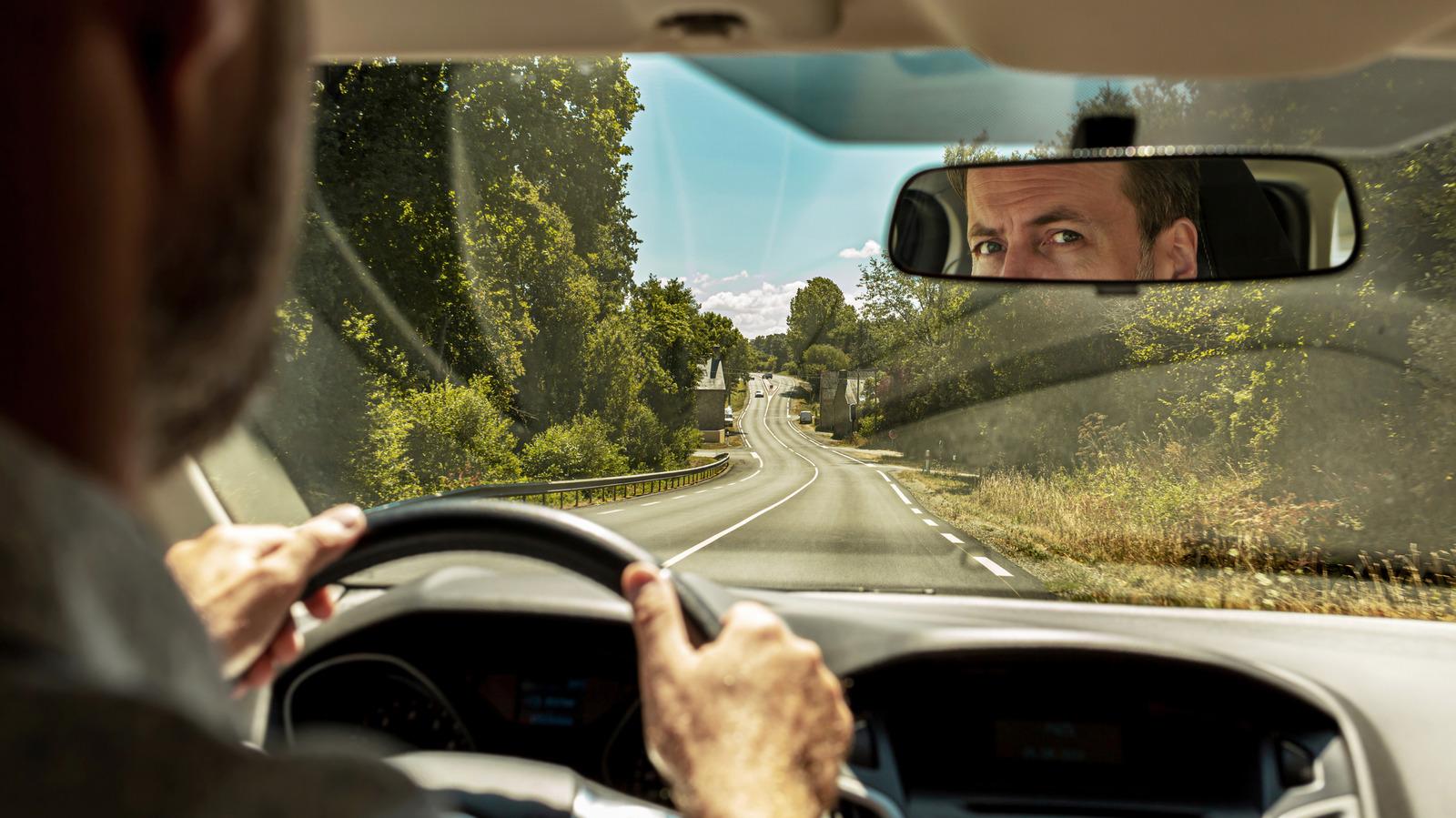
The Rearview Mirror Wasn’t Just Invented For Safety: 2026 Tech Evolution & History
Image: The Rearview Mirror Wasn’t Just Invented For Safety: 2026 Tech Evolution & History – Performance and Specifications
- Advertisement -
Most of us take that small rectangular piece of glass for granted. Every time you shift lanes or reverse into a parking spot, you glance at it. But did you know that when the rearview mirror was first introduced, it wasn’t about safety at all? It was actually a tool for speed and a ‘cop-spotter.’ As we enter 2026, where digital displays have replaced traditional glass in high-end models like the 2026 Volkswagen Tayron and the Toyota Fortuner, the rearview mirror has undergone a massive transformation. Currently, digital rearview systems are priced as premium add-ons ranging from $300 to $1,200 depending on the vehicle’s trim.
The 1911 Indy 500: A Racing Innovation
The credit for the first rearview mirror used in a vehicle goes to Ray Harroun. In the inaugural Indianapolis 500 in 1911, Harroun drove the ‘Marmon Wasp.’ At the time, race cars were two-seaters; the driver was accompanied by a ‘riding mechanic’ whose job was to look backward and watch for overtaking vehicles. Harroun, looking to save weight and aerodynamic drag, decided to go solo. To compensate for the lack of a mechanic, he bolted a mirror to his car. While it shook so much he could barely see anything, it allowed him to win the race, cementing the mirror’s place in history—not for safety, but for competitive advantage.
- Advertisement -
The ‘Cop-Spotter’ Era and Dorothy Levitt
Before it became a standard safety feature, many early adopters used mirrors to look out for police officers on their tails. In her 1909 book ‘The Woman and the Car,’ Dorothy Levitt—a pioneer of women’s racing—suggested that women should carry a small hand mirror to occasionally hold aloft to see what was behind them while driving in traffic. This was long before manufacturers integrated them into the frame of the car. It wasn’t until 1921 that Elmer Berger patented the mirror for commercial use, calling it the ‘COP-SPOTTER.’
2026 Digital Mirror Technology: Performance and Design
In 2026, the rearview mirror has evolved into a high-definition command center. Traditional prismatic glass is being phased out for Camera Monitoring Systems (CMS). These 2026 systems offer a wider field of view, eliminate blind spots caused by C-pillars or rear passengers, and provide crystal-clear visibility even in torrential rain or pitch-black darkness.
High-Definition OLED Displays
Modern mirrors in 2026 luxury SUVs now feature ultra-thin OLED panels. Unlike LCDs, these offer infinite contrast ratios, ensuring that the headlights of the car behind you don’t ‘wash out’ the screen. The integration of 4K cameras at the rear ensures that the driver sees a lag-free, high-resolution feed that is more accurate than a reflection.
- Advertisement -
Augmented Reality (AR) Overlays
The latest 2026 updates for vehicle mirrors include AR integration. For example, in the 2026 Tayron R-Line, the rearview mirror can overlay distance markers and highlight ‘high-speed approaching’ vehicles in red, alerting the driver before a lane change becomes dangerous.
Night Vision and Thermal Imaging
Safety ratings from NCAP in 2026 now heavily weigh the presence of active visibility aids. High-end mirrors now include thermal imaging modes, allowing drivers to see pedestrians or animals through the mirror feed that would otherwise be invisible to the naked eye at night.
| Feature | Traditional Mirror (Standard) | Digital Smart Mirror (2026 Gen) |
|---|---|---|
| Field of View | 20-25 Degrees | 50-70 Degrees |
| Night Visibility | Dependent on Ambient Light | Enhanced/Thermal Mode |
| Blind Spot Reduction | Low (Requires Side Mirrors) | High (Wide Angle Integration) |
| Recording (Dashcam) | External Add-on | Integrated 360-Loop |
| Obstruction Handling | Blockable by Rear Passengers | Unobstructed Camera Feed |
Technical Specifications & Comparison: 2026 Tech Leaders
When looking at the top-tier implementations of this technology, the 2026 Volkswagen Tayron and the 2026 Toyota Fortuner Legender are the primary rivals in the Asian and European markets. Here is how their visibility tech stacks up.
- Advertisement -
| Specification | VW Tayron R-Line (2026) | Toyota Fortuner (2026 Update) |
|---|---|---|
| Mirror Type | Full Digital OLED | Hybrid (Prismatic + LCD) |
| Camera Resolution | 4K @ 60fps | 1080p @ 30fps |
| AI Features | Object Recognition & AR | Blind Spot Indicators |
| Estimated Price (Add-on) | $850 | $500 |
| Auto-Dimming Tech | Digital Pixel Dimming | Electrochromic Coating |
People Also Ask (FAQ)
1. Why was the rearview mirror called a ‘cop spotter’?
In the early 1920s, Elmer Berger marketed it as a way for drivers to spot police officers following them, as speeding laws became more strictly enforced.
2. Who was the first person to use a rearview mirror in a race?
Ray Harroun used it during the 1911 Indianapolis 500 on his Marmon Wasp car.
3. Are digital rearview mirrors legal in 2026?
Yes, most international safety standards now recognize Camera Monitoring Systems as legal replacements for physical mirrors, provided they have a backup power source.
- Advertisement -
4. Do digital mirrors work if the camera is dirty?
Most 2026 models include a high-pressure washer nozzle specifically for the rearview camera or use hydrophobic coatings to repel dirt and water.
5. Is the 2026 VW Tayron mirror better than the Fortuner’s?
The Tayron offers a full 4K OLED experience with AR, while the Fortuner uses a more conservative hybrid system, making the Tayron superior for tech-enthusiasts.
6. Can I install a digital rearview mirror in an older car?
Yes, several aftermarket 2026 kits allow for ‘Plug and Play’ installation with front and rear dashcam integration.
- Advertisement -
7. What are the cons of digital mirrors?
The main complaints from users include ‘depth perception’ issues and the high cost of repair if the screen or camera is damaged.
8. Did Dorothy Levitt invent the rearview mirror?
She did not patent it, but she was the first to document the practice of using a mirror to see behind a vehicle in 1909.
9. How does a digital mirror help with glare?
By using digital sensors, the system can ‘clip’ the brightness of high beams from trailing cars, showing a clear image without blinding the driver.
- Advertisement -
10. Will mirrors be replaced by screens entirely?
Trends for 2026 suggest that while luxury vehicles are moving to screens, entry-level cars will retain traditional glass to keep costs low.
Verdict: Should You Upgrade to a Digital Mirror in 2026?
If you are buying a 2026 model like the Tayron or a high-spec Fortuner, the digital mirror is a ‘Must-Have.’ It offers unparalleled safety and recording capabilities that traditional glass simply cannot match.
Pros
- Eliminates blind spots and rear-seat obstructions.
- Crystal clear night vision.
- Integrated dashcam recording.
Cons
- Expensive to replace ($1,000+).
- Requires a learning curve for depth perception.
- Susceptible to electronic glitches.
- Advertisement -