BYD Pondering F1 Entry Bid to Spur Overseas Sales in 2026
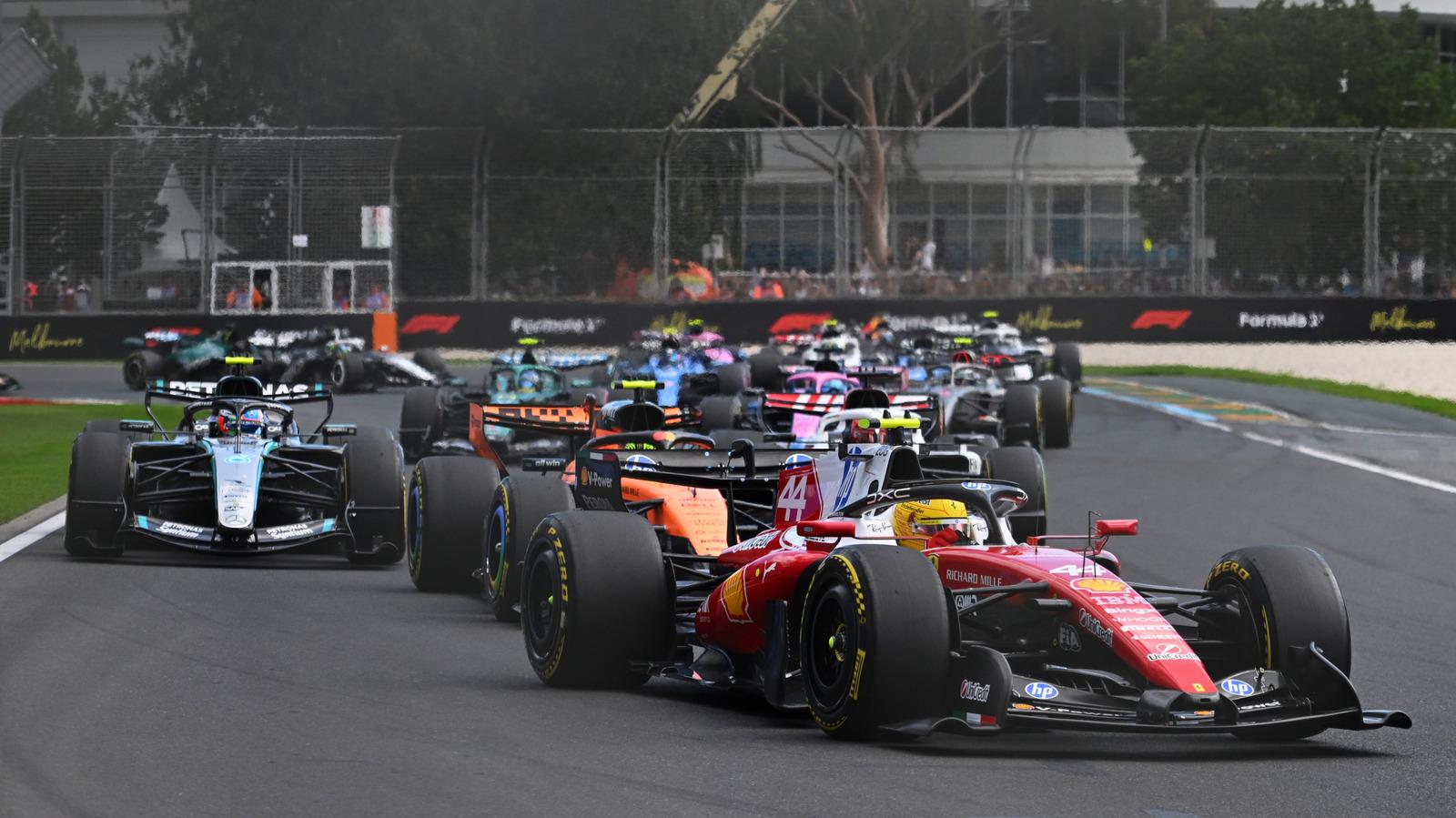
BYD F1 Entry 2026: Why the EV Giant is Targeting the Pinnacle of Motorsport
Image: BYD F1 Entry 2026: Why the EV Giant is Targeting the Pinnacle of Motorsport – Performance and Specifications
- Advertisement -
In the high-octane world of global automotive branding, few names have risen as meteorically as BYD. The Chinese conglomerate, which recently overtook Tesla as the world’s leading electric vehicle (EV) manufacturer, is now reportedly setting its sights on the ultimate marketing frontier: Formula 1. With the 2026 FIA Formula 1 Power Unit regulations placing a heavy emphasis on electrification and sustainable fuels, the timing couldn’t be more perfect. Rumors suggest that the entry fee alone for a new team could hover around $600 million, a figure that BYD is reportedly considering as part of a massive global branding push to elevate its premium sub-brands like YangWang and FangChengBao.
The Hook: Why Formula 1 and Why Now?
BYD isn’t just looking for a trophy; they are looking for legitimacy in the Western markets where European giants like Ferrari, Mercedes, and the incoming Audi still hold the prestige crown. By entering F1 in 2026, BYD aligns itself with the sport’s pivot toward a 50/50 split between internal combustion and electric power. This technical shift plays directly into BYD’s hands, as their expertise in battery chemistry and electric motors is arguably the best in the world. Furthermore, the FIA World Endurance Championship (WEC) is also on the radar, offering a secondary path through the Hypercar class to showcase endurance and reliability at the 24 Hours of Le Mans.
- Advertisement -
The 2026 Shift: Technical Regulations and BYD’s Advantage
The 2026 regulations represent a clean slate. The removal of the MGU-H (Motor Generator Unit – Heat) and the increased output of the MGU-K (Motor Generator Unit – Kinetic) to 350kW means that electric power will contribute nearly half of the car’s total output. For a company that produces its own Blade Batteries and semiconductor chips, this is a strategic goldmine.
Performance and Aerodynamics
In the 2026 era, active aerodynamics will become standard to compensate for the high drag of open-wheel cars under electric power. If BYD enters, we can expect a collaboration with top-tier chassis designers to integrate their ‘e4’ platform logic—currently seen in the YangWang U9—into a race-spec format. The focus will be on energy recovery efficiency, an area where BYD’s street-car regenerative braking tech could provide a unique data-driven advantage.
Interior Tech and Driver Cockpit
While an F1 cockpit is a far cry from the rotating 15.6-inch screens found in the BYD Seal, the telemetry and data visualization systems developed for F1 would trickle down into BYD’s consumer DiLink OS. The 2026 F1 driver interface will require advanced energy management displays, allowing drivers to toggle between ‘overtake’ modes and ‘recovery’ modes with millisecond precision—tech that will eventually define the next generation of BYD’s performance road cars.
- Advertisement -
Safety and FIA Standards
Safety is the cornerstone of F1, with the ‘Halo’ system and reinforced carbon-fiber monocoques setting the global standard. BYD has already achieved 5-star Euro NCAP ratings for models like the Atto 3 and Dolphin. Participating in F1 would allow BYD to test their proprietary ‘CTB’ (Cell-to-Body) battery technology under extreme thermal and kinetic stress, potentially leading to the safest road-going EV batteries ever created.
The Comparison: BYD vs. The 2026 Titans
How does a potential BYD entry stack up against the confirmed 2026 giants? The table below compares the strategic positioning of BYD against Audi and Ferrari.
| Feature | BYD (Rumored) | Audi (Confirmed) | Ferrari (Incumbent) |
|---|---|---|---|
| Power Unit Focus | Electrical Efficiency/Blade Battery | German Engineering/Hybridization | Racing Heritage/Synthetic Fuels |
| Primary Goal | Global Brand Prestige | Direct Rivalry with Mercedes | Maintaining Dominance |
| Road Car Link | YangWang U9 Hypercar | E-Tron Performance Line | SF90 Stradale/Purosangue |
| Market Strength | Mass Market EV Sales | Premium Luxury Engineering | Exclusivity and Heritage |
Data Visualization: Technical Specifications and Pricing
To understand what BYD is bringing to the table, we must look at the specifications required for the 2026 F1 season alongside the pricing of their current flagship performance models that would benefit from this racing pedigree.
- Advertisement -
| Specification | 2026 F1 Regulation Standard | BYD YangWang U9 (Road Benchmark) |
|---|---|---|
| Engine Type | 1.6L V6 Turbo Hybrid | Quad-Motor Electric |
| Electric Power Output | 350 kW (approx. 470 hp) | 960 kW (1,287 hp) |
| Fuel Type | 100% Sustainable Synthetic Fuel | Full Electric (LFP Battery) |
| Chassis Material | Carbon Fiber Monocoque | Carbon Fiber / Aluminum Alloy |
| 0-100 km/h | ~2.2 Seconds | 2.36 Seconds |
Variant-Wise Pricing for BYD Performance Models (2026 Projections)
If you are looking to buy the ‘F1-inspired’ tech today, here is the current ex-showroom pricing for BYD’s flagship lineup.
| Model Variant | Estimated Ex-Showroom Price (INR) | Key Performance Feature |
|---|---|---|
| BYD Seal Performance (AWD) | ₹53.00 Lakh | 3.8s 0-100 km/h, iTAC Tech |
| BYD YangWang U8 (Luxury SUV) | ₹1.20 Crore (Estimated) | Tank Turn, Floating Mode |
| BYD YangWang U9 (Hypercar) | ₹1.90 Crore (Estimated) | DiSus-X Active Suspension |
| BYD FangChengBao 5 (Off-road) | ₹45.00 Lakh (Estimated) | DMO Hybrid Platform |
People Also Ask (FAQ)
1. Is BYD officially joining Formula 1 in 2026?
While not officially confirmed, BYD has expressed strong interest and is currently evaluating the 2026 Power Unit regulations as a means to boost overseas sales.
2. Will BYD supply engines or have its own team?
Industry experts suggest BYD would likely enter as a full works team, similar to Audi, to maintain control over its battery and motor technology.
- Advertisement -
3. How much would an F1 entry cost BYD?
The anti-dilution fee for a new F1 team is currently $200 million, but rumors suggest this could rise to $600 million by 2026.
4. What is the YangWang U9?
The YangWang U9 is BYD’s electric hypercar featuring four motors and 1,287 hp, serving as the technical halo for their racing ambitions.
5. Why is F1 changing rules in 2026?
F1 is moving toward increased electrification and 100% sustainable fuels to attract manufacturers like BYD and Audi who are focused on green energy.
- Advertisement -
6. Does BYD have any racing history?
BYD has previously been involved in Formula E as a battery supplier and has minor experience in touring car championships in Asia.
7. How does the BYD Blade Battery help in racing?
The Blade Battery’s thermal stability and high discharge rates make it a perfect candidate for the high-intensity energy recovery systems required in F1.
8. Will BYD enter the WEC instead of F1?
The WEC is considered a more cost-effective alternative to F1, allowing BYD to compete at Le Mans with its Hypercar tech.
- Advertisement -
9. Who would be BYD’s drivers?
It is too early to tell, but a mix of an experienced F1 veteran and a high-profile Chinese driver (like Zhou Guanyu) would be a logical choice for marketing.
10. Can I buy a BYD car with F1 tech now?
The BYD Seal and YangWang U9 already utilize advanced torque vectoring and thermal management systems that are developed using racing simulations.
Verdict: Should BYD Join the Grid?
For BYD, the question isn’t whether they have the technology—it’s whether they can handle the politics and the immense pressure of the F1 paddock. Joining F1 would permanently erase the ‘budget brand’ stigma and place BYD in the pantheon of automotive legends.
- Advertisement -
Pros
- Unmatched marketing reach to 1.5 billion viewers annually.
- Direct R&D pipeline for high-performance solid-state batteries.
- Validation of Chinese engineering on a global stage.
Cons
- Extremely high R&D and entry costs (Total investment could exceed $1 billion).
- Steep learning curve against established giants like Ferrari.
- Potential for brand damage if the team performs poorly in the initial seasons.
Final Verdict: If BYD wants to be the world’s #1 carmaker by value and not just volume, an F1 or WEC entry in 2026 is a mandatory move. For enthusiasts, this means the next BYD you buy might just have a bit of Grand Prix DNA under the hood.