When we discuss the future of mobility in 2026, we often look toward solid-state batteries and autonomous AI. However, the true origin of the electric revolution dates back over 130 years. Long before Elon Musk was a household name, there was Andreas Flocken. In 1888, he debuted the Flocken Elektrowagen, a vehicle that, quite literally, looked like a giant baby carriage. While modern electric vehicles (EVs) are sleek aerodynamic machines, this Victorian-era pioneer was a wooden-wheeled marvel that set the stage for every Tesla and Taycan on the road today. In today’s market, where vintage EV restorations are fetching upwards of $150,000 (approx. ₹1.25 Crore), understanding this ‘baby carriage’ is more relevant than ever.
The Design: A Giant Baby Carriage for the Elite
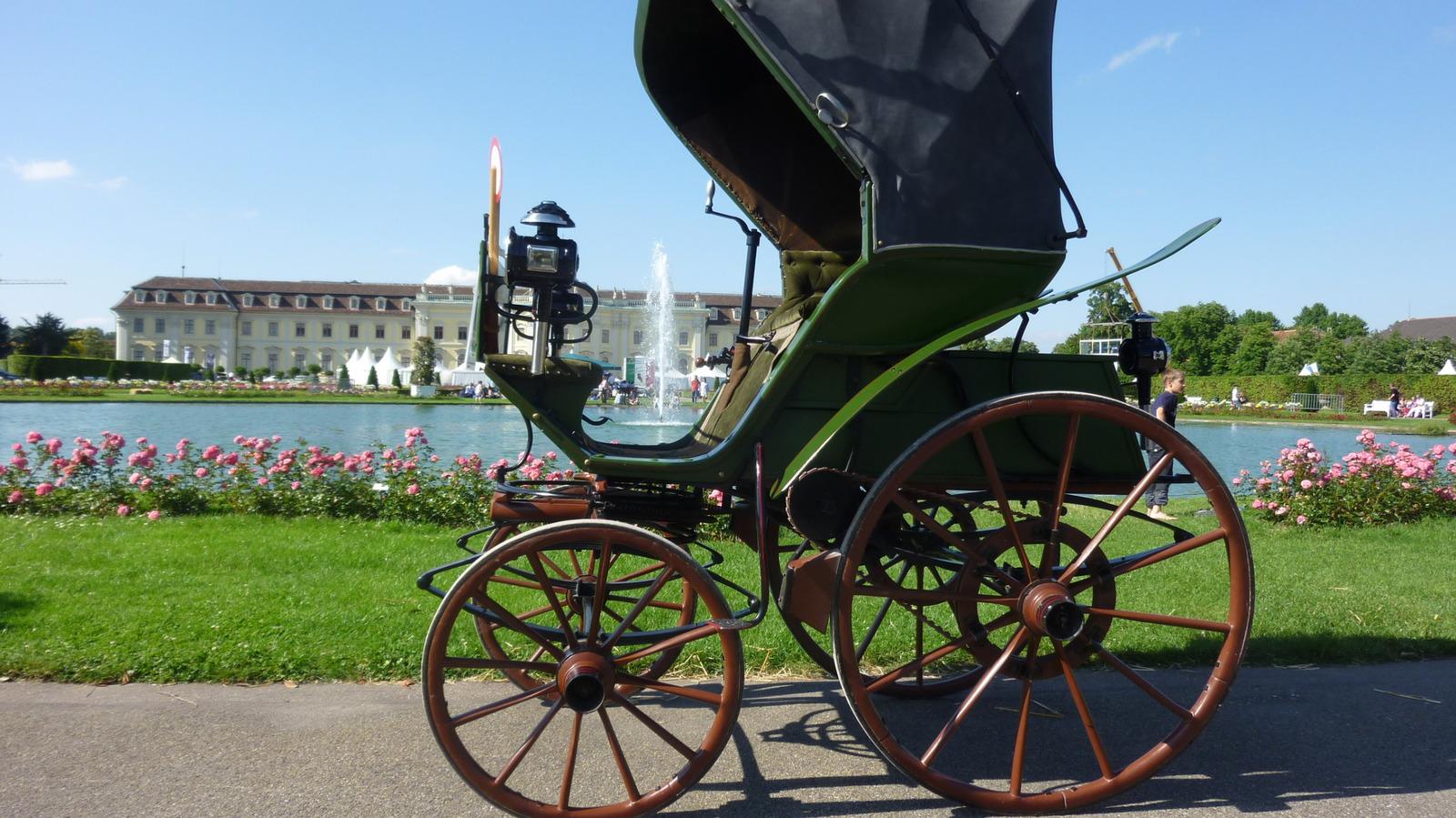
The First Practical Electric Car: 2026 Retrospective on the Flocken Elektrowagen
- Advertisement -
Image: The First Practical Electric Car: 2026 Retrospective on the Flocken Elektrowagen – Performance and Specifications
The Flocken Elektrowagen did not have the benefit of wind-tunnel testing. Instead, it was built on the chassis of a traditional horse-drawn carriage. The design featured high wooden wheels with iron tires (later updated to pneumatic), a high seating position, and a lack of a front hood. This ‘high-wheeler’ aesthetic is why many modern observers compare it to an oversized perambulator.
- Advertisement -
Aesthetics and Chassis Build
The 1888 model used a high-perch phaeton body style. In 2026, collectors and historians point to the hand-stitched leather upholstery and the polished wooden frame as the height of 19th-century luxury. It lacked doors, a windshield, and any semblance of a crumple zone, making its ‘open-air’ experience quite literal.
The Tiller Steering System
Forget steering wheels; the Flocken used a vertical tiller. This mechanism was common in early horseless carriages but requires a steep learning curve for the modern driver. In 2026 vintage rallies, this is often the #1 complaint from enthusiasts who find the sensitivity of the tiller difficult to manage compared to power-assisted racks.
Technical Specifications and Performance
For its time, the Flocken Elektrowagen was a powerhouse, though its 1888 specs look modest by 2026 standards. It was powered by a 0.7 kW electric motor (roughly 0.9 horsepower) and utilized a lead-acid battery pack that was incredibly heavy for the chassis.
- Advertisement -
| Feature | 1888 Flocken Elektrowagen | 2026 Heritage EV Spec |
|---|---|---|
| Motor Power | 0.7 kW (0.9 HP) | Upgraded 15 kW (Restomod) |
| Top Speed | 15 km/h (9 mph) | 45 km/h (Limited for safety) |
| Battery Type | Lead-Acid (100V) | Lithium-Ion (Restomod) |
| Range | Approx. 30 km | 120 km (Upgraded) |
| Charging Time | Overnight (Manual) | 4 Hours (Level 2) |
Battery Innovation and Challenges
The lead-acid batteries in the original Flocken were revolutionary. However, in 2026, restomod shops like ‘VintageVolt’ have highlighted that the original weight distribution was a nightmare, with nearly 30% of the vehicle’s weight consisting of battery cells alone. This led to significant wear on the wooden axles.
The 2026 Legacy: Comparing the Pioneer to Modern Rivals
To understand the Flocken’s place in 2026, we must compare it to its contemporary historical rival and its spiritual successor in the micro-EV space.
- Advertisement -
| Feature | Flocken Elektrowagen | Benz Patent-Motorwagen | 2026 Citroën Ami (EV) |
|---|---|---|---|
| Powertrain | Electric | Gasoline (Ligroin) | Electric |
| Seating Capacity | 2-4 | 2 | 2 |
| Safety Features | None | None | Airbags/Stability Control |
| Modern Valuation | $150,000+ | $200,000+ | $9,500 |
Safety and NCAP Ratings
It goes without saying that the Flocken Elektrowagen would receive a 0-star Global NCAP rating by 2026 standards. With no seatbelts, no mirrors, and a wooden frame that would splinter on impact, it is strictly a parade vehicle or museum piece. However, its ‘safety’ in 1888 was considered superior to horses, which could be unpredictable and bolt.
2026 Variant-wise Value (Collector Market)
| Variant/Condition | Description | Estimated Price (Ex-Showroom/Auction) |
|---|---|---|
| Museum Grade | 100% Original Parts, Non-functional | ₹1.5 Crore ($180k) |
| Restomod Series | Original Chassis, Lithium Battery | ₹1.1 Crore ($135k) |
| Replica Edition | Modern materials, 1888 look | ₹45 Lakh ($55k) |
People Also Ask (FAQ)
1. Who built the first electric car?
Andreas Flocken is credited with building the first practical four-wheeled electric car in 1888 in Germany.
2. Why did the first electric car look like a baby carriage?
It was based on the horse-drawn carriage designs of the era, which utilized high wheels for ground clearance on unpaved roads.
- Advertisement -
3. What was the top speed of the 1888 Flocken?
It reached a top speed of approximately 15 km/h (9 mph).
4. How long did the battery last?
The range was roughly 30 kilometers, depending on the terrain and load.
5. Is the Flocken Elektrowagen still available?
Originals are in museums (like the Deutsches Museum); however, replica kits are available for collectors in 2026.
- Advertisement -
6. How did you charge it in 1888?
Charging required a stationary DC generator, usually powered by a steam engine or water wheel.
7. Did it have brakes?
Yes, simple mechanical friction brakes that acted directly on the rear wheels.
8. How many were made?
Production numbers were extremely low, as they were bespoke vehicles for the wealthy.
- Advertisement -
9. Is an electric car from 1888 road legal in 2026?
No, it lacks modern safety features like lights, signals, and crash protection required for highway use.
10. Is it better than a modern EV?
Only as a historical investment. For daily use, modern EVs offer 50x the range and 20x the speed.
Verdict: Should You Invest in This Piece of History?
In 2026, the Flocken Elektrowagen isn’t a car you buy for your commute; it’s a blue-chip investment. It represents the ‘Genesis’ of the green energy movement. While its ‘baby carriage’ looks might invite smiles, its engineering was the spark that ignited the modern EV industry.
- Advertisement -
Pros:
– Ultimate historical significance.
– Hand-crafted luxury aesthetic.
– Rapidly appreciating asset value.
Cons:
– Impossible to drive in modern traffic.
– Extremely high maintenance for wooden components.
– No safety features or weather protection.
- Advertisement -