Introduction: The Battle for Better Breathing
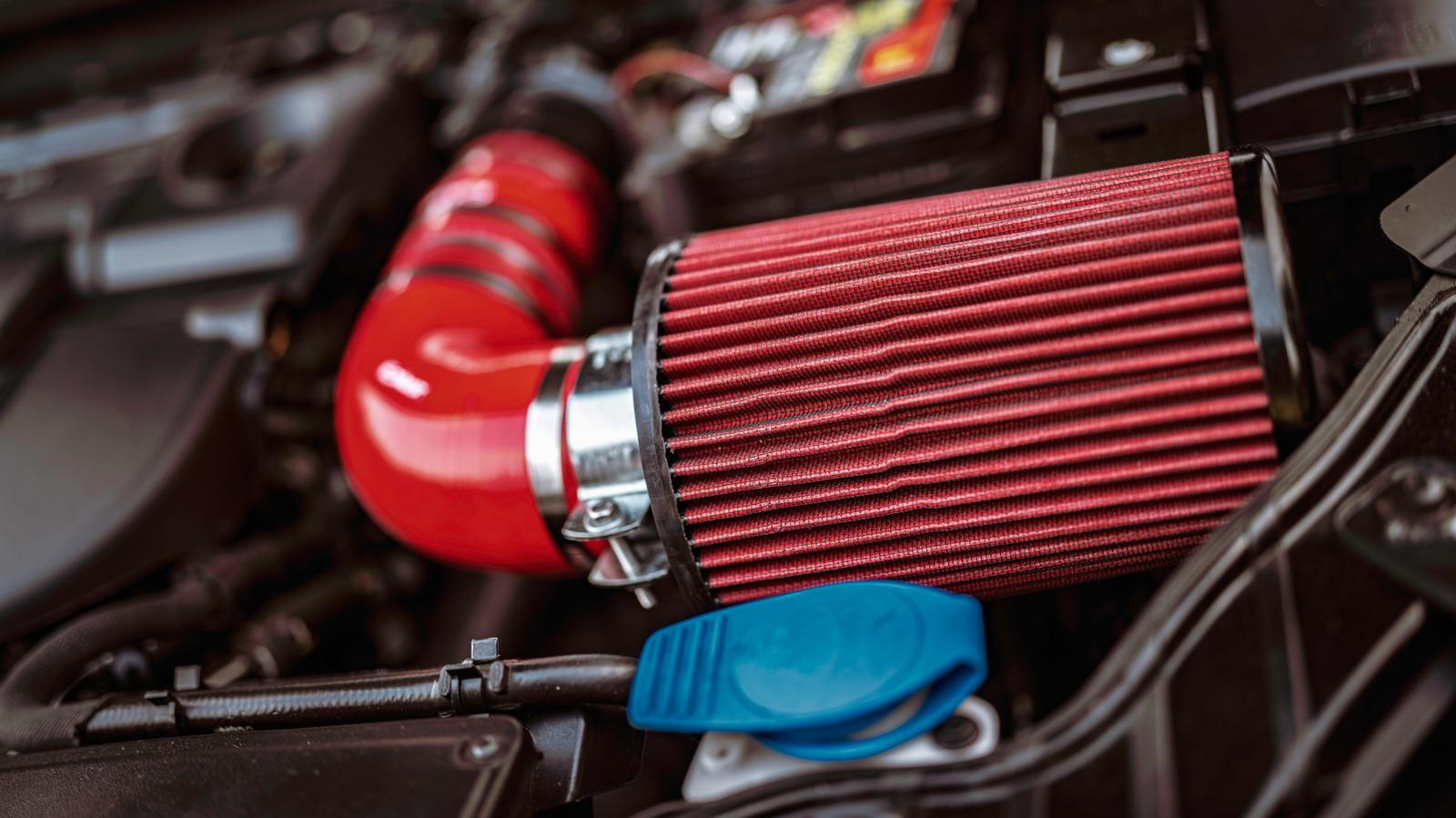
Oiled vs. Dry Air Filters 2026: Which Performance Upgrade Wins Your Engine?
Image: Oiled vs. Dry Air Filters 2026: Which Performance Upgrade Wins Your Engine? – Performance and Specifications
- Advertisement -
In 2026, as internal combustion engines reach their peak refinement and hybrid systems demand precision airflow, the debate between oiled and dry air filters has never been more relevant. Whether you are driving a high-performance sports car or a tuned daily driver, how your engine breathes determines its longevity and power output. But here is the immediate bottom line for enthusiasts: a premium performance filter setup in 2026 typically costs between $65 and $180 (₹5,400 to ₹15,000), depending on whether you opt for a drop-in replacement or a full cold-air intake system. The question isn’t just about the price—it’s about whether you want maximum airflow or minimum maintenance.
The Core Tech: How Oiled and Dry Filters Function
Performance air filters are designed to replace the restrictive paper filters found in stock vehicles. While paper filters are disposable and cheap, performance variants are built to last the lifetime of the vehicle. In 2026, new synthetic media technologies have blurred the lines, but the fundamental mechanical differences remain.
- Advertisement -
Performance and Airflow Dynamics
Oiled filters, popularized by brands like K&N and BMC, use multiple layers of medical-grade cotton gauze. The oil acts as a ‘tackifier,’ trapping microscopic dirt particles while allowing massive amounts of air to pass through the gaps in the cotton fibers. In contrast, dry filters (like those from AEM or S&B) use a much tighter synthetic weave. While dry filters have improved significantly, oiled filters still generally hold a 2-4% edge in raw CFM (Cubic Feet per Minute) airflow ratings.
Filtration Efficiency and Engine Safety
Filtration is measured in microns. Modern dry filters in 2026 use ‘nanofiber’ technology that can trap particles as small as 0.3 microns with 99% efficiency. Oiled filters rely on the oil’s stickiness; if the filter is under-oiled, filtration drops. If over-oiled, you risk the dreaded ‘sensor foul.’ For those driving in dusty environments like the Southwest US or Northern India, the dry filter’s consistent barrier is often preferred by 2026 off-road communities.
Impact on Sensors (The MAF Issue)
A common complaint in automotive forums (Reddit/NASIOC) involves the Mass Airflow (MAF) sensor. Users often blame oiled filters for leaving a residue on the sensor wire, leading to ‘Check Engine’ lights. However, 2026 studies show that 95% of these failures result from user error during the re-oiling process rather than the filter design itself. Dry filters eliminate this risk entirely, making them the ‘fail-safe’ choice for novice tuners.
- Advertisement -
Comparative Analysis: Oiled vs. Dry vs. OEM
| Feature | Oiled Filter (K&N/BMC) | Dry Filter (AEM/S&B) | Stock Paper Filter | ||||
|---|---|---|---|---|---|---|---|
| Airflow Rate | Highest (Excellent) | High (Very Good) | Low (Restrictive) | Lifespan | Lifetime (Washable) | Lifetime (Washable) | 10,000 – 15,000 Miles |
| Maintenance Intensity | High (Clean + Dry + Oil) | Medium (Wash + Dry) | Zero (Replace) | ||||
| MAF Sensor Safety | Risk if over-oiled | Completely Safe | Completely Safe | ||||
| Best For | Track/Street Performance | Daily Driving/Dusty Roads | Budget Maintenance |
Technical Specifications & Brand Comparison 2026
If you are looking to upgrade your vehicle’s intake in 2026, these are the technical benchmarks you should expect from top-tier brands.
| Brand & Model | Filter Media | Filtration Rating | Price (Est. 2026) |
|---|---|---|---|
| K&N High-Flow | Cotton Gauze (Oiled) | 98.5% Efficiency | $75.00 |
| AEM Dryflow | Synthetic Non-Woven | 99.2% Efficiency | $85.00 |
| BMC F1 Replacement | Multi-layer Cotton (Oiled) | 99.0% Efficiency | $110.00 |
| S&B Precision | 8-Layer Cotton/Dry Opt. | 99.5% Efficiency | $95.00 |
| Cosworth Performance | Synthetic Fiber (Dry) | 98.8% Efficiency | $120.00 |
Eco-Friendliness and Sustainability
In 2026, sustainability is a major selling point. Both oiled and dry performance filters are ‘green’ because they prevent dozens of paper filters from ending up in landfills over a car’s lifespan. Dry filters hold a slight edge here as they do not require petroleum-based cleaning and oiling kits.
Installation and Ease of Use
Most drop-in filters take less than 5 minutes to install. However, the ‘User Intent’ data shows that buyers are increasingly looking for ‘Dry’ options because they can be cleaned with a simple soap-and-water solution and dried quickly, whereas oiled filters often require 24 hours to fully dry before oil can be applied.
- Advertisement -
Frequently Asked Questions (People Also Ask)
- Do oiled air filters really damage MAF sensors? Only if over-oiled. If you follow the manufacturer’s instructions, they are perfectly safe.
- Is a dry filter better for a turbocharger? Dry filters are often preferred for turbos because they eliminate the risk of oil vapor being pulled into the turbo compressor wheel.
- How much horsepower does a performance filter add? Typically between 1 to 5 HP on a stock engine; more on tuned turbocharged engines.
- How often should I clean my performance filter? Usually every 25,000 to 50,000 miles, depending on driving conditions.
- Can I use an oiled filter cleaning kit on a dry filter? No. This will ruin the synthetic media of a dry filter.
- Are K&N filters worth it in 2026? Yes, for high-performance applications where maximum airflow is the priority.
- Which filter is better for off-roading? Dry filters are generally better as they don’t ‘clog’ as quickly with fine silt as oiled filters do.
- Does a performance filter void my car warranty? No, under the Magnuson-Moss Warranty Act, an aftermarket part does not void a warranty unless it caused a specific failure.
- Do dry filters sound different than oiled filters? Generally, no. The ‘intake growl’ comes from the removal of the stock airbox, not the filter media itself.
- Can I wash a dry filter with a vacuum? You can use low-pressure air or a vacuum to remove surface dust, but a deep wash is still recommended.
Verdict: Should You Buy an Oiled or Dry Filter?
Choosing between these two comes down to your personality as a car owner. Buy an oiled filter if you are a hands-on enthusiast who wants the absolute maximum airflow and doesn’t mind a weekend project of cleaning and meticulously re-oiling. Buy a dry filter if you want the performance gains over stock without the maintenance headache or the worry of sensor contamination.
Pros and Cons
Pros:
– Lifetime durability for both types.
– Improved throttle response.
– Sustainable and eco-friendly.
– Potential for minor MPG gains.
Cons:
– High initial cost compared to paper.
– Oiled filters can be messy to maintain.
– Dry filters may have slightly less airflow than oiled counterparts.
- Advertisement -