The Evolution of Practicality: Simple Energy’s New Family Move
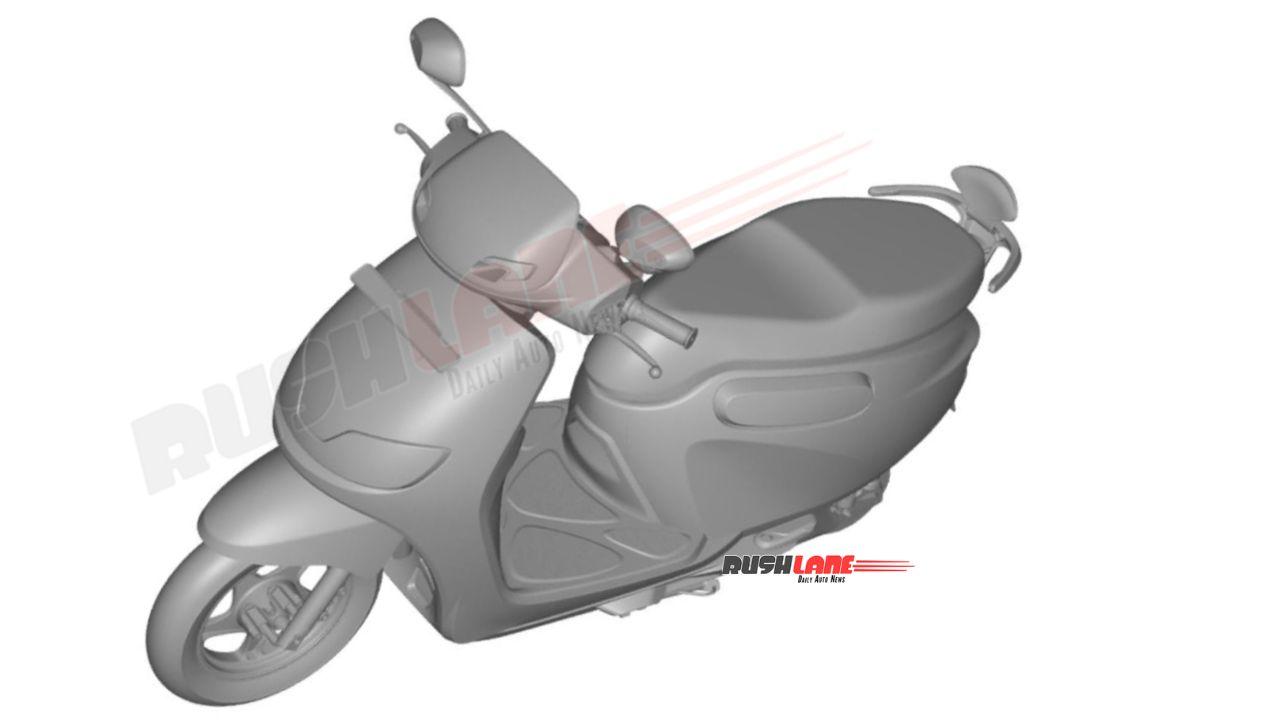
2026 Simple Energy Family Scooter Leaked: The Ultimate Ather Rizta & iQube Rival?
Image: 2026 Simple Energy Family Scooter Leaked: The Ultimate Ather Rizta & iQube Rival? – Performance and Specifications
Advertisement
For years, Simple Energy has been synonymous with raw performance and industry-leading range. However, the market dynamics of 2026 have shifted toward utility, comfort, and family-oriented ergonomics. Following the success of the Simple One, leaked patent images have now confirmed that the Bengaluru-based startup is ready to challenge the dominance of the Ather Rizta and TVS iQube. The new Simple Family Scooter (2026) is expected to launch at a highly competitive price point of ₹1.15 Lakh to ₹1.35 Lakh (ex-showroom), aiming directly at the heart of the Indian middle-class commuter segment.
While the Simple One focused on the ‘enthusiast’ who wanted 105 kmph top speeds, this new model is designed for the ‘household.’ It marks a significant departure from the sharp, aggressive lines of its predecessor, opting instead for a more rounded, approachable, and voluminous design language that prioritizes floorboard space and pillion comfort.
Advertisement
Design Philosophy: Function Over Form
The leaked patent drawings reveal a scooter that looks significantly bulkier than the Simple One. The front apron is wider, likely providing better wind protection, and the headlight assembly has been repositioned lower for a more ‘friendly’ aesthetic. The most notable change is the ultra-long seat. Much like the Ather Rizta, Simple Energy has recognized that Indian families often travel with children or heavy groceries, requiring a flat, wide seating area.
Performance and Battery: Efficiency Meets Reliability
Unlike the high-performance motor found in the Simple One, the 2026 family scooter is expected to feature a more efficient mid-drive motor tuned for city traffic. While top speed might be capped at 85 kmph, the focus is on ‘usable torque’ for climbing flyovers with a full load. The battery setup is rumored to be a fixed 3.5 kWh LFP unit, offering a real-world range of approximately 120-130 km on a single charge. This shift to LFP (Lithium Iron Phosphate) would improve the thermal stability and longevity of the battery, a common concern among family buyers.
Tech and Interior: A Digital Family Hub
The 2026 model doesn’t skimp on technology. It is expected to feature a 7-inch touchscreen dashboard with a simplified UI. Features include:
Advertisement
- Google Maps integration for seamless navigation.
- ‘Family Mode’ which allows speed limiting for younger riders.
- A massive 40-liter under-seat storage compartment.
- Reverse mode and Hill-hold assist as standard.
How It Compares: 2026 Family Scooter Showdown
In 2026, the electric scooter market is more crowded than ever. Simple Energy needs to prove that it can match the reliability of legacy brands like TVS and the ecosystem of Ather. Below is how the new Simple Family Scooter stacks up against its primary rivals.
| Feature | Simple Family Scooter (2026) | Ather Rizta (Z) | TVS iQube ST |
|---|---|---|---|
| Battery Capacity | 3.5 kWh (LFP) | 3.7 kWh (NMC) | 3.4 kWh (NMC) |
| True Range | 125 km | 120 km | 115 km |
| Top Speed | 85 kmph | 80 kmph | 82 kmph |
| Under-seat Storage | 42 Liters | 34 Liters | 32 Liters |
| Expected Price | ₹1.20 Lakh | ₹1.45 Lakh | ₹1.35 Lakh |
Safety Standards and Build Quality
One of the biggest complaints regarding early Simple Energy units was the fit and finish. For the 2026 model, the company has reportedly overhauled its manufacturing process at its Shoolagiri plant. The scooter is built on a high-tensile steel tubular frame, designed to handle the rough Indian roads. Safety features include a Combi-Braking System (CBS), side-stand sensor cut-off, and an IP67 rating for both the motor and the battery pack, ensuring water resistance during heavy monsoons.
Variant-Wise Pricing Strategy
To capture different segments of the market, Simple Energy is expected to release three distinct variants of the family scooter. Here is the projected pricing for 2026.
Advertisement
| Variant | Battery Type | Ex-Showroom Price | Target Audience |
|---|---|---|---|
| Simple Family ‘Lite’ | 2.9 kWh (Fixed) | ₹1,10,000 | Budget Conscious / Short Commutes |
| Simple Family ‘Standard’ | 3.5 kWh (Fixed) | ₹1,25,000 | Typical Urban Families |
| Simple Family ‘Plus’ | 4.0 kWh (Dual) | ₹1,40,000 | Long-distance Commuters |
People Also Ask: FAQ
- What is the launch date of the Simple Energy Family Scooter? It is expected to be officially unveiled in late 2025, with deliveries starting in early 2026.
- What is the range of the new Simple scooter? The standard variant is expected to offer 125 km of real-world range.
- How does it compare to the Ather Rizta? The Simple scooter offers a larger storage space (42L vs 34L) and a higher top speed.
- Does it have a removable battery? Most leaks suggest a fixed battery for better frame rigidity and storage space.
- Is Simple Energy reliable now? In 2026, the company has expanded its service network significantly to address previous complaints.
- What is the charging time? Using a home charger, it should take 4-5 hours for a 0-80% charge.
- Does it support fast charging? Yes, it is compatible with Simple’s ‘Loop’ fast-charging network.
- What are the color options? Expect sober family colors like Pearl White, Azure Blue, and Slate Grey.
- Can it carry two adults and a child? While legally meant for two, the extra-long seat is designed for maximum family comfort.
- Is there a subscription fee for GPS? Simple Energy usually offers a free 1-year ‘Smart Connect’ plan, followed by a nominal fee.
The Verdict: Should You Wait for the Simple Family Scooter?
The 2026 Simple Family Scooter is a calculated gamble. Simple Energy is moving away from its ‘speed-demon’ persona to become a household name. If you are looking for an EV that prioritizes storage, a massive seat, and a competitive price point, this scooter is worth the wait.
Pros:
- Market-leading under-seat storage (42L).
- Sturdy LFP battery chemistry for longer life.
- Cheaper than the Ather Rizta and TVS iQube.
Cons:
- Brand trust is still being rebuilt after early delivery delays.
- Design may be too ‘plain’ for those used to the Simple One’s looks.
- Service network is still smaller than TVS or Bajaj.