The 2026 Renault Bridger: Redefining Practicality in the Compact SUV Segment
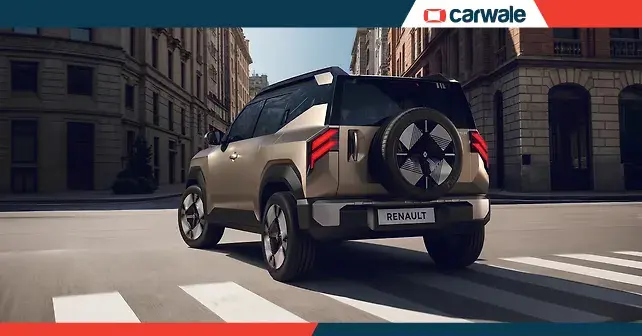
2026 Renault Bridger Compact SUV: The Ultimate Space-Focused Creta Rival Launched at ₹11 Lakh?
Image: 2026 Renault Bridger Compact SUV: The Ultimate Space-Focused Creta Rival Launched at ₹11 Lakh? – Performance and Specifications
- Advertisement -
Renault is preparing to shake up the Indian automotive landscape with its most ambitious project yet: the Renault Bridger. Set for a full-scale launch in early 2026, the Bridger isn’t just another compact SUV; it is a calculated gamble on what Indian families value most—interior volume and real-world utility. Based on the stunning Niagara concept architecture, the Bridger aims to bridge the gap between the budget-friendly Kiger and premium European SUVs.
With an expected starting price of ₹11.20 Lakh (Ex-showroom), Renault is positioning this vehicle directly against the Hyundai Creta, Kia Seltos, and the Maruti Suzuki Grand Vitara. As buyers move away from mere feature-loading toward better ride quality and cabin flexibility, Renault’s focus on ‘Space and Practicality’ might just be the masterstroke they need.
- Advertisement -
Exterior Design: Rugged Meets Futuristic
The 2026 Renault Bridger ditches the soft curves of the older Duster for a more chiseled, upright stance. It features high-mounted LED DRLs, a wide-slatted grille with integrated Renault lighting signatures, and a massive ground clearance of 210mm. The squared-off wheel arches and 18-inch alloy wheels give it a commanding road presence that rivals the mid-size SUV segment.
Interior & Technology: The ‘Space’ Bet
Inside is where Renault expects to win. By utilizing the CMF-B platform, the Bridger offers best-in-class wheelbase dimensions. Renault has implemented ‘Modular Living’—rear seats that slide and recline, a massive 520-liter boot, and over 30 liters of clever storage cubbies throughout the cabin. The dashboard is dominated by a 10.25-inch vertical touchscreen with wireless Android Auto and Apple CarPlay, alongside a fully digital driver’s display.
Performance: The Hybrid Leap
Under the hood, the Bridger will offer two primary powertrains. The entry-level variants will feature a 1.0L Turbo petrol engine, while the flagship models will debut Renault’s 1.3L Turbo engine co-developed with Mercedes-Benz. Furthermore, a ‘E-Tech’ Strong Hybrid variant is expected in late 2026, promising a staggering fuel efficiency of 24 kmpl.
- Advertisement -
Comparison: 2026 Renault Bridger vs. Rivals
How does the Bridger stack up against the reigning kings of the segment? Here is a direct comparison based on 2026 specifications.
| Feature | Renault Bridger (2026) | Hyundai Creta (2026) | Maruti Grand Vitara |
|---|---|---|---|
| Engine | 1.3L Turbo / 1.5L Hybrid | 1.5L Turbo / 1.5L Diesel | 1.5L Mild/Strong Hybrid |
| Boot Space | 520 Liters | 433 Liters | 373 Liters |
| Ground Clearance | 210 mm | 190 mm | 210 mm |
| Safety Rating | Targeting 5-Star BNCAP | 5-Star BNCAP | Targeting 5-Star BNCAP |
| Transmission | 6MT/7DCT/e-CVT | 6MT/IVT/7DCT | 5MT/6AT/e-CVT |
Technical Specifications
The technical architecture of the Bridger is designed for Indian road conditions, emphasizing suspension travel and structural rigidity.
| Specification | Details |
|---|---|
| Length / Width / Height | 4350mm / 1810mm / 1670mm |
| Wheelbase | 2675mm |
| Max Power | 158 BHP (1.3L Turbo) |
| Max Torque | 250 Nm |
| Fuel Tank | 50 Liters |
| Turning Radius | 5.2 Meters |
Expected Variant-Wise Pricing (Ex-Showroom)
Renault is expected to follow an aggressive pricing strategy to undercut the Korean rivals.
- Advertisement -
| Variant | Estimated Price (INR) | Key Highlight |
|---|---|---|
| RXE (Base) | ₹11.20 Lakh | Safety Kit, Projector Lamps |
| RXL (Mid) | ₹12.80 Lakh | 8-inch Touchscreen, Rear AC |
| RXT (Value) | ₹14.50 Lakh | Sunroof, Alloy Wheels |
| RXZ (Luxury) | ₹16.90 Lakh | ADRS, Ventilated Seats |
| Zen (E-Tech Hybrid) | ₹19.45 Lakh | Panoramic Sunroof, Strong Hybrid |
People Also Ask (FAQ)
1. What is the launch date of Renault Bridger in India?
The Renault Bridger is expected to make its official Indian debut in late 2025, with deliveries starting in early 2026.
2. Does the Renault Bridger have a sunroof?
Yes, the mid-spec RXT will feature a standard electric sunroof, while the RXZ and Zen variants will get a massive Panoramic Sunroof.
3. What is the mileage of the Renault Bridger Hybrid?
The E-Tech Strong Hybrid variant is expected to deliver an ARAI-certified mileage of approximately 24-26 kmpl.
- Advertisement -
4. Will there be a Diesel engine option?
No, Renault has moved away from diesel engines. The Bridger will be available in Turbo Petrol and Strong Hybrid options only.
5. Is the Renault Bridger 4WD?
The concept featured an e-4WD system. While the production version will primarily be FWD, a flagship AWD variant might be introduced for off-road enthusiasts.
6. What is the safety rating of the Renault Bridger?
Renault is aiming for a full 5-star rating at the Bharat NCAP (BNCAP) tests, equipped with 6 airbags as standard.
- Advertisement -
7. How much boot space does it offer?
The Bridger offers a class-leading 520-liter boot space, which can be expanded by sliding the rear seats forward.
8. Does it get ADAS?
Yes, the top-tier RXZ and Hybrid variants will come with Level 2 ADAS features including lane-keep assist and emergency braking.
9. What are the color options for 2026?
Expect new shades like ‘Caspian Blue’, ‘Iron Blue’, and a signature ‘Copper Gold’ launch color.
- Advertisement -
10. Is Renault Bridger better than the Mahindra XUV700?
While the XUV700 is a segment higher in size, the Bridger offers better maneuverability and likely higher fuel efficiency in its hybrid avatar.
Verdict: Should You Wait for the Renault Bridger?
The 2026 Renault Bridger is a vehicle for the pragmatic buyer. If you find the current crop of SUVs too cramped for five adults or are tired of the ‘feature-over-function’ trend, the Bridger will be worth the wait. It prioritizes cabin ergonomics, boot space, and fuel efficiency via hybrid tech.
Pros:
– Massive interior space and 520L boot.
– High-quality 1.3L Turbo engine performance.
– Strong safety focus with 6 airbags standard.
– Rugged European styling.
- Advertisement -
Cons:
– No Diesel option for high-mileage users.
– Renault’s service network is smaller than Maruti or Hyundai.
– Late entry into a hyper-competitive market.