The Affordable EV Revolution: Dacia’s Bold Move into 2026
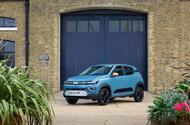
Dacia to Launch 4 New EVs by 2026: From £16k Twingo Sibling to Next-Gen Sandero EV
Image: Dacia to Launch 4 New EVs by 2026: From £16k Twingo Sibling to Next-Gen Sandero EV – Performance and Specifications
- Advertisement -
Dacia is officially ending the era of overpriced electric cars. While most manufacturers are struggling to bring EV prices below the £30,000 mark, the Romanian brand has confirmed a major growth push that will see four new full-electric vehicles launch by 2030. The headline stealer? A sub-£16,000 (approximately ₹17.5 Lakh) city car based on the Renault Twingo’s architecture. This move aims to reinforce Dacia’s positioning as the global benchmark for affordable, essential, and robust mobility.
Currently, the Dacia Spring is the brand’s lone warrior in the EV space. However, as we move into 2026, the landscape will change drastically. With the introduction of the AmpR Small platform, Dacia is leveraging Renault Group’s engineering to deliver high-quality electric drivetrains without the premium price tag. Here is everything you need to know about the upcoming Dacia EV lineup, from performance specs to the highly anticipated ‘Striker’ estate.
- Advertisement -
1. The Sub-£16,000 Twingo Sibling: The Ultimate City Commuter
Developed in a record-breaking 16 months, Dacia’s new entry-level city car is set to disrupt the A-segment. Built on the AmpR Small platform, this vehicle is a sibling to the upcoming Renault Twingo. While the Spring served as a proof of concept, this new model will offer significantly better refinement. Expect a battery capacity of around 30-40kWh, providing a city range of nearly 180 miles (290 km). Users on various forums have praised Dacia for maintaining physical buttons for AC and volume—a trend they expect to continue in the 2026 model, unlike the screen-heavy interiors of rivals.
2. Next-Gen Dacia Sandero EV: The Versatile Legend
The Sandero has been Europe’s best-selling car for years, and the 2026-2027 iteration will offer a full-electric variant alongside traditional hybrid options. Unlike the Renault 5, which focuses on retro-chic styling, the Sandero EV will prioritize utility and interior space. By using a ‘multi-energy’ platform, Dacia can keep costs low by sharing body panels between the ICE and EV versions.
3. The Dacia Striker: A Rugged Quasi-Estate
Revealed alongside the Bigster, the Striker is a new quasi-estate designed for families who need more than a hatchback but don’t want a full-blown SUV. While it launches initially with hybrid power, a full EV version is part of the roadmap toward 2030. It features Dacia’s new ‘Starkle’ material—a sustainable, unpainted plastic that resists scratches, making it perfect for off-road adventures.
- Advertisement -
Technical Specifications and Performance
Dacia’s strategy for 2026 isn’t about having the fastest cars; it’s about having the most efficient ones. By keeping the weight low, they can use smaller batteries to achieve respectable ranges.
| Feature | Dacia City EV (2026) | Dacia Sandero EV (2027) | Dacia Striker (Hybrid/EV) |
|---|---|---|---|
| Platform | AmpR Small | CMF-B EV / Multi-Energy | CMF-B Extended |
| Est. Range (WLTP) | 180 Miles | 250 Miles | 310 Miles (Hybrid Combined) |
| Battery Size | 30 – 40 kWh | 52 kWh | 1.2L Hybrid + 60kWh EV Opt. |
| Charging Speed | 50kW DC Fast Charge | 100kW DC Fast Charge | 100kW DC Fast Charge |
| 0-100 km/h | 11.5 Seconds | 9.0 Seconds | 8.5 Seconds |
Interior Tech and Safety Ratings
One of the biggest ‘Cons’ cited by current Dacia Spring owners is the basic infotainment and low NCAP safety scores. For 2026, Dacia is pivoting. The new models will feature the ‘YouClip’ accessory system, allowing users to mount phones, tablets, or cup holders anywhere in the cabin. Safety-wise, Dacia is aiming for a 3-star or 4-star Euro NCAP rating by including mandatory ADAS features like Lane Keep Assist and Emergency Braking, though they refuse to add ‘superfluous’ sensors that drive up the purchase price.
The Comparison: Dacia City EV vs. Rivals
How does Dacia’s £16k challenger stack up against the current leaders in the affordable EV segment?
- Advertisement -
| Feature | Dacia City EV (2026) | Citroen e-C3 | Renault 5 E-Tech |
|---|---|---|---|
| Starting Price | £15,995 (Est) | £21,990 | £22,995 |
| Battery | 35 kWh | 44 kWh | 40/52 kWh |
| Power | 65 hp | 113 hp | 120/150 hp |
| Infotainment | Smartphone-Centric | 10-inch Touchscreen | Google Built-in |
Variant-Wise Estimated Pricing (Ex-Showroom)
While official Indian pricing isn’t confirmed, the global conversion provides a clear picture of the market positioning.
| Variant | Estimated Price (GBP) | Estimated Price (INR Equiv.) |
|---|---|---|
| City EV Essential | £15,995 | ₹17.2 Lakh |
| City EV Expression | £17,500 | ₹18.8 Lakh |
| Sandero EV Base | £21,000 | ₹22.6 Lakh |
| Striker Hybrid Extreme | £26,500 | ₹28.5 Lakh |
People Also Ask (FAQs)
- What is the cheapest Dacia EV coming in 2026? The new city car based on the Twingo platform, priced under £16,000.
- Will the Dacia Sandero be fully electric? Yes, the next-gen Sandero will offer a full EV variant alongside hybrid models.
- What is the range of the 2026 Dacia EV? The city model is expected to offer around 180 miles (WLTP).
- Is Dacia owned by Renault? Yes, Dacia is a subsidiary of the Renault Group and shares its technology.
- Will Dacia EVs come to India? While Dacia operates as Renault in India, the Bigster and Sandero-based models are expected to arrive under the Renault/Nissan badge.
- Are Dacia EVs safe? Dacia focuses on ‘essential’ safety, meeting all legal requirements but avoiding expensive high-tech ADAS that adds cost.
- How long does it take to charge a Dacia EV? With DC fast charging, expect 20-80% in about 30 minutes.
- Does Dacia use recycled materials? Yes, the 2026 models use ‘Starkle’, a 20% recycled polypropylene.
- What is the Dacia Striker? It is a new rugged estate/SUV crossover related to the Bigster.
- Why are Dacia cars so cheap? They use proven technology from Renault, minimize weight, and omit non-essential luxury features.
Verdict: Should You Wait for the 2026 Dacia EV?
Pros: Unbeatable price point, rugged design, physical cabin controls, lightweight efficiency.
Cons: Lower safety ratings compared to premium brands, basic interior materials, slower DC charging than rivals.
- Advertisement -
Final Thoughts: If you are looking for a no-nonsense electric vehicle that treats mobility as a utility rather than a status symbol, the 2026 Dacia lineup is worth the wait. It represents the first real challenge to Chinese EV dominance in the budget sector.