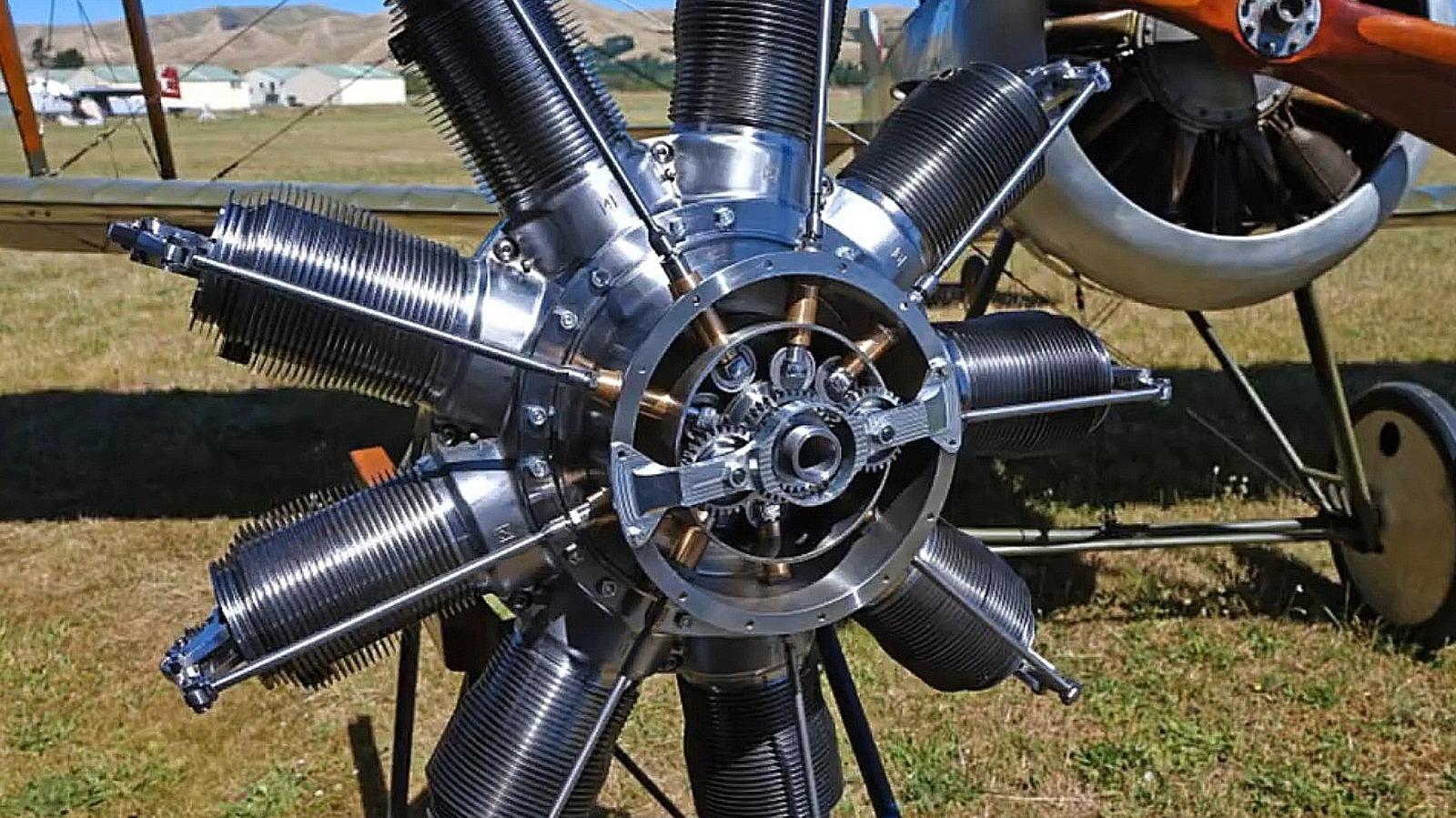
In the high-octane world of 2026, where electric propulsion and silent turbines dominate the skies, there remains a mechanical relic that continues to baffle engineers and thrill vintage enthusiasts alike. It is the Gnome Omega, a 118-year-old French rotary engine that doesn’t just power an aircraft—it dances with it. But this dance comes at a price: a constant shower of castor oil and a gyroscopic force that could flip a novice pilot into a tailspin. Currently, in the 2026 vintage market, a fully restored, airworthy Gnome Omega commands a staggering price of $85,000 to $110,000, depending on its provenance and serial number.
The 2026 Resurgence of the ‘Spinner’: A French Engineering Nightmare
118 Years Later: Why the Gnome Rotary Engine Remains the World’s Weirdest (and Messiest) 2026 Restoration Legend
Advertisement
Image: 118 Years Later: Why the Gnome Rotary Engine Remains the World’s Weirdest (and Messiest) 2026 Restoration Legend – Performance and Specifications
While the modern world often confuses ‘rotary’ with the Mazda Wankel engine, the Gnome Omega represents the ‘pre-Wankel’ era where the entire engine rotated around a stationary crankshaft. In 2026, we are seeing a massive resurgence in the restoration of these units, thanks to 3D-metal printing technology that allows enthusiasts to recreate the fragile cooling fins and valves that were once impossible to source.
Advertisement
The Mechanics of Total Loss Lubrication
One of the most peculiar aspects of the Gnome is its lubrication system. Unlike modern engines with closed-loop oil systems, the Gnome uses a ‘total loss’ system. Castor oil is mixed with fuel and sprayed into the crankcase. Because the engine rotates at high speeds, centrifugal force flings the oil out through the exhaust valves. For the pilot, this meant a constant mist of oil hitting their goggles. In 2026, vintage pilots still complain about the ‘laxative effect’ of inhaling castor oil fumes during a 30-minute flight—a legendary hazard of early aviation.
Why Castor Oil Was Both Friend and Foe
In the early 1900s, mineral oils would dissolve in the presence of gasoline. Castor oil, being a vegetable-based lubricant, was largely insoluble in fuel, making it the only viable choice for an engine that mixed fuel and oil in the crankcase. However, the mess it creates is monumental. Even in 2026, cleaning a Gnome-powered aircraft after a flight requires hours of degreasing. Yet, for purists, the sweet, nutty smell of burning castor oil is the ultimate olfactory hallmark of ‘real’ flying.
Technical Breakdown: Performance of the Gnome Omega
The performance of the Gnome was revolutionary for 1909 and remains fascinating in 2026. Because the cylinders themselves acted as a flywheel, the engine was incredibly smooth. There were no reciprocating vibrations that plagued stationary engines of the era. However, this rotating mass created a massive gyroscopic effect. If a pilot tried to turn right, the nose would pitch down; turn left, and the nose would pitch up. It required ‘combat’ levels of skill to manage even the simplest maneuvers.
Advertisement
Weight-to-Power Ratio and the Gyroscopic Effect
The Gnome Omega produced approximately 50 horsepower from a 7-cylinder configuration. Weighing in at only 75kg, its power-to-weight ratio was unmatched. In 2026, when we compare this to modern light aircraft engines, the Gnome’s simplicity is stark. There is no carburetor in the traditional sense; fuel is regulated by a simple needle valve. The cooling is purely atmospheric—since the cylinders are spinning through the air at 1,200 RPM, they never overheat.
The Lack of a Traditional Throttle: The ‘Blip’ System
Perhaps the most terrifying feature for a modern pilot is the lack of a throttle. The Gnome Omega essentially runs at ‘Full Power’ or ‘Off.’ To taxi or land, pilots use a ‘blip switch’ on the control stick to momentarily cut the ignition. This creates a distinctive stuttering sound (pop-pop-vroom) as the pilot modulates power. In the 2026 vintage circuit, mastering the blip switch is considered the ‘Black Belt’ of aviation skills.
Comparing the Legends of the Great War
To understand the Gnome’s place in 2026, we must compare it with its two closest historical rivals that are also seeing restoration interest: the Le Rhône 9C and the Bentley BR2.
Advertisement
| Feature | Gnome Omega (1909/2026) | Le Rhône 9C | Bentley BR2 |
|---|---|---|---|
| Horsepower | 50 HP | 80 HP | 230 HP | Weight | 75 kg | 121 kg | 225 kg | Control Method | Blip Switch Only | Limited Throttle | Full Carburetion | 2026 Valuation | $85,000+ | $95,000+ | $150,000+ | Maintenance Level | Extreme (Castor Oil) | High | Moderate |
2026 Market Valuation and Technical Specifications
If you are looking to acquire one of these ‘spinners’ in 2026, the market is niche but highly competitive. Below are the technical specs and the current variant-wise pricing for engines in various states of repair.
Table 1: Full Technical Specifications (Gnome Omega)
| Specification | Detail | ||
|---|---|---|---|
| Type | 7-Cylinder, Air-cooled Rotary | Bore / Stroke | 110 mm / 120 mm |
| Displacement | 8.0 Liters | ||
| Maximum RPM | 1,200 RPM | ||
| Lubricant | Pure Castor Oil (Grade A) | ||
| Fuel Type | 80 Octane Aviation Fuel |
Table 2: 2026 Market Pricing (Estimated)
| Condition Variant | Ex-Showroom/Auction Price |
|---|---|
| Static Display (Non-functional) | $35,000 – $45,000 |
| Restorable Core | $55,000 – $65,000 |
| Airworthy Condition (Certified) | $85,000 – $110,000 |
| Museum Quality (Original Parts) | $130,000+ |
User Intent: People Also Ask (FAQ)
- Why does the Gnome engine spin entirely? To solve the cooling problem. By spinning the cylinders through the air, it eliminated the need for heavy water-cooling systems.
- Is castor oil still used in these engines in 2026? Yes, because modern synthetic oils can react poorly with the bronze bushings and fuel mixtures used in these 100-year-old designs.
- What is the ‘laxative effect’ pilots talk about? Inhaling burnt castor oil mist acts as a natural laxative. Early pilots often suffered from digestive distress after long missions.
- Can you throttle a Gnome engine? No. It is controlled by cutting the ignition (blipping) or adjusting the fuel-to-air mix manually, which is very difficult.
- How many Gnome Omegas are left in 2026? Fewer than 50 original airworthy units exist globally, though high-end replicas are becoming more common.
- Is it legal to fly a rotary engine today? Yes, under ‘Experimental’ or ‘Vintage’ certification categories, provided it passes rigorous safety inspections.
- Why did rotary engines go extinct? They were limited by RPM (centrifugal force would explode the engine) and were incredibly fuel-inefficient.
- Does the Gnome Omega have a high NCAP safety rating? No. By modern standards, it is incredibly dangerous due to the gyroscopic forces and fire risk.
- What planes used the Gnome Omega? The Bleriot XI and the Sopwith Pup are the most famous examples.
- How much fuel does it consume? It is notoriously thirsty, consuming nearly 30 liters of fuel and 4 liters of castor oil per hour.
Verdict: Should You Buy a Gnome Rotary Engine in 2026?
Buying a Gnome Omega in 2026 is not a rational financial decision—it is an act of historical preservation and mechanical masochism. It is messy, dangerous, and expensive to maintain. However, nothing else in the world provides the same raw, visceral connection to the pioneers of flight.
Pros:
Advertisement
- Unmatched historical significance and ‘wow’ factor at airshows.
- Smooth, vibration-free operation compared to radial engines.
- Appreciating asset value in the 2026 vintage market.
Cons:
- The ‘Castor Oil Shower’ requires extensive post-flight cleaning.
- Extremely difficult to fly due to gyroscopic precession.
- High fuel and oil consumption with ‘Total Loss’ waste.
Final Thoughts: If you have the budget and a mechanic who doesn’t mind being covered in oil, the Gnome Omega is the ultimate trophy for any serious 2026 collector.
Advertisement