When we talk about the legendary muscle car era of the 1960s and 70s, the conversation usually revolves around displacement and horsepower. However, in 2026, as the restomod scene reaches its peak, the focus has shifted toward the components that can actually survive that power. Enter the Ford Toploader. While modern dual-clutch systems offer lightning shifts, the Toploader remains the gold standard for mechanical durability. Today, a professionally refurbished or high-spec reproduction Toploader costs between $2,500 and $5,200, depending on the gear set and torque rating. But what exactly makes this transmission so bulletproof even six decades after its debut?
The Engineering Genius: Why the ‘Top-Loading’ Design Matters
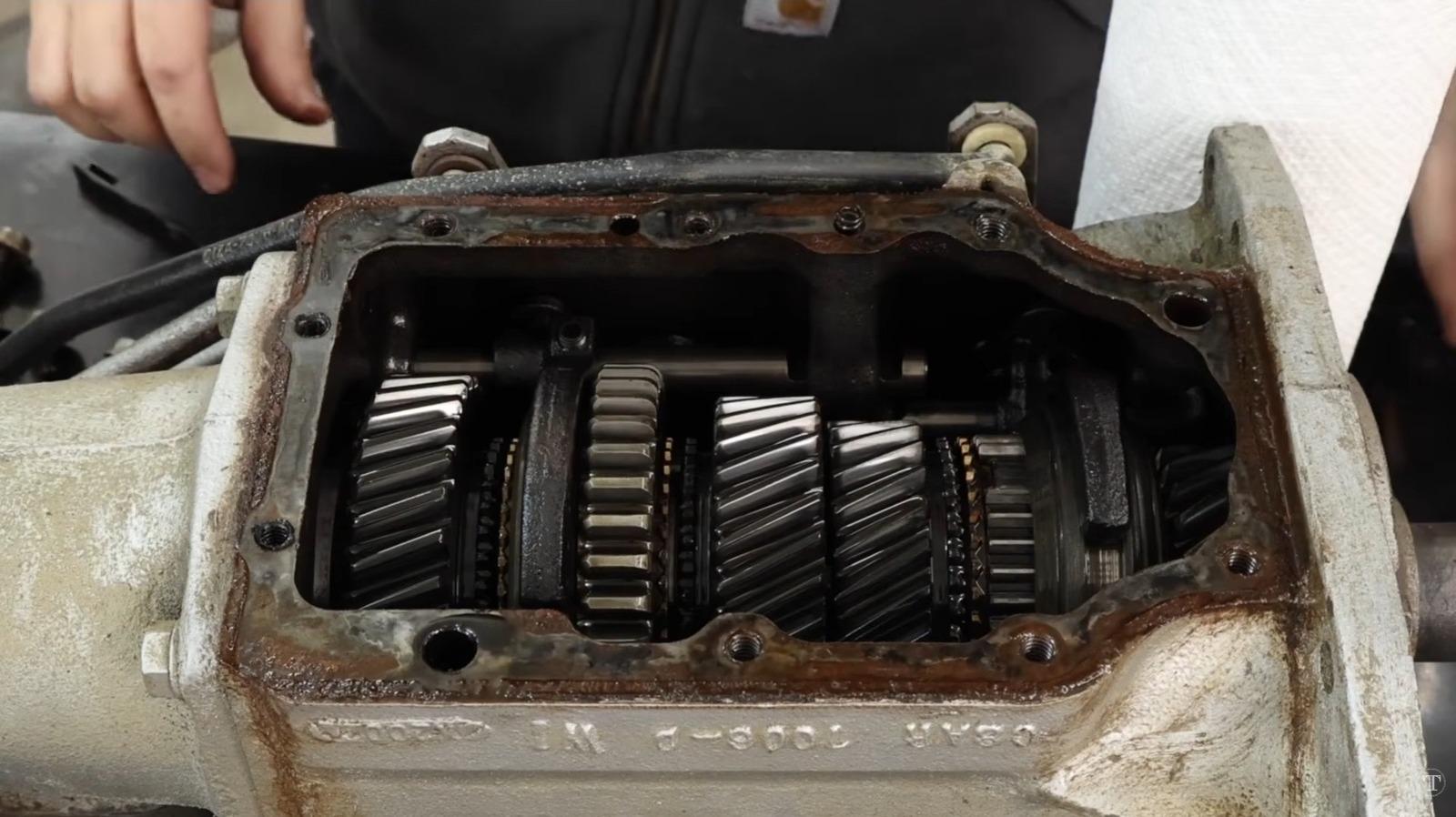
What Made Ford’s Toploader Transmission So Durable? The 2026 Guide to an American Icon
- Advertisement -
Image: What Made Ford’s Toploader Transmission So Durable? The 2026 Guide to an American Icon – Performance and Specifications
Most manual transmissions of the era used a side-loading design with a removable cover on the side of the case. While convenient for quick inspections, this created a structural weak point. Under high torque, the side-loading cases had a tendency to flex, which caused the gears to misalign and eventually shatter. Ford’s engineers solved this by designing a solid, cast-iron case that is accessed only through a removable plate on the top.
- Advertisement -
The Rigid Single-Piece Case
By eliminating the side opening, the Toploader case functions as a continuous structural box. In 2026, structural analysis tools have confirmed that this design reduces case deflection by nearly 40% compared to side-loading rivals. This rigidity ensures that the main shaft and countershaft remain perfectly parallel, even when launching a 500-horsepower Mustang on drag slicks.
Oversized Gear Sets and Metallurgy
Inside the case, Ford didn’t cut corners. The gears in a Toploader are significantly wider than those found in contemporary transmissions like the Borg-Warner T-10. This increased surface area distributes the load more effectively. Furthermore, modern 2026 restoration kits often utilize 9310 alloy steel or 8620 case-hardened steel, allowing these vintage units to handle upwards of 700 lb-ft of torque.
Synchronizer Innovation
One of the common praises from drivers on classic car forums is the Toploader’s ‘crisp’ shift feel. Ford utilized a unique synchronizer design that was more forgiving of high-RPM shifts. While modern users occasionally complain about the ‘notchy’ feel when cold, the consensus in the 2026 enthusiast community is that this is a fair trade-off for a transmission that refuses to grind under pressure.
- Advertisement -
2026 Updates: Modernizing the Classic Toploader
While the basic design remains unchanged, 2026 has brought several technological advancements to the Toploader ecosystem. Companies like David Kee and Liberty’s Gears now offer ‘Face-Plated’ versions for racing and ‘Cryogenic’ treatment for gear sets. These updates have eliminated the classic complaints regarding heat soak and long-term metal fatigue.
Cryogenic Hardening
Modern restomods often push 600+ horsepower. To accommodate this, 2026-spec Toploaders undergo cryogenic freezing, which rearranges the molecular structure of the steel to increase wear resistance by over 200%. This is the secret behind the ‘unbreakable’ reputation of today’s high-end builds.
Synthetic Lubricant Integration
A frequent user complaint in the past was the leaking associated with vintage seals. Modern 2026 gasket kits utilize Viton and advanced synthetics that allow the Toploader to run modern, low-friction MTF fluids without the risk of weeping or seal failure.
- Advertisement -
Technical Comparison: Toploader vs. The Competition
In the world of classic heavy-duty manuals, three names stand above the rest: the Ford Toploader, the Muncie M22 ‘Rock Crusher,’ and the Chrysler A833. Below is how they stack up in the 2026 market.
| Feature | Ford Toploader | Muncie M22 (Rock Crusher) | Chrysler A833 |
|---|---|---|---|
| Case Material | Cast Iron (Solid Box) | Aluminum (Side Load) | Cast Iron/Aluminum (Side) |
| Torque Rating (Restored) | 650+ lb-ft | 500 lb-ft | 600 lb-ft |
| 2026 Market Value | $3,200 – $4,800 | $2,800 – $4,500 | $2,500 – $4,000 |
| Primary Strength | Case Rigidity | Gear Hardness | Simplicity |
| Primary Weakness | Heavy Weight | Case Flex | Shift Linkage Wear |
Full Technical Specifications (HEH/RUG Models)
Whether you are hunting for a ‘Big In/Big Out’ 31-spline unit or a standard 28-spline version, the specifications matter. Here is the data for the most common 4-speed Toploader configurations available in 2026.
| Specification | Close Ratio (RUG-series) | Wide Ratio (HEH-series) |
|---|---|---|
| First Gear Ratio | 2.32:1 | 2.78:1 |
| Second Gear Ratio | 1.69:1 | 1.93:1 |
| Third Gear Ratio | 1.29:1 | 1.36:1 |
| Fourth Gear Ratio | 1.00:1 (Direct) | 1.00:1 (Direct) |
| Input Shaft Spline | 10 or 28 | 10 |
| Output Shaft Spline | 28 or 31 | 28 |
People Also Ask (FAQ)
- Is the Ford Toploader an overdrive transmission? No, the original 4-speed Toploader has a 1.00:1 fourth gear. However, modern 2026 conversion kits offer a 4th-gear overdrive swap.
- How do I identify a real Toploader? Look for the 10-bolt top cover and the ID tag on the passenger side near the tailhousing (look for codes like RUG or HEH).
- What oil should I use in 2026? While many use 75W-90, experts recommend high-quality GL-4 gear oil to protect the yellow metal (brass) synchronizers.
- Can a Toploader handle 700 horsepower? Yes, when upgraded with modern 9310 alloy gears and a 1-3/8 inch input shaft.
- Why is it called a ‘Toploader’? Because the internal components are loaded into the case from a hole in the top rather than the side.
- What is the difference between Close and Wide ratio? Close ratio keeps RPMs high between shifts (better for racing), while Wide ratio has a deeper first gear for better street acceleration.
- Did all Mustangs come with Toploaders? No, many lower-power models used the lighter-duty Borg-Warner T-10 or Dagenham transmissions.
- How much does a Toploader weigh? A cast-iron 4-speed Toploader weighs approximately 100-110 lbs dry.
- Is a Toploader better than a Tremec TKX? The TKX offers an extra gear (overdrive), but for pure period-correct durability and ‘brute strength’ feel, many prefer the Toploader.
- Are parts still available for Toploaders in 2026? Yes, the aftermarket support is stronger than ever with companies producing 100% new reproduction cases and internals.
Verdict: Should You Buy It?
The Ford Toploader isn’t just a transmission; it’s an insurance policy for your drivetrain. If you are building a period-correct 1960s muscle car or a high-torque restomod that will see track time, the Toploader is nearly impossible to beat. Its lack of an overdrive gear is its only modern drawback, making it less than ideal for long-distance highway cruising without a very low rear-end gear ratio.
- Advertisement -
Pros:
- Indestructible cast-iron top-loading design.
- Excellent parts availability in 2026.
- Handles massive torque without case flex.
- Appreciating value as a classic performance part.
Cons:
- Heavy compared to modern aluminum 5-speeds.
- No factory overdrive (unless modified).
- Shift action can be stiff when cold.
- Advertisement -