Efficiency Without the Battery: The 2026 Fuel Economy Leaders
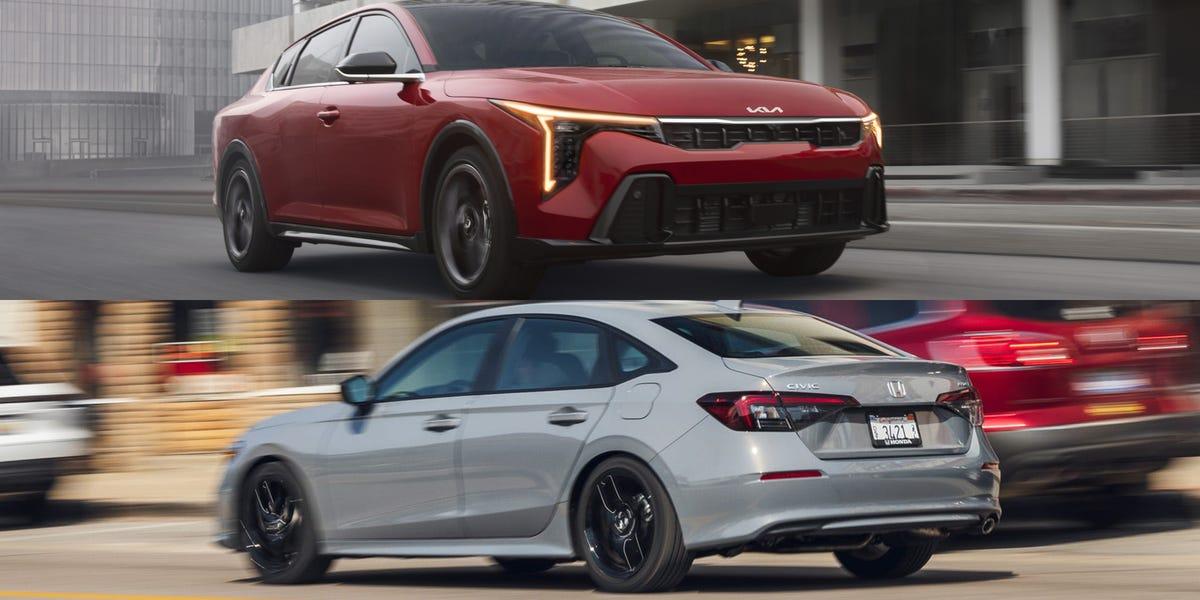
The Most Fuel-Efficient Cars That Aren’t Hybrids in 2026: Top MPG Champions
Image: The Most Fuel-Efficient Cars That Aren’t Hybrids in 2026: Top MPG Champions – Performance and Specifications
Advertisement
As fuel prices fluctuate and the push for electrification grows, many drivers still prefer the simplicity, lower upfront cost, and lightweight dynamics of a traditional internal combustion engine (ICE). For 2026, the benchmark for non-hybrid efficiency remains high, with the top contenders reaching a staggering 36 to 40 mpg combined. Leading the charge is the 2026 Nissan Versa, a vehicle that proves you don’t need a complex battery pack to save money at the pump. With a starting price of approximately $17,800 (roughly ₹14.90 Lakhs when adjusted for market positioning), these vehicles represent the peak of affordable engineering.
Design and Aerodynamics: Slippery Shapes for Maximum Range
The 2026 lineup of high-MPG gasoline cars, featuring the likes of the Nissan Versa, Mitsubishi Mirage, and the Honda Civic, shares a common trait: aerodynamic optimization. To achieve 36+ mpg, manufacturers have moved beyond simple aesthetics. The 2026 Versa features active grille shutters that close at high speeds to reduce drag and a redesigned rear diffuser to manage airflow.
Advertisement
Modern Aesthetics and Compact Footprints
The Mitsubishi Mirage, while aging, remains a masterclass in weight reduction. By keeping the curb weight under 2,100 lbs, it requires less energy to move. Meanwhile, the 2026 Honda Civic 2.0L NA model utilizes a long-wheelbase design that provides stability while maintaining a low-slung profile to cut through the air. You’ll notice fewer ‘boxy’ SUVs in this efficiency tier, as the sedan and hatchback forms remain the kings of the wind tunnel.
Performance: Small Displacement, Big Technology
How do these cars achieve hybrid-like numbers? It comes down to thermal efficiency. The 2026 engines are typically small-displacement four-cylinders (1.2L to 2.0L) utilizing high-pressure direct injection and Variable Valve Event and Lift (VVEL) technology. These engines are paired with refined Continuously Variable Transmissions (CVTs) that are programmed to keep the RPMs in the ‘sweet spot’ for fuel economy.
The Driving Experience
While these cars aren’t built for the drag strip, the 2026 models have improved significantly in NVH (Noise, Vibration, and Harshness) levels. The 2026 Nissan Versa offers a smooth 122 horsepower, which feels adequate for city commuting and highway cruising. Users on forums like Reddit and NicoClub praise the 2026 updates for reducing the ‘rubber band’ feel previously associated with CVTs.
Advertisement
Interior, Tech, and Safety: No Longer Just ‘Basic’
In 2026, being fuel-efficient doesn’t mean being stripped out. The interior of the 2026 Hyundai Elantra (Non-Hybrid) features a dual 10.25-inch screen setup that looks more like a luxury car than an economy leader. Apple CarPlay and Android Auto are now standard across all models mentioned in this list.
Safety and NCAP Ratings
Safety is a major talking point for 2026. The Nissan Versa and Honda Civic have both targeted 5-star NCAP ratings. Standard safety suites now include:
- Automatic Emergency Braking with Pedestrian Detection
- Lane Departure Warning
- High Beam Assist
- Blind Spot Warning (on higher trims)
2026 Rivals Comparison
| Feature | 2026 Nissan Versa | 2026 Mitsubishi Mirage | 2026 Honda Civic (2.0L) |
|---|---|---|---|
| Combined MPG | 35-36 MPG | 39 MPG | 33-35 MPG |
| Horsepower | 122 hp | 78 hp | 158 hp |
| Transmission | Xtronic CVT | CVT / 5-Speed MT | CVT |
| Starting MSRP (Est) | $17,800 | $17,200 | $25,500 |
Full Technical Specifications
| Specification | Details (Primary Focus: 2026 Versa) | ||
|---|---|---|---|
| Engine Type | 1.6-liter DOHC 16-valve 4-cylinder | Valvetrain | Twin CVTC |
| Fuel System | Sequential Multi-port Injection | ||
| Curb Weight | 2,600 – 2,750 lbs | ||
| Fuel Tank Capacity | 10.8 Gallons |
Variant-wise Pricing (Estimated Ex-Showroom)
| Variant | Price (USD) | Price (Converted INR Est.) |
|---|---|---|
| Base S Trim | $17,800 | ₹14,95,000 |
| Mid SV Trim | $20,500 | ₹17,20,000 |
| Top SR Trim | $21,900 | ₹18,40,000 |
People Also Ask (FAQ)
1. What is the most fuel-efficient non-hybrid car for 2026?
The Mitsubishi Mirage remains the leader at 39 combined MPG, followed closely by the Nissan Versa at 36 combined MPG.
Advertisement
2. Are non-hybrid cars cheaper to maintain than hybrids?
Generally, yes. Non-hybrid cars avoid the cost of battery replacements and the complexity of dual-powertrain systems.
3. Can a non-hybrid car get 40 MPG?
Yes, several models like the Mirage can hit 43 MPG on the highway, resulting in near-40 combined figures.
4. Is the 2026 Nissan Versa good for long drives?
With Zero Gravity seats and improved sound insulation, it is much more comfortable for long trips than previous generations.
Advertisement
5. Why are there so few non-hybrid efficient cars left?
Most manufacturers are moving toward hybrids to meet stricter fleet emission standards set by governments.
6. Does the 2026 Honda Civic still offer a manual transmission?
Manual transmissions are becoming rare, mostly reserved for the Si or Type R performance trims, while the efficient 2.0L uses a CVT.
7. What is the real-world mileage of these cars?
In real-world testing (Car and Driver), the 2026 non-hybrids usually stay within 5% of their EPA estimates if driven conservatively.
Advertisement
8. Are small efficient cars safe in 2026?
Yes, modern high-strength steel and advanced driver assistance systems (ADAS) have significantly closed the safety gap between small cars and SUVs.
9. What are the cons of buying a non-hybrid for efficiency?
The main drawbacks are lower low-end torque compared to electric motors and higher emissions than hybrid counterparts.
10. Is the Mitsubishi Mirage being discontinued in 2026?
There are rumors of its discontinuation, but for the 2026 model year, it remains the efficiency king in many markets.
Advertisement
Verdict: Should You Buy a Non-Hybrid in 2026?
If you are looking for the lowest possible ‘Total Cost of Ownership,’ the answer is a resounding yes. These vehicles offer the best balance between purchase price and running costs. While hybrids save more on gas, it often takes 5-7 years of driving to recoup the higher initial purchase price of a hybrid over a car like the Nissan Versa.
Pros
- Lowest initial purchase price in the market.
- Simple mechanicals mean cheaper long-term repairs.
- Lightweight handling and easy parking.
- Impressive highway range.
Cons
- Lacks the instant torque of an electric motor.
- CVT transmissions can be noisy under heavy acceleration.
- Resale value may be lower as the market shifts toward EVs.