The Undisputed Kings of the Big Block Era: Mopar 440 vs. 440 Magnum
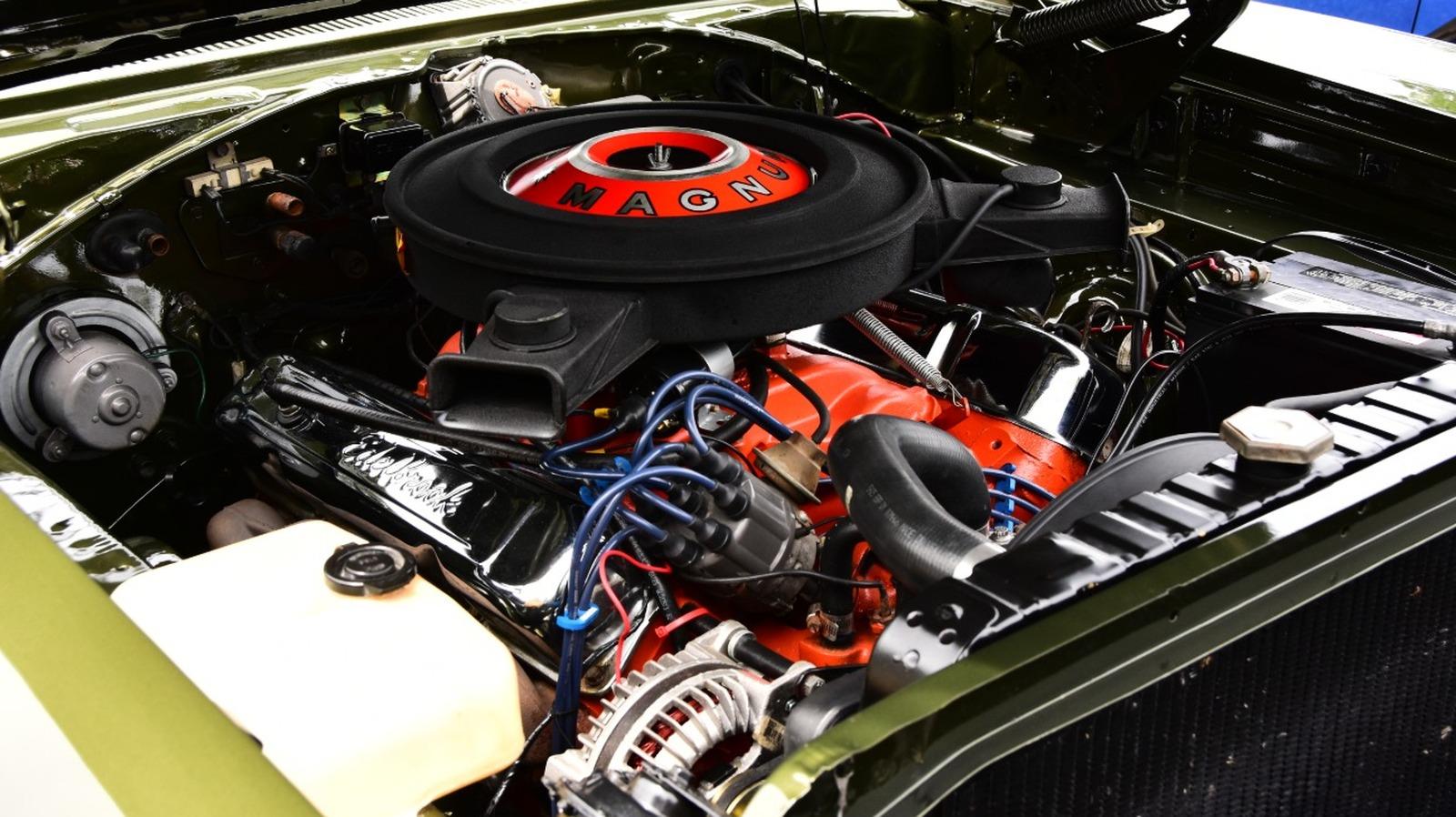
Mopar 440 vs. 440 Magnum: The Definitive Muscle Car Engine Guide for 2026 Restomodders
Image: Mopar 440 vs. 440 Magnum: The Definitive Muscle Car Engine Guide for 2026 Restomodders – Performance and Specifications
Advertisement
In the world of American muscle, few numbers carry as much weight as ‘440’. While modern enthusiasts in 2026 are looking toward electrification, the demand for high-displacement Mopar legacy engines has reached an all-time high. If you are looking to buy a restored classic or a high-performance crate engine today, you will find that a professionally built 440 Magnum can cost anywhere from $12,000 to $28,000 depending on the build specifications. This article dives deep into the mechanical DNA that separates the standard 440 from the legendary 440 Magnum.
The Evolution of the RB Block in 2026
The 440-cubic-inch V8 belongs to the ‘Raised B’ (RB) engine family. By 2026, these engines have transitioned from scrapyard finds to blue-chip investments. The standard 440 was the workhorse, found in luxury barges and heavy-duty cruisers, designed for smooth torque delivery. However, the 440 Magnum (and its Plymouth twin, the 440 Super Commando) was engineered for one thing: street dominance. In today’s market, enthusiasts value the ‘HP’ stamp on the block more than ever, as original blocks become increasingly scarce.
Advertisement
Design and Performance: What Sets the Magnum Apart?
Internal Upgrades and Camshaft Profiles
The primary difference between a standard 440 and a 440 Magnum lies in the internals. The Magnum was equipped with a more aggressive camshaft, high-flow cylinder heads, and improved valve springs. These modifications allowed the engine to breathe better at high RPMs, a necessity for the drag strips of the late ’60s. Modern builders in 2026 often use the Magnum’s architecture as a baseline, adding electronic fuel injection (EFI) to marry classic power with modern drivability.
The Cooling and Exhaust Systems
To handle the extra heat generated by high-performance driving, the 440 Magnum featured a more robust cooling system and high-flow exhaust manifolds. While the standard 440 used restrictive manifolds to keep the engine quiet for Chrysler’s luxury line, the Magnum’s exhaust was designed to growl. Today, many 2026 restomod projects replace these with long-tube headers, but the original ‘HP’ manifolds remain a prized possession for purists.
Technical Specifications and Market Comparisons
When comparing these engines to modern powerplants or even their period rivals like the 426 Hemi, the 440 Magnum stands out for its ‘usable’ torque. Below is the detailed technical breakdown for the 2026 collector market.
Advertisement
| Feature | Standard 440 (1967-1971) | 440 Magnum / Super Commando | Modern 2026 Crate Equivalent |
|---|---|---|---|
| Compression Ratio | 9.5:1 to 10.1:1 | 10.1:1 to 10.5:1 | 10.5:1 (Typical) |
| Horsepower (Gross) | 350 hp | 375 – 390 hp | 450+ hp |
| Induction | 4-Barrel Carburetor | 4-Barrel / Six-Pack (3×2) | Modern EFI / Sniper Kits |
| Main Use | Chrysler New Yorker / Imperial | Dodge Charger / Plymouth GTX | Custom Restomods |
| 2026 Market Value | $5,000 – $8,000 (Core) | $15,000+ (Restored) | $22,000 (Turn-key) |
Safety and Structural Integrity in the 2026 Restomod Scene
While an engine doesn’t have an NCAP rating, the vehicles they power in 2026—like the Dodge Charger and Plymouth Road Runner—often undergo modern safety upgrades. When dropping a 440 Magnum into a classic chassis, experts recommend 2026-spec subframe connectors and 4-wheel disc brake conversions to handle the 480 lb-ft of torque that these engines naturally produce.
The Rivalry: 440 Magnum vs. The Competition
| Engine Model | Displacement | Torque (lb-ft) | Best For |
|---|---|---|---|
| Mopar 440 Magnum | 7.2L | 480 lb-ft | Streetability & Low-end Grunt |
| Mopar 426 Hemi | 7.0L | 490 lb-ft | High-RPM Racing / Investment |
| Chevy 454 LS6 | 7.4L | 500 lb-ft | Pure Muscle Bragging Rights |
Variant-Wise Pricing for 2026 Restoration Projects
| Engine Variant | Condition | Estimated Price (USD) |
|---|---|---|
| Standard 440 RB Block | Refurbished | $7,500 |
| 440 Magnum (HP Stamped) | Concours Restored | $18,500 |
| 440 Six-Pack (V-Code) | Original/Matching | $25,000+ |
| Modern Aluminum 440 | New Crate | $21,000 |
People Also Ask (FAQ)
1. Is the 440 Magnum faster than a 426 Hemi?
In a street setting, the 440 Magnum often feels faster due to its low-end torque, though the Hemi wins on the track at high RPMs.
2. What does the ‘HP’ stamp mean on a 440 block?
It stands for ‘High Performance,’ indicating the engine is a Magnum/Super Commando spec with forged internals.
Advertisement
3. Can I run a 440 Magnum on modern pump gas in 2026?
Yes, but you may need to retard the timing or use octane boosters if the compression ratio is above 10.5:1.
4. What is the fuel economy of a 440 Magnum?
Expect 8-12 MPG, depending on your driving style and rear-end gears.
5. Which cars came with the 440 Magnum?
The Dodge Charger, Challenger, Coronet, and Plymouth’s GTX and Sport Fury.
Advertisement
6. Is a 440 engine reliable?
Extremely. The RB block is known for its thick walls and durability.
7. What is a 440 ‘Six-Pack’?
It is a 440 engine equipped with three two-barrel carburetors, producing 390 hp.
8. Are 440 parts still available in 2026?
Yes, the aftermarket support through Mopar Direct Connection and third-party vendors is massive.
Advertisement
9. How much oil does a 440 take?
Typically 5 to 6 quarts, depending on the oil pan used.
10. Should I choose a 440 over a modern Hellcat swap?
Choose the 440 if you want period-correct sound, simplicity, and ‘old school’ soul.
Verdict: Should You Buy a 440 Magnum in 2026?
The 440 Magnum remains the king of the ‘Blue Collar’ muscle engines. It offers 90% of the performance of a Hemi for 50% of the price. If you are building a classic Mopar, the 440 Magnum is the best balance of power, reliability, and heritage.
Advertisement
Pros:
– Incredible low-end torque
– Simpler to maintain than a Hemi
– Massive aftermarket support in 2026
Cons:
– Heavy iron block
– Poor fuel economy
– Increasing scarcity of original parts
Advertisement