Is the Dream of a Budget Nissan EV Dead? The Entry-Level Leaf Hits a Roadblock
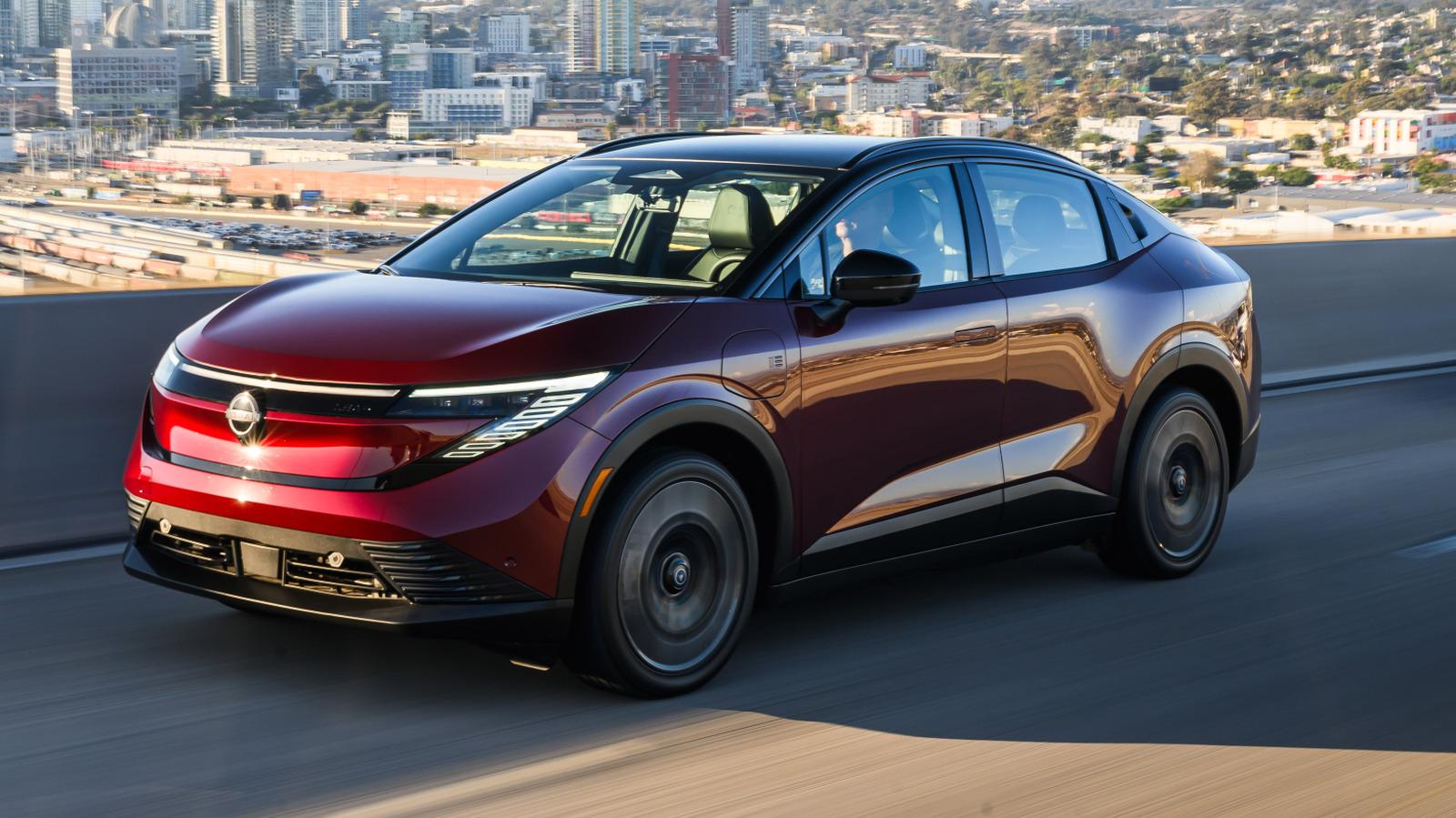
The ‘Evolving EV Landscape’ Means the Cheapest Nissan Leaf is Delayed Indefinitely
Image: The ‘Evolving EV Landscape’ Means the Cheapest Nissan Leaf is Delayed Indefinitely – Performance and Specifications
Advertisement
For over a decade, the Nissan Leaf has been the poster child for affordable electric mobility. It was the car that proved you didn’t need a six-figure salary to own a reliable, zero-emission vehicle. However, as we move into 2026, the landscape of the electric vehicle market is shifting, and not necessarily in favor of the budget-conscious buyer. Recent reports have confirmed that the much-anticipated entry-level Nissan Leaf S—the model promised to be the cheapest in the lineup—has been delayed indefinitely.
Nissan executives have pointed to an “evolving EV landscape” as the primary reason for shelving the base model. This move has left many enthusiasts wondering if the age of the truly affordable new EV is slipping away, or if Nissan is simply pivoting to survive a more competitive, high-tech market. Let’s dive into what this delay means, what the new 2026 Leaf actually looks like, and why the sub-$30,000 price point is becoming a battlefield for manufacturers.
Advertisement
The ‘Evolving EV Landscape’ Explained
The phrase “evolving EV landscape” is corporate speak for a very complex set of challenges. In 2026, the cost of raw materials for batteries, the shift in government tax credits, and the rise of high-tech Chinese competitors have changed the rules of the game. For Nissan, producing a car with a smaller battery (the planned 52 kWh pack) at a rock-bottom price became difficult to justify when the profit margins were razor-thin.
Furthermore, consumer demand is shifting. While everyone says they want a cheap EV, sales data shows that most buyers prioritize range and fast-charging capabilities over the absolute lowest price. By focusing on the larger-battery variants first, Nissan is betting that customers would rather pay a little more for a car that can actually handle a weekend road trip.
A Radical Transformation: From Hatchback to Crossover
One of the biggest reasons the “cheap” Leaf is delayed is that the car itself is no longer the simple hatchback we once knew. The 2026 Nissan Leaf has undergone a total metamorphosis, transforming into a sleek crossover SUV. Heavily inspired by the Nissan Chill-Out concept, the new Leaf looks more like a shrunken-down Nissan Ariya than its predecessor.
Advertisement
This new design brings better aerodynamics, a higher driving position, and a much more premium feel. However, crossovers are naturally more expensive to build than small hatchbacks. The 2026 model now rides on the advanced CMF-EV platform, which it shares with the Ariya and the Renault Megane E-Tech. While this makes the car better in every technical way, it also pushes the price floor higher.
Technical Specs: 2025 vs. 2026 Nissan Leaf
To understand why the new model is such a leap forward, we need to look at the numbers. The table below compares the outgoing 2025 hatchback with the all-new 2026 crossover.
| Feature | 2025 Nissan Leaf (Hatchback) | 2026 Nissan Leaf (Crossover) |
|---|---|---|
| Base Battery Size | 40 kWh | 75 kWh (S+ Trim) |
| Max Range (EPA) | 212 Miles | 303 Miles |
| Horsepower | 147 hp | 214 hp |
| Charging Port | CHAdeMO / J1772 | NACS (Tesla Style) |
| Drive Type | Front-Wheel Drive | Front-Wheel Drive |
Pricing Breakdown: What Can You Actually Buy?
Since the “base” S trim (which was expected to cost around $27,000) is on ice, the entry point for the 2026 lineup is now the Leaf S+. While it is more expensive, it offers significantly more value than the old base models ever did. Here is how the 2026 pricing currently stands:
Advertisement
| Trim Level | Estimated MSRP | Key Highlights |
|---|---|---|
| Leaf S+ | $29,990 | 75 kWh battery, 303-mile range, 12.3-inch screen |
| Leaf SV+ | $34,230 | ProPILOT Assist, 14.3-inch dual displays, 19-inch wheels |
| Leaf Platinum+ | $38,990 | Bose Sound System, Panoramic Moonroof, 360 Camera |
The Competition: Who Wins the Budget EV Battle?
With Nissan delaying its cheapest variant, other manufacturers are smelling blood in the water. The Chevrolet Bolt has been revived for 2026, and the Hyundai Kona Electric remains a strong contender. Below is a comparison of how the 2026 Leaf stacks up against its closest rivals in the budget space.
| Vehicle | Starting Price | Range (Est.) | Body Style |
|---|---|---|---|
| 2026 Nissan Leaf S+ | $29,990 | 303 Miles | Crossover |
| 2026 Chevrolet Bolt EV | $28,500 | 259 Miles | Hatchback |
| 2026 Hyundai Kona Electric | $33,000 | 261 Miles | Crossover |
| 2026 Tesla Model 2 (Rumored) | $25,000 | 250 Miles | Compact |
Why the Sunderland Factory Matters
Production for the new Leaf crossover is centered at Nissan’s Sunderland plant in the UK. This facility has been transformed through the EV36Zero project, a massive investment that combines vehicle production, battery manufacturing, and renewable energy. By building the car in a high-tech, integrated hub, Nissan hopes to keep costs down in the long run. However, for US buyers, import logistics and the lack of a local manufacturing base for this specific platform mean that prices are harder to slash compared to domestic rivals.
Battery Tech and the NACS Standard
One major win for the 2026 Nissan Leaf is the switch to the North American Charging Standard (NACS). This means Leaf owners will finally have native access to the Tesla Supercharger network without needing clunky adapters. Additionally, the new thermal management system for the battery promises faster charging in cold weather—a common complaint with older Leaf models that used air-cooled batteries.
Advertisement
Frequently Asked Questions (FAQ)
1. Is the Nissan Leaf being discontinued?
No, but the hatchback version is being phased out. The Leaf name lives on as a new all-electric crossover SUV starting with the 2026 model year.
2. Why was the cheapest version of the 2026 Leaf delayed?
Nissan cited an “evolving EV landscape,” which likely refers to the difficulty of making a profit on a low-priced EV with a small battery amidst rising production costs and changing market demands.
3. How much does the 2026 Nissan Leaf cost?
The 2026 model starts at $29,990 for the S+ trim. Higher trims like the Platinum+ can reach nearly $40,000.
Advertisement
4. What is the range of the 2026 Nissan Leaf?
The 2026 Leaf S+ offers an impressive 303 miles of range on a full charge. Higher trims with larger wheels may see a slight decrease to around 259–288 miles.
5. Does the new Nissan Leaf support Tesla Superchargers?
Yes! The 2026 Leaf comes standard with a NACS port, allowing it to use Tesla’s vast Supercharger network across North America.
6. Is the 2026 Nissan Leaf eligible for the federal tax credit?
Currently, because the 2026 Leaf is produced in the UK and Japan, it may not qualify for the full $7,500 federal tax credit in the US. However, leasing options often allow the credit to be passed on to the consumer.
Advertisement
7. Will there be an All-Wheel Drive (AWD) version of the Leaf?
While the platform supports e-4ORCE AWD, the 2026 Leaf is launching primarily as a Front-Wheel Drive (FWD) vehicle to keep the entry price competitive.
8. How fast does the 2026 Leaf charge?
The new model supports DC fast charging up to 150 kW, a significant upgrade from the 50 kW limit on older models. This allows for a 10% to 80% charge in about 30 minutes.
9. What happened to the 52 kWh battery option?
That was the battery meant for the “cheapest” S trim. It has been delayed indefinitely for the US market, as Nissan focuses on the higher-range 75 kWh battery.
Advertisement
10. Is the 2026 Leaf better than the Chevy Bolt?
The Leaf offers a longer range (303 miles vs 259 miles) and a more modern crossover interior, but the Bolt is expected to have a slightly lower starting price. It depends on whether you value range or budget more.