Imagine navigating through the bumper-to-bumper chaos of Silk Board in Bengaluru or the Western Express Highway in Mumbai without ever having to press a clutch pedal. For years, this luxury was reserved for the elite, but in 2026, the landscape has shifted entirely. With entry-level automatic cars now starting as low as ₹6.45 Lakh (ex-showroom), the manual gearbox is fast becoming a niche enthusiast’s choice rather than a budget necessity.
The Great Shift: How Automatics Conquered the Mass Market
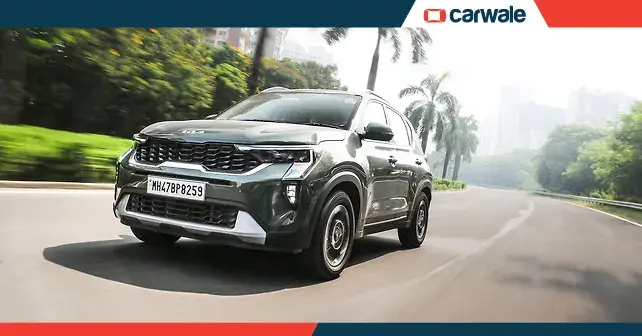
The End of the Clutch Pedal? Why Automatics Are Now Standard Across Lower Variants in 2026
- Advertisement -
Image: The End of the Clutch Pedal? Why Automatics Are Now Standard Across Lower Variants in 2026 – Performance and Specifications
In 2026, the Indian automotive sector has reached a tipping point. Data suggests that over 55% of all new car sales in the sub-₹15 lakh segment are now automatic variants. This isn’t just a trend; it’s a structural change driven by technological refinement and a massive shift in urban demographics. Manufacturers like Maruti Suzuki, Hyundai, and Tata have responded by offering Automated Manual Transmissions (AMT), Continuously Variable Transmissions (CVT), and even Dual-Clutch Transmissions (DCT) right from the base and mid-spec variants.
- Advertisement -
1. The Refinement of AMT Technology in 2026
Gone are the days when AMTs were synonymous with ‘head-nod’ and jerky shifts. The 2026 iterations of AMT systems use advanced actuators and predictive AI software that syncs with GPS data to anticipate shifts based on terrain. This has made the entry-level automatic experience almost as smooth as a traditional torque converter.
2. Urban Congestion: The Silent Salesman
With average commute speeds in Indian metros dropping to under 15 km/h, the physical strain of operating a manual gearbox has become a primary ‘pain point’ for buyers. Forums like Team-BHP are flooded with users stating they switched to automatics solely to preserve their knee health, leading to a surge in demand for the ‘S’ and ‘V’ trims of popular hatchbacks that now come standard with two pedals.
3. The Price Gap Has Vanished
Previously, opting for an automatic meant a premium of ₹1.2 lakh to ₹1.5 lakh. Today, thanks to localized manufacturing of CVT and DCT units, that gap has narrowed to a mere ₹60,000 in many segments, making it an easy upsell for dealership staff.
- Advertisement -
Comparative Analysis: The 2026 Budget Automatic Kings
To understand why these vehicles are dominating, we must look at how they stack up against the competition in the 2026 model year.
| Feature | Maruti Suzuki Fronx (2026) | Hyundai Exter (2026) | Tata Punch iCNG-AMT |
|---|---|---|---|
| Transmission Type | 6-Speed Torque Converter | Smart Auto AMT | Twin-Cylinder AMT |
| Engine | 1.2L DualJet / 1.0L Turbo | 1.2L Kappa | 1.2L Revotron |
| Mileage (ARAI) | 22.5 kmpl | 19.8 kmpl | 26.2 km/kg (CNG) |
| Standard Safety | 6 Airbags, ESP | 6 Airbags, ESC | 5-Star BNCAP, 6 Airbags |
| ADAS Level | Level 1 | N/A | Level 1 (Select Trims) |
Technical Specifications & Performance
The 2026 models have integrated mild-hybrid systems with their automatic gearboxes to ensure that ‘kitna deti hai’ (fuel efficiency) remains a USP. Below is a breakdown of the technical prowess found in the current crop of lower-variant automatics.
| Specification | Entry-Level AMT (General) | Mid-Range CVT/TC |
|---|---|---|
| Power Output Range | 67 – 88 PS | 100 – 120 PS |
| Torque Range | 90 – 113 Nm | 150 – 172 Nm |
| Creep Function | Standard with Hill Start Assist | Advanced with Auto-Hold |
| Drive Modes | City / Eco | Eco / City / Sport |
| Service Interval | 10,000 km | 10,000 km |
Variant-Wise Pricing (Estimated 2026 Ex-Showroom)
The following table represents the pricing strategy for a typical segment leader, showcasing how automatics have penetrated the lower half of the price bracket.
- Advertisement -
| Variant | Manual Price (INR) | Automatic Price (INR) |
|---|---|---|
| Base (Lxi/Era/Pure) | ₹6,50,000 | ₹7,15,000 |
| Mid (Vxi/Magna/Adventure) | ₹7,60,000 | ₹8,25,000 |
| Top (Zxi/Asta/Creative) | ₹9,10,000 | ₹9,95,000 |
Interior Tech and Safety: No Longer a Compromise
One of the biggest complaints in the past was that buying an automatic meant sacrificing features. In 2026, even the ‘Mid’ automatic variants come equipped with 10.25-inch touchscreens, wireless Android Auto/Apple CarPlay, and connected car tech. Furthermore, the Bharat NCAP (BNCAP) ratings for these vehicles consistently hit 4 or 5 stars, as stability control (ESC) is now mandatory for all automatic variants to manage gear-shift logic during emergency maneuvers.
People Also Ask (FAQ)
1. Which is the cheapest automatic car in India in 2026?
The Maruti Suzuki Alto K10 and S-Presso AMT remain the most affordable, starting around ₹5.99 Lakh.
2. Is AMT better than CVT for city driving?
CVT is smoother but more expensive; AMT is more fuel-efficient and cost-effective for budget buyers.
- Advertisement -
3. Do automatic cars give less mileage?
In 2026, the difference is negligible (within 1-2 kmpl) due to advanced transmission tuning.
4. Is the Tata Punch AMT good for hills?
Yes, the 2026 model includes Hill Hold Assist as standard, preventing roll-back on inclines.
5. Why are manuals being discontinued in some models?
Low demand and the integration of ADAS (which works best with automatics) are the primary reasons.
- Advertisement -
6. What is the maintenance cost of a 2026 DCT?
DCT maintenance has decreased by 20% since 2023, but it remains higher than AMT/Manuals.
7. Does Maruti Fronx 2026 have a torque converter?
Yes, the 1.0L Turbo variant now features a refined 6-speed torque converter.
8. Can I install an aftermarket automatic kit?
No, it is unsafe and will void your 2026 vehicle warranty.
- Advertisement -
9. Are electric cars always automatic?
Yes, virtually all EVs in 2026 use a single-speed automatic reduction gear.
10. Is insurance higher for automatic cars?
Slightly, as the IDV (Insured Declared Value) is higher due to the transmission cost.
Verdict: Should You Buy an Automatic in 2026?
The short answer is: Yes. Unless you are a purist who enjoys the tactile feedback of a manual for weekend drives, the modern automatic offers better resale value, significantly higher convenience, and improved safety integration.
- Advertisement -
Pros:
- Stress-free driving in heavy traffic.
- Improved fuel efficiency via AI-tuned shifts.
- Higher resale value in the used car market.
- Standardized safety features (ESC, Hill Hold).
Cons:
- Slightly higher upfront cost (₹60k – ₹90k).
- AMT units can still feel slightly slower than manuals during overtakes.
- Complex repairs if the transmission control unit (TCU) fails out of warranty.