The Power Behind the Legend: Why the B-29 Still Dominates Engineering Discussions in 2026
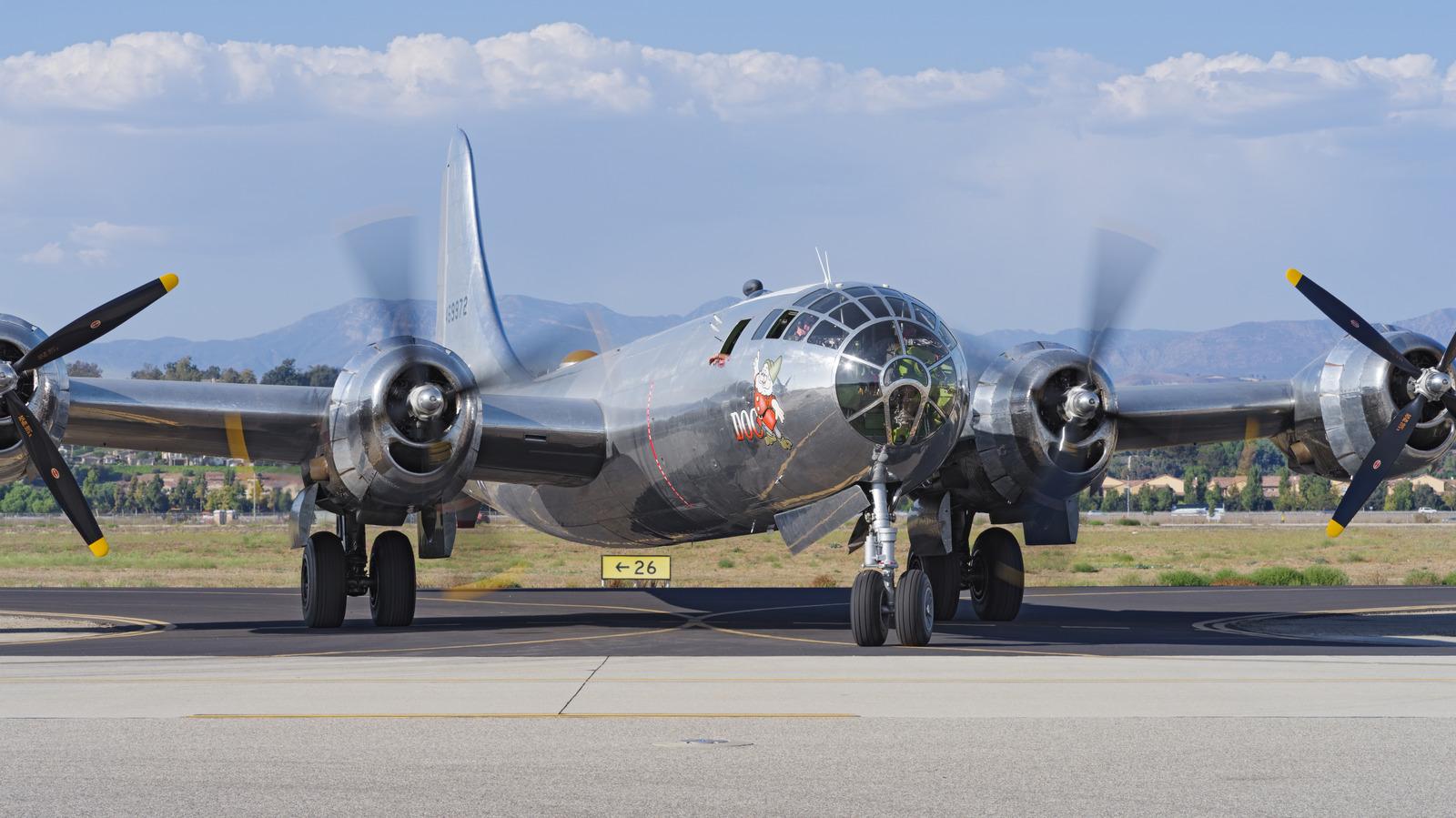
2026 Engineering Deep-Dive: The Giant Wright R-3350 Engines That Helped The B-29 Superfortress Rule The Skies
Image: 2026 Engineering Deep-Dive: The Giant Wright R-3350 Engines That Helped The B-29 Superfortress Rule The Skies – Performance and Specifications
- Advertisement -
When we talk about the Boeing B-29 Superfortress, we aren’t just discussing a relic of World War II; we are looking at the precursor to modern pressurized aviation. In 2026, as vintage restoration technology reaches its peak with CNC-machined parts and 3D-printed alloys, the B-29’s Wright R-3350 Duplex-Cyclone engines remain a masterclass in radial engineering. For those looking to own or restore a piece of this history, the ‘entry price’ for a flight-ready engine core in 2026 starts at a staggering $1.2 million USD, with full restoration costs pushing the aircraft’s value north of $15 million.
The B-29 was more than a bomber; it was a high-altitude fortress that utilized the most powerful radial engines available at the time. This article explores the mechanical heart of the B-29, its 2026 maintenance outlook, and how it compares to the legendary powerplants of its era.
- Advertisement -
The Heart of the Beast: Wright R-3350 Duplex-Cyclone Design
The Wright R-3350 was a twin-row, 18-cylinder radial engine. Its design was revolutionary but plagued with early-stage issues, particularly regarding heat management. In 2026, restorers have solved many of these historical ‘cons’ by using modern metallurgical techniques to prevent the infamous magnesium crankcase fires that once haunted B-29 crews.
Unmatched Performance and Horsepower
Each of the four engines on a B-29 Superfortress produced 2,200 horsepower. This allowed the massive airframe to carry a heavy payload of up to 20,000 pounds of bombs at altitudes exceeding 30,000 feet, well out of the reach of many Japanese interceptors and anti-aircraft fire during the war. By 2026 standards, the torque density of these engines remains a subject of study for aeronautical students.
High-Altitude Turbocharging Systems
What set the B-29 apart was its dual General Electric turbosuperchargers per engine. This system allowed the R-3350 to maintain power in the thin air of the stratosphere. Unlike modern digital FADEC systems, the B-29 required a skilled flight engineer to manually balance the manifold pressure, a task that remains the ultimate ‘Pro’ for vintage aviation enthusiasts who love the tactile connection to the machine.
- Advertisement -
Interior Tech and Pressurization
The engines didn’t just provide thrust; they powered the cabin pressurization system. This allowed the crew to operate without oxygen masks for extended periods—a first for a large-scale production bomber. The ‘Interior Tech’ of a 2026-restored B-29 often includes updated avionics, but the core engine monitoring remains analog to preserve historical accuracy.
Safety and Reliability (NCAP for Warbirds)
While aircraft don’t receive NCAP ratings, the B-29’s safety record in 2026 is maintained through rigorous FAA ‘Experimental’ category inspections. Modern upgrades to the R-3350’s exhaust valves and the move to electronic ignition systems have significantly reduced the risk of the catastrophic engine failures that were common in 1944.
The Comparison: B-29 Powerplants vs. The Rivals
To understand the R-3350’s dominance, we must compare it to its contemporaries. The Pratt & Whitney R-2800 and the British Bristol Centaurus were the only other engines in the same weight class during the mid-1940s.
- Advertisement -
| Feature | Wright R-3350 (B-29) | Pratt & Whitney R-2800 | Bristol Centaurus |
|---|---|---|---|
| Cylinders | 18-Cylinder Radial | 18-Cylinder Radial | 18-Cylinder Sleeve Valve |
| Displacement | 3,347 cu in | 2,804 cu in | 3,272 cu in |
| Horsepower | 2,200 hp | 2,100 hp | 2,520 hp |
| Weight | 2,670 lbs | 2,350 lbs | 2,695 lbs |
| Cooling | Air-Cooled | Air-Cooled | Air-Cooled |
Technical Specifications & Pricing
Understanding the sheer scale of these engines requires a look at the hard data. Below are the technical specifications and the current 2026 market valuation for components used in the restoration of ‘Doc’ or ‘Fifi’ style B-29s.
| Specification | Details |
|---|---|
| Engine Model | Wright R-3350-23 Duplex-Cyclone |
| Bore x Stroke | 6.125 in x 6.312 in |
| Compression Ratio | 6.85:1 |
| Fuel System | Bendix-Stromberg PR-58 Carburetor |
| Propeller Type | 4-Blade Hamilton Standard (16ft 7in) |
| Part/Variant | 2026 Ex-Showroom (Restored Price) |
|---|---|
| Core Engine (Unrestored) | $450,000 |
| Overhauled R-3350-23 | $1,250,000 |
| Replacement Cylinder Bank | $85,000 |
| Custom CNC Magnesium Crankcase | $210,000 |
People Also Ask (FAQ)
1. How much fuel did a B-29 consume per hour?
In cruising flight, a B-29 burned approximately 400 to 500 gallons of high-octane aviation gasoline per hour across its four engines.
2. Why were the B-29 engines prone to fire?
The engines used magnesium in the crankcases which, when combined with high operating temperatures and restricted airflow on the ground, could ignite and become impossible to extinguish.
- Advertisement -
3. What is the top speed of a B-29?
The B-29 had a top speed of roughly 357 mph at altitude, making it faster than many contemporary fighters.
4. Are there any flyable B-29s in 2026?
Yes, ‘Fifi’ and ‘Doc’ are the two primary B-29s maintained in flying condition by the Commemorative Air Force and Doc’s Friends, respectively.
5. How many engines did the B-29 have?
The B-29 was powered by four Wright R-3350 Duplex-Cyclone turbo-supercharged radial engines.
- Advertisement -
6. What was the wing span of the B-29?
The B-29 had a massive wingspan of 141 feet and 3 inches, providing the lift necessary for its 120,000 lb maximum takeoff weight.
7. Did the B-29 use fuel injection?
Early models used carburetors, but later variants of the R-3350 incorporated direct fuel injection for better fuel distribution and efficiency.
8. How many cylinders does a Wright R-3350 have?
It is an 18-cylinder engine, arranged in two rows of nine cylinders each.
- Advertisement -
9. What replaced the B-29?
The B-29 was evolved into the B-50, and eventually replaced by the jet-powered B-47 Stratojet and the massive B-36 Peacemaker.
10. Can you buy a B-29 engine today?
Yes, they appear occasionally in government surplus auctions or through specialized warbird restoration companies, though they require millions for flight-certification.
Verdict: Should You Invest in a B-29 Project?
In 2026, owning a piece of the B-29’s legacy is the ultimate status symbol in the aviation world. While the ‘Pros’ include owning a piece of history and unmatched radial power, the ‘Cons’ are the astronomical maintenance costs and the scarcity of specialized mechanics.
- Advertisement -
Pros:
– Legendary historical significance
– Massive 2,200 HP output
– Unrivaled airshow presence
Cons:
– High risk of engine overheat during taxi
– $1M+ per engine restoration cost
– Extremely high fuel consumption
Final Verdict: If you have the capital and a passion for WWII engineering, the B-29’s Wright R-3350 engines are the finest examples of mechanical art ever to take to the skies.
- Advertisement -