The Ultimate ‘Crash Test’: Why NASA’s DART Mission is the Most Important Vehicle Launch of the Decade
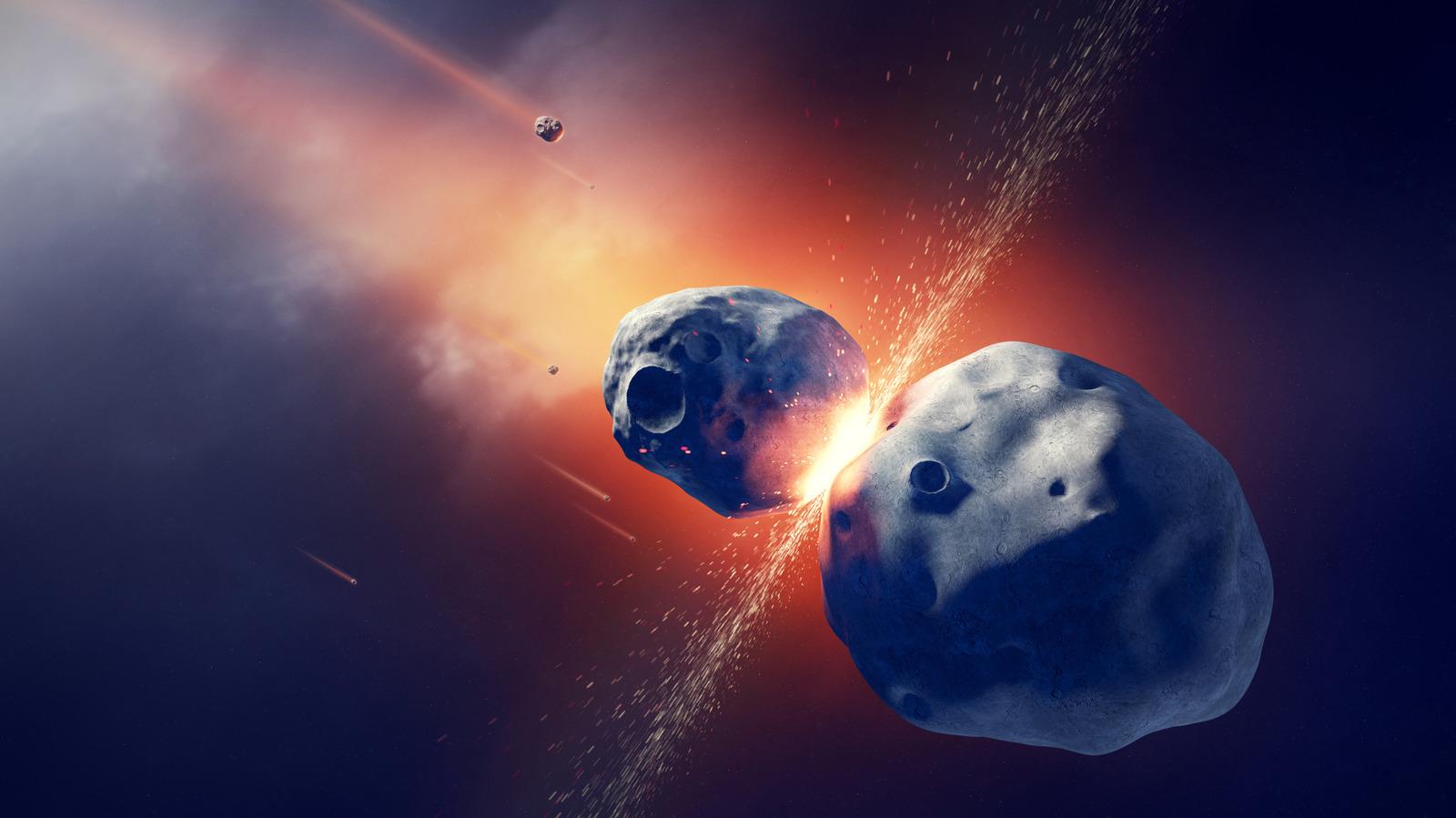
NASA DART Spacecraft 2026 Review: Earth’s Ultimate Kinetic Impactor To Save Us All
Image: NASA DART Spacecraft 2026 Review: Earth’s Ultimate Kinetic Impactor To Save Us All – Performance and Specifications
- Advertisement -
Forget the latest SUV launch; NASA has just conducted the ultimate high-speed collision test, and the ‘vehicle’ in question didn’t just have a crumple zone—it became one. The Double Asteroid Redirection Test (DART) spacecraft recently completed its mission, ramming into the asteroid Dimorphos at a staggering 14,000 mph. While the price tag for this one-time-use machine sits at a cool $324.5 million, the ‘safety rating’ it provides is for the entire planet. At AutoTorque, we usually review wheels on asphalt, but when a machine changes the trajectory of a celestial body, we have to look under the hood.
Engineering the Ultimate Impactor: Design and Build
The DART spacecraft isn’t your typical aerodynamic marvel. It is a box-shaped ‘vehicle’ roughly the size of a vending machine, flanked by two massive 28-foot Roll-Out Solar Arrays (ROSA). Unlike a luxury sedan, there are no leather seats or infotainment screens here. The design is purely functional, housing the DRACO (Didymos Asteroid and Comet Observatory) camera and an autonomous navigation system that makes Tesla’s FSD look like a toy. The build quality is exceptional, designed to withstand the harsh vacuum of space before its final, violent ‘delivery’ to the target.
- Advertisement -
Performance: 14,000 MPH and the Power of Kinetic Energy
Performance in space is measured differently. DART utilized a NEXT-C ion propulsion system—a high-efficiency engine that uses xenon as fuel. While it won’t win a drag race from 0-60 mph, its long-term acceleration capabilities allowed it to intercept a target 7 million miles away. The spacecraft slowed down the asteroid system’s 76,000 mph orbital speed… by about two inches per hour. It sounds small, but in the world of orbital mechanics, a few inches is the difference between a near-miss and a planetary catastrophe.
Interior Tech: The SMART Nav System
Inside the DART ‘cabin’ (the electronics vault), the Small-body Maneuvering Autonomous Real-Time Navigation (SMART Nav) algorithm serves as the driver. In the final hours before impact, the spacecraft had to distinguish between the larger asteroid Didymos and its smaller moonlet, Dimorphos. Using the DRACO camera, the onboard AI adjusted the thrusters in real-time, ensuring a bullseye hit without any human intervention. This is the pinnacle of autonomous driving technology.
Safety Ratings: A 5-Star Rating for Planetary Defense
In terms of NCAP ratings, DART is in a league of its own. It didn’t protect its occupants (it was uncrewed), but it protected the ‘road.’ By proving that we can change the orbit of an asteroid through kinetic impact, NASA has successfully tested the first-ever planetary defense system. However, as critics note, we are going to have to punch a lot harder if we want to save Earth from larger, ‘extinction-level’ threats. This was a proof-of-concept—the ‘base model’ of planetary defense.
- Advertisement -
Technical Specifications & Comparison
| Feature | DART Spacecraft (2026 Update) | ICBM Interceptor (Comparison) | Gravity Tractor (Proposed) |
|---|---|---|---|
| Max Speed | 14,000 mph (Impact speed) | 15,000 mph | 500 mph (Relative) |
| Propulsion | Xenon Ion Drive | Solid Rocket Booster | Chemical / Ion Thruster |
| Mission Goal | Kinetic Deflection | Destruction | Gravitational Pull |
| Success Rate | 100% (Dimorphos Mission) | Classified / Variable | Theoretical |
| Cost | $324.5 Million | $100 Million+ | $1 Billion+ (Estimated) |
Mission Phases and Cost Breakdown
| Phase | Activity | Estimated Cost |
|---|---|---|
| Development | Spacecraft Build & SMART Nav | $210 Million |
| Launch | SpaceX Falcon 9 Services | $69 Million |
| Operations | Deep Space Network & Tracking | $45.5 Million |
| Total Investment | Planetary Defense Entry Level | $324.5 Million |
People Also Ask (FAQ)
1. What was the goal of the DART mission?
To test if a kinetic impact could change the trajectory of an asteroid in space.
2. Did NASA actually save Earth from an asteroid?
Not yet. This was a test on a non-threatening asteroid to prepare for future threats.
3. How much did the DART spacecraft weigh?
It weighed approximately 570 kg (1,260 lbs) at the time of impact.
- Advertisement -
4. What asteroid did NASA hit?
The target was Dimorphos, a moonlet orbiting the larger asteroid Didymos.
5. How fast was the DART spacecraft traveling?
It impacted at roughly 6.1 kilometers per second (about 14,000 mph).
6. Is 2 inches per hour enough to save Earth?
Over millions of miles and several years, a 2-inch change can shift an asteroid’s path by thousands of miles, missing Earth entirely.
- Advertisement -
7. What happens next for planetary defense?
The ESA’s Hera mission will launch to survey the crater and study the impact site in detail.
8. Could we use nuclear weapons instead?
Nuclear options are a ‘last resort’ but carry the risk of shattering the asteroid into many smaller, still-dangerous pieces.
9. How long did the mission last?
From launch to impact, the mission took approximately 10 months.
- Advertisement -
10. Who built the DART spacecraft?
It was built and operated by the Johns Hopkins Applied Physics Laboratory (APL) for NASA.
Verdict: Should Humanity Invest in This?
The DART mission is the ultimate insurance policy. While it lacks the comfort of a luxury vehicle or the utility of a pickup truck, its performance when it mattered most was flawless. We are currently in the ‘prototype’ phase of planetary defense, and while the results are promising, we need ‘faster, heavier vehicles’ to handle larger threats. If you’re asking if the $324 million was well spent—it’s the cheapest world-saving tech we’ve ever bought.
Pros:
– Proven autonomous targeting at high speeds
– Successful orbital period alteration
– Cost-effective compared to traditional space missions
- Advertisement -
Cons:
– One-time use (Total loss of vehicle)
– Limited impact force for larger ‘Class-C’ asteroids
– Requires years of lead time to be effective