NASA Artemis Update 2026: The Strategic Shift Toward Astronaut Safety
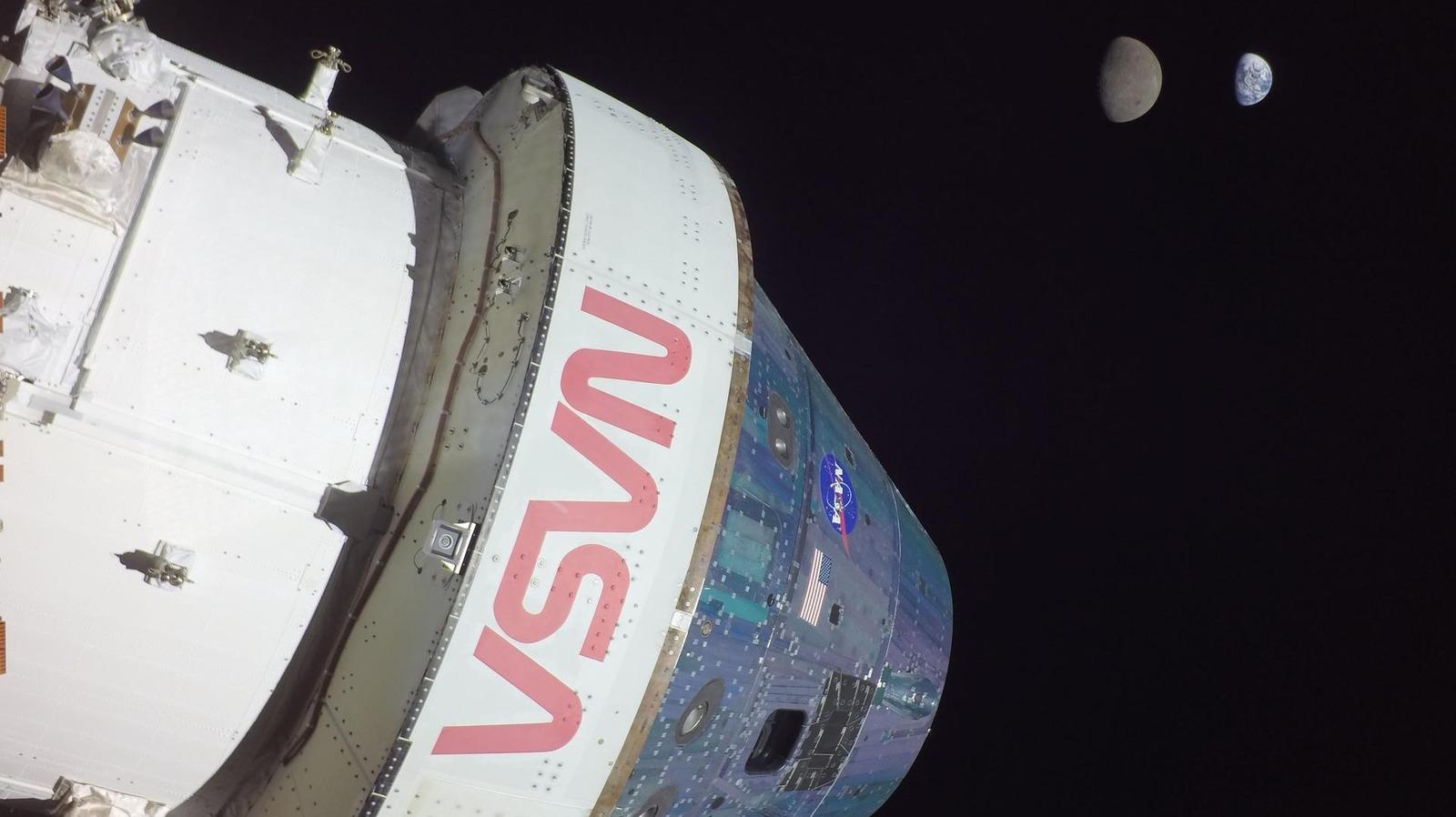
NASA Artemis Moon Landing 2026: Why NASA is Slowing Down to Speed Up (Detailed Analysis)
Image: NASA Artemis Moon Landing 2026: Why NASA is Slowing Down to Speed Up (Detailed Analysis) – Performance and Specifications
Advertisement
Space exploration is rarely a straight line, and the latest 2026 updates from NASA prove it. In a move that has been hailed by safety experts and critiqued by space-race enthusiasts, NASA Administrator Jared Isaacman announced a radical overhaul of the Artemis mission architecture on February 27, 2026. The agency is officially slowing down its moon landing plans, choosing to ‘test before they fly’—a decision driven by a scathing report from the Aerospace Safety Advisory Panel (ASAP). The cost of the program, now estimated at a staggering $93 billion, reflects the high stakes of returning humans to the lunar surface for the first time in over 50 years.
The core change? Artemis III, originally slated for a 2026/2027 lunar landing, has been redefined. It will now be a Low Earth Orbit (LEO) test flight to ensure the Human Landing Systems (HLS) from SpaceX and Blue Origin are actually safe for human occupants. The first actual boots on the moon are now rescheduled for Artemis IV in 2028. For an industry that often prioritizes speed, this ‘back to basics’ approach is the automotive equivalent of a massive safety recall before a flagship launch.
Advertisement
The Vehicles: Starship HLS vs. Blue Origin Blue Moon
Design and Architecture
The 2026 architecture introduces a ‘two-horse race’ between SpaceX’s Starship HLS and Blue Origin’s Blue Moon Mark 2. These aren’t just vehicles; they are massive orbital skyscrapers. SpaceX’s Starship stands at an imposing 50 meters, while Blue Origin’s more modular Blue Moon Mark 2 stands at roughly 16 meters. NASA’s new strategy involves testing the docking, refueling, and life-support capabilities of both vehicles in the safety of Earth’s orbit during the new 2027 Artemis III mission profile.
Performance: Cryogenic Fueling Challenges
One of the biggest ‘cons’ identified by NASA engineers in 2026 is the complexity of cryogenic fuel management. SpaceX uses Liquid Methane (Methalox), which is easier to store but requires multiple ‘tanker’ launches to refuel. Blue Origin utilizes Liquid Hydrogen (Hydrolox), which is incredibly efficient but notoriously difficult to keep from leaking—a problem that recently delayed the Artemis II SLS rocket. Testing these propellant transfers in 2027 is now a mandatory milestone before any lunar descent is attempted.
Safety and Reliability: The NCAP of Space
While space vehicles don’t have a traditional NCAP rating, the ASAP report serves as the ultimate safety audit. The 2026 pivot addresses critical ‘red flags’ including heat shield ablation on the Orion capsule and battery reliability. By adding a dedicated LEO test mission (Artemis III), NASA is ensuring that ‘muscle memory’ is built within the workforce, aiming for a launch cadence of one mission every 10 months rather than once every three years.
Advertisement
| Feature | SpaceX Starship HLS (Artemis IV) | Blue Origin Blue Moon Mk2 (Artemis V) |
|---|---|---|
| Height | ~50 Meters | ~16 Meters |
| Propellant | Liquid Methane / LOX | Liquid Hydrogen / LOX |
| Payload Capacity | 100+ Metric Tons | ~20 Metric Tons |
| Primary Advantage | Massive Volume & Reusability | Lower Profile & Direct Landing Tech |
| Development Status | 11+ Test Flights Completed | Pathfinder Mk1 Testing in Houston |
Technical Specifications: The 2026 Mission Roadmap
The revised timeline is designed to eliminate ‘stagnant progress’ and foster competition between billionaires Elon Musk and Jeff Bezos. Here is the full technical breakdown of the mission sequence as of the February 2026 update.
| Mission Phase | Target Date | Primary Objective | Estimated Cost (Per Launch) |
|---|---|---|---|
| Artemis II | April 2026 | Crewed Lunar Flyby (4 Astronauts) | $2.0 Billion |
| Artemis III | Mid-2027 | LEO Docking & HLS Refueling Test | $2.2 Billion |
| Artemis IV | September 2028 | First Human Landing (South Pole) | $4.1 Billion |
| Artemis V | Late 2028 | Sustained Presence (Blue Moon Debut) | $3.4 Billion |
Interior and Tech: Living on the Lunar South Pole
The interior of the Starship HLS is described as a ‘luxury camper’ compared to the cramped Apollo modules, featuring private quarters and a dedicated lab space. Blue Origin’s design focuses on accessibility, with a deck height much closer to the lunar surface to reduce the risk of ladder falls. Both landers will feature the new 2026 xEVA spacesuits provided by Axiom Space, which offer greater mobility and better thermal protection for the permanently shadowed regions of the lunar South Pole.
People Also Ask (FAQ)
- Why did NASA delay the 2026 Moon landing? NASA delayed the landing to prioritize safety after a safety panel (ASAP) warned that the mission had too many untested first-time technologies.
- Is Artemis III still happening in 2026? Artemis III is now targeted for 2027 and has changed from a landing mission to a technology test mission in Low Earth Orbit.
- Who will land on the moon first, SpaceX or Blue Origin? Currently, SpaceX’s Starship is slated for the Artemis IV landing in 2028, while Blue Origin is scheduled for Artemis V.
- What are the main problems with the Artemis mission? Key issues include heat shield cracks on the Orion capsule, hydrogen leaks in the SLS rocket, and delays in HLS fuel transfer technology.
- How much does the Artemis program cost? The total cost through 2026 is estimated at approximately $93 billion.
- Will China land on the moon before NASA? China aims for a 2030 landing; NASA’s 2028 target keeps the U.S. ahead, provided no further major delays occur.
- What is the new Artemis III mission profile? It is an Earth-orbit rendezvous where the Orion capsule docks with a lunar lander to test life support and docking systems.
- Who is the current NASA Administrator in 2026? Jared Isaacman was sworn in as the 15th NASA Administrator in late 2025/early 2026.
- What is the SLS rocket’s launch frequency? NASA is aiming to increase the cadence from once every 3 years to once every 10 months.
- Can Starship really land on the moon? NASA believes so, but Starship must first demonstrate uncrewed landing and in-space refueling in 2026-2027 tests.
Verdict: Is the 2026 Delay a Good Move?
From a technical and safety standpoint, the answer is a resounding YES. The previous plan was a ‘Mars or Bust’ gamble that risked astronaut lives for the sake of political timelines. By moving the landing to 2028 and adding a ‘dress rehearsal’ in 2027, NASA has drastically increased the probability of mission success.
Advertisement
Pros:
- Reduced risk of life-support failure during lunar descent.
- Redundancy with two competing landing systems (SpaceX & Blue Origin).
- Standardized rocket configurations leading to faster production.
Cons:
- Public perception of a ‘failing’ timeline compared to China.
- Budget inflation due to extended development cycles.
- Skills atrophy if the 10-month launch cadence isn’t met.
Should we support it? If you value safety and a sustainable lunar presence over a one-off flag-planting stunt, this 2026 pivot is the most responsible decision NASA has made in decades.
Advertisement