The 1980s Ambition: When Maserati Decided More Was More
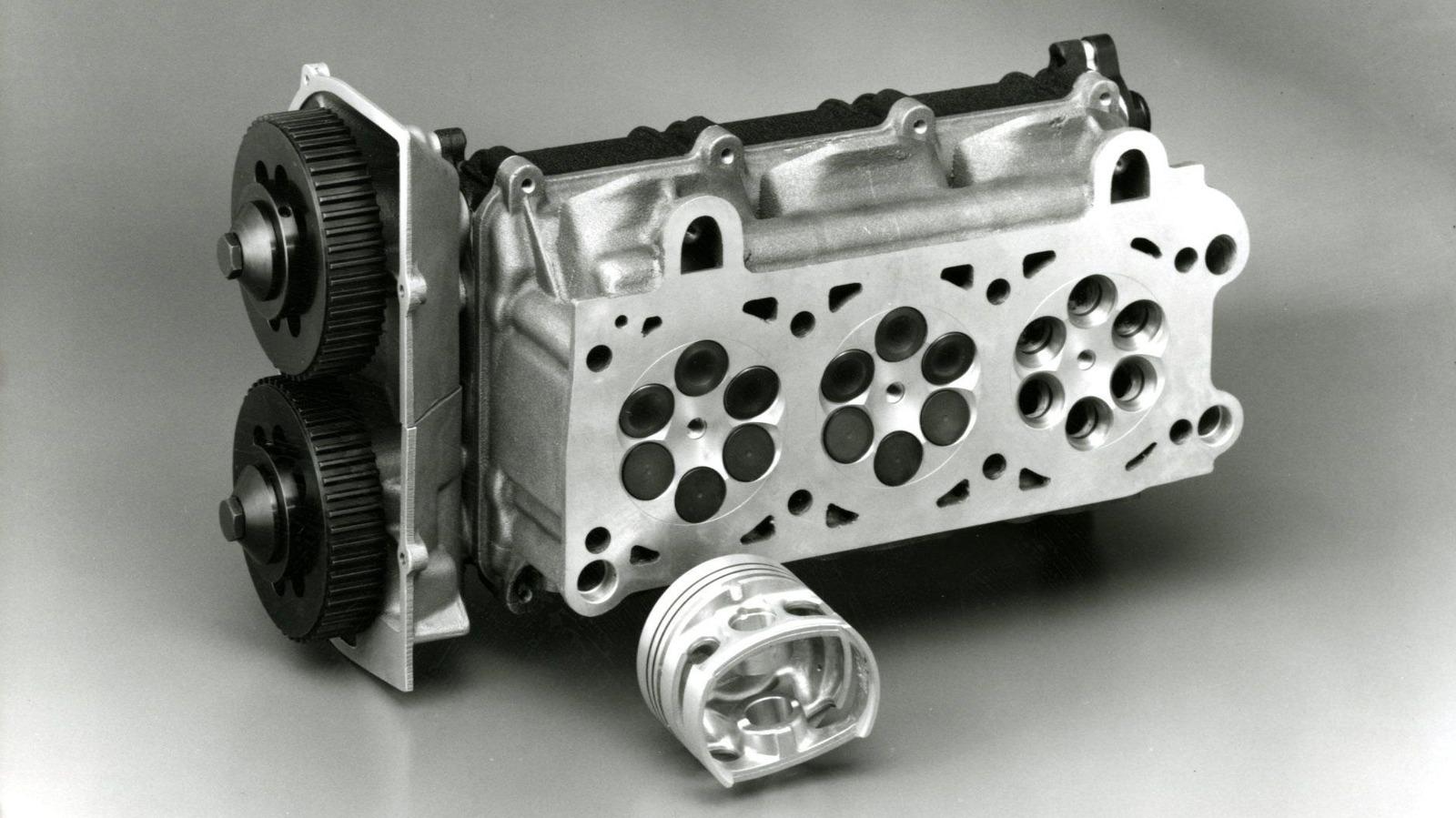
Maserati’s Forgotten 36-Valve Legend: Why the Six-Valve-Per-Cylinder V6 Failed in 2026 Retrospect
Image: Maserati’s Forgotten 36-Valve Legend: Why the Six-Valve-Per-Cylinder V6 Failed in 2026 Retrospect – Performance and Specifications
Advertisement
In the world of internal combustion, the 1980s were a wild west of engineering. Before the refinement of the 2026 Maserati MC20 Nettuno engine, there was a project so ambitious it bordered on insanity: the 6.36 engine. In 1985, Maserati attempted to rewrite the rulebook by squeezing six valves into a single cylinder. While modern performance cars in 2026 focus on hybrid hybridization and pre-chamber ignition, this historical outlier proves that sometimes, mechanical complexity hits a hard ceiling. At the time, the project was estimated to have cost millions in R&D, equivalent to a starting price of over $150,000 in today’s inflation-adjusted terms, yet it never saw a full production line.
The Engineering Behind the 6.36 Masterpiece
The name ‘6.36’ stood for 6 cylinders and 36 valves. Most high-performance engines use a four-valve-per-cylinder setup (two intake, two exhaust). Maserati’s engineers, led by the legendary Aurelio Bertocchi, believed that by using three intake and three exhaust valves, they could maximize the surface area for gas exchange. This was designed to allow the engine to breathe better at high RPMs without the massive valve float associated with larger, heavier single valves.
Advertisement
Performance: Small Displacement, Massive Ambition
The prototype was based on the 2.0-liter V6 used in the Biturbo. Despite its small displacement, the 36-valve head allowed it to produce a staggering 261 horsepower. For context, in the mid-80s, that was supercar territory from a 2,000cc block. In 2026, we see similar power-to-displacement ratios only in highly stressed, turbocharged four-cylinder units or the latest F1-derived power plants.
Why Nobody Else Followed: The Engineering Dead End
If six valves were so efficient, why is the 2026 Maserati lineup powered by the Nettuno V6 with a traditional (albeit advanced) valve layout? The answer lies in thermodynamics and mechanical packaging. The 6.36 engine suffered from ‘crowded head syndrome.’ With six valves, a spark plug, and cooling channels all fighting for space in a tiny cylinder head, there was almost no room for the metal to dissipate heat. This led to warping and catastrophic reliability issues during testing.
| Feature | Maserati 6.36 (1985 Prototype) | Maserati Nettuno V6 (2026 Specs) | Ferrari 296 GTB (2026 Rival) |
|---|---|---|---|
| Cylinders/Valves | V6 / 36 Valves | V6 / 24 Valves | V6 / 24 Valves (Hybrid) | Displacement | 2.0 Liters | 3.0 Liters | 2.9 Liters | Peak Power | 261 HP | 621 HP | 819 HP (Combined) | Valves Per Cylinder | 6 | 4 | 4 | Induction | Twin Turbocharged | Twin Turbo / Pre-chamber | Twin Turbo / PHEV |
Design Challenges: The Complexity of the Valvetrain
Imagine the timing belt tension required to manage 36 valves. The friction losses alone from opening that many springs started to negate the power gains found through better breathing. Furthermore, the intake manifold had to be a labyrinthine masterpiece of plumbing just to feed the three intake ports per cylinder. In 2026, we use variable valve timing (VVT) and electronic lift to achieve what Maserati tried to do with sheer valve count.
Advertisement
The Reliability Nightmare: User and Tester Feedback
While the car never reached customers, internal testers and subsequent owners of the few prototype heads complained about ‘impossible’ maintenance schedules. Modern forums and historical archives highlight that the heat soak in the center of the cylinder head was so intense it would foul spark plugs in minutes during high-load testing. It was a classic case of ‘just because you can, doesn’t mean you should.’
Technical Specifications: A Closer Look
| Specification | Details | ||
|---|---|---|---|
| Engine Code | Maserati Tipo 6.36 | Bore x Stroke | 82mm x 63.5mm |
| Compression Ratio | Unknown (Estimated 7.5:1) | Max RPM | 7,500 RPM |
| Cooling System | Water-cooled (High Flow) | Valvetrain Layout | DOHC per Bank |
Variant-Wise Pricing (Historical Context vs 2026 Value)
While you cannot buy a 6.36 new today, its spiritual successors and the rare prototype components carry heavy price tags for collectors.
| Model/Variant | Status | Estimated Value (2026) |
|---|---|---|
| Maserati Biturbo (Standard) | Classic Purchase | ₹35,00,000 – ₹55,00,000 |
| Maserati 6.36 Prototype Head | Museum/Collector | Priceless (Est. ₹1.2 Crore) |
| Maserati MC20 (Nettuno) | New Sale | ₹3.65 Crore (Ex-Showroom) |
Safety and Modern Comparison: NCAP in the 80s?
Safety was an afterthought in the 1980s compared to the 5-star Euro NCAP ratings we expect in 2026. The Biturbo chassis, which housed the 36-valve engine, was notorious for ‘widow-maker’ handling. Without traction control or modern ABS, the 261 HP would often overwhelm the rear tires, leading to a driving experience that was as dangerous as it was exciting.
Advertisement
People Also Ask (FAQ)
- Did any car use 6 valves per cylinder? Only the Maserati 6.36 prototype. Most others stopped at 5 (Audi/Ferrari/Yamaha).
- Why did Maserati stop the 36-valve project? Reliability, heat dissipation, and excessive manufacturing costs.
- What is the Maserati 2026 price in India? The MC20 starts at approximately ₹3.65 Crore.
- Is a 6-valve engine better than a 4-valve? Theoretically yes for breathing, but practically no due to weight and heat.
- Who designed the Maserati 36-valve engine? Aurelio Bertocchi and the Maserati technical team in the mid-80s.
- Does Ferrari use 6 valves? No, Ferrari famously used 5 valves per cylinder in the F355 and early F1 cars but returned to 4.
- What is the fastest Maserati in 2026? The Maserati MC20 Folgore (Electric) is the quickest-accelerating model.
- Is the Maserati Biturbo reliable? Historically, no; it is considered one of the most temperamental classics.
- Can I buy a 6.36 engine today? No, they are museum pieces or held in private heritage collections.
- What replaced the 36-valve design? More efficient turbocharging and 4-valve heads with variable timing.
Verdict: Should You Buy a Maserati Legacy Car?
The Maserati 6.36 engine remains a fascinating ‘what if’ in automotive history. It represents the peak of mechanical over-engineering before computers took over the optimization of engines. In 2026, we look back at it as a brave, if flawed, attempt to achieve perfection.
Pros:
- Incredible historical significance.
- High power density for the 1980s.
- Unique ‘mechanical art’ valvetrain.
Cons:
Advertisement
- Severe overheating issues.
- Extremely fragile timing components.
- Impossible to find parts in 2026.
Final Thought: If you are a billionaire collector, find one for the story. If you want to drive, stick to the 2026 Maserati MC20.