The Strategic Pivot: Honda’s Global EV Realignment
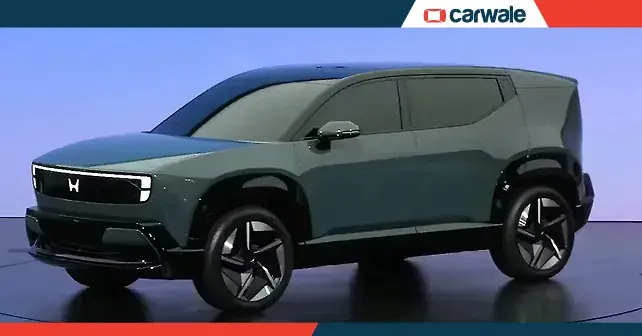
Honda Scraps 3 Affordable EVs for 2026: Why India’s EV Roadmap Remains Unshaken
Image: Honda Scraps 3 Affordable EVs for 2026: Why India’s EV Roadmap Remains Unshaken – Performance and Specifications
- Advertisement -
In a move that sent ripples through the global automotive industry, Honda Motor Co. recently announced the cancellation of three major electric vehicle (EV) projects planned for the North American market. Originally slated for a 2025-2026 rollout, these models were part of a multi-billion dollar joint venture with General Motors (GM) aimed at producing affordable electric SUVs. While this news has caused concern globally, the Indian market stands on firm ground. The upcoming Honda Elevate EV (expected 2026) remains the cornerstone of Honda’s Indian strategy, with an estimated price tag ranging between ₹20 Lakh to ₹25 Lakh (ex-showroom).
Why Honda Scrapped the Global Budget EV Project
The decision to halt the production of three upcoming EVs in North America stems from a change in market dynamics and cost-efficiency challenges. Honda and GM realized that the ‘affordable EV’ segment is increasingly difficult to navigate without a localized supply chain for battery minerals. However, Honda is not backing away from electrification. Instead, it is shifting focus toward its proprietary ‘Honda 0 Series,’ a line of premium EVs designed with a ‘Thin, Light, and Wise’ philosophy. For Indian consumers, this shift is actually a blessing in disguise as it allows Honda India to focus entirely on the localized ‘ACE’ (Advanced Compact Electric) platform.
- Advertisement -
Design and Aesthetics: The Rugged Future
The 2026 Honda Elevate EV is expected to retain the muscular, upright stance of its internal combustion engine (ICE) counterpart. However, to distinguish it as a green machine, Honda will introduce a closed-off front grille, signature blue accents around the Honda logo, and aerodynamically optimized 17-inch alloy wheels. Users on automotive forums have praised the Elevate’s ‘Big SUV feel,’ and the EV version is expected to maintain that imposing road presence.
Performance, Battery, and Range
Under the hood (or rather, under the floor), the Honda Elevate EV is expected to house a 45-50 kWh battery pack. This should provide a real-world range of approximately 400-450 km on a single charge. Honda’s engineering focus is on ‘linear power delivery,’ ensuring that the transition from petrol to electric feels seamless for long-time Honda loyalists. While the global models were scrapped due to profitability concerns, the Indian EV will utilize heavy localization to keep costs competitive.
Interior Tech and Cabin Experience
Step inside, and you are greeted by a 10.25-inch touchscreen infotainment system with wireless Apple CarPlay and Android Auto. Honda is also expected to introduce a fully digital instrument cluster for the EV variant. Fans of the brand love the ‘minimalist yet premium’ layout. The 2026 model will likely feature eco-friendly upholstery and a panoramic sunroof, a feature that Indian buyers have been vocally demanding on forums.
- Advertisement -
Safety and NCAP Ratings
Safety remains a non-negotiable for Honda. The Elevate EV will be built on a reinforced version of the Global Small Car platform. It is being designed to achieve a 5-star rating in the Bharat NCAP (BNCAP) tests. Standard safety features will include 6 airbags, ABS with EBD, and the much-acclaimed Honda Sensing (ADAS) suite, which includes Collision Mitigation Braking and Lane Keep Assist.
The 2026 EV Rivalry: How Honda Compares
The Indian EV space is heating up. By 2026, Honda will face stiff competition from the Tata Curvv.ev and the Hyundai Creta EV. Here is how they stack up:
| Feature | Honda Elevate EV (2026) | Tata Curvv.ev | Hyundai Creta EV |
|---|---|---|---|
| Battery Pack | ~50 kWh | 55 kWh | 45 kWh |
| Claimed Range | 450 km | 585 km | 450 km |
| DC Fast Charging | Yes (60kW) | Yes (100kW) | Yes (80kW) |
| ADAS Level | Level 2 | Level 2 | Level 2 |
Technical Specifications (Estimated)
| Specification | Details | ||
|---|---|---|---|
| Motor Type | Permanent Magnet Synchronous Motor | Max Power | 150 PS |
| Max Torque | 250 Nm | ||
| Drive Type | FWD (Front Wheel Drive) | ||
| Ground Clearance | 220 mm |
Expected Variant-wise Pricing (Ex-Showroom)
| Variant | Expected Price (INR) |
|---|---|
| Honda Elevate EV S (Base) | ₹19.99 Lakh |
| Honda Elevate EV V | ₹21.50 Lakh |
| Honda Elevate EV VX | ₹23.00 Lakh |
| Honda Elevate EV ZX (Top) | ₹24.90 Lakh |
People Also Ask (FAQ)
- Why did Honda scrap its upcoming EVs? Honda cancelled its partnership with GM for budget EVs to focus on its high-end ‘Honda 0’ series and independent localized platforms.
- Will the Honda Elevate EV launch in India? Yes, Honda has confirmed that its India plans remain unchanged, with an EV launch expected by early 2026.
- What is the expected price of the Honda Elevate EV? It is expected to be priced between ₹20 lakh and ₹25 lakh.
- What will be the range of Honda’s new EV? It is expected to offer a real-world range of about 400-450 km.
- Does Honda Elevate EV have a sunroof? Yes, higher variants are expected to feature a panoramic sunroof.
- Will it compete with the Tata Nexon EV? It will primarily compete with the larger Tata Curvv.ev and Hyundai Creta EV.
- Is the Honda Elevate EV safe? Honda aims for a 5-star Bharat NCAP rating with the Elevate EV.
- Will it support fast charging? Yes, it will support DC fast charging, likely capable of 0-80% in under 60 minutes.
- Does it have ADAS? Yes, it will come equipped with the Honda Sensing ADAS suite.
- What is the ACE platform? It stands for Advanced Compact Electric, a platform designed for efficient, localized EV production in India.
Verdict: Should You Wait for the 2026 Honda Elevate EV?
Despite the global cancellation of three EV models, Honda’s commitment to India is stronger than ever. The Elevate EV promises the reliability of the Honda brand paired with modern electric efficiency. If you value build quality and a sophisticated driving experience over raw feature-overload, it is worth the wait.
- Advertisement -
Pros: Excellent ground clearance, Honda Sensing ADAS, Trusted brand reliability, Spacious cabin.
Cons: Later entry compared to rivals, Limited public charging infrastructure (brand-specific), Expected high premium over ICE model.
- Advertisement -