Imagine you are driving your brand-new 2026 performance SUV through a rain-slicked mountain pass. You hit the accelerator coming out of a tight corner, but instead of a surge of power, one wheel spins helplessly while the other does nothing. This is the ‘one-wheel peel’—a classic failure of the open differential. In 2026, as vehicle torque figures skyrocket thanks to hybrid and electric powertrains, the Limited-Slip Differential (LSD) has evolved from a niche racing component to a safety and performance essential. Whether you are eyeing a factory upgrade costing roughly ₹1.5 Lakh to ₹3.2 Lakh or looking at aftermarket options, understanding how an LSD works is crucial for any driving enthusiast.
The Evolution of Traction: How Differentials Work in 2026
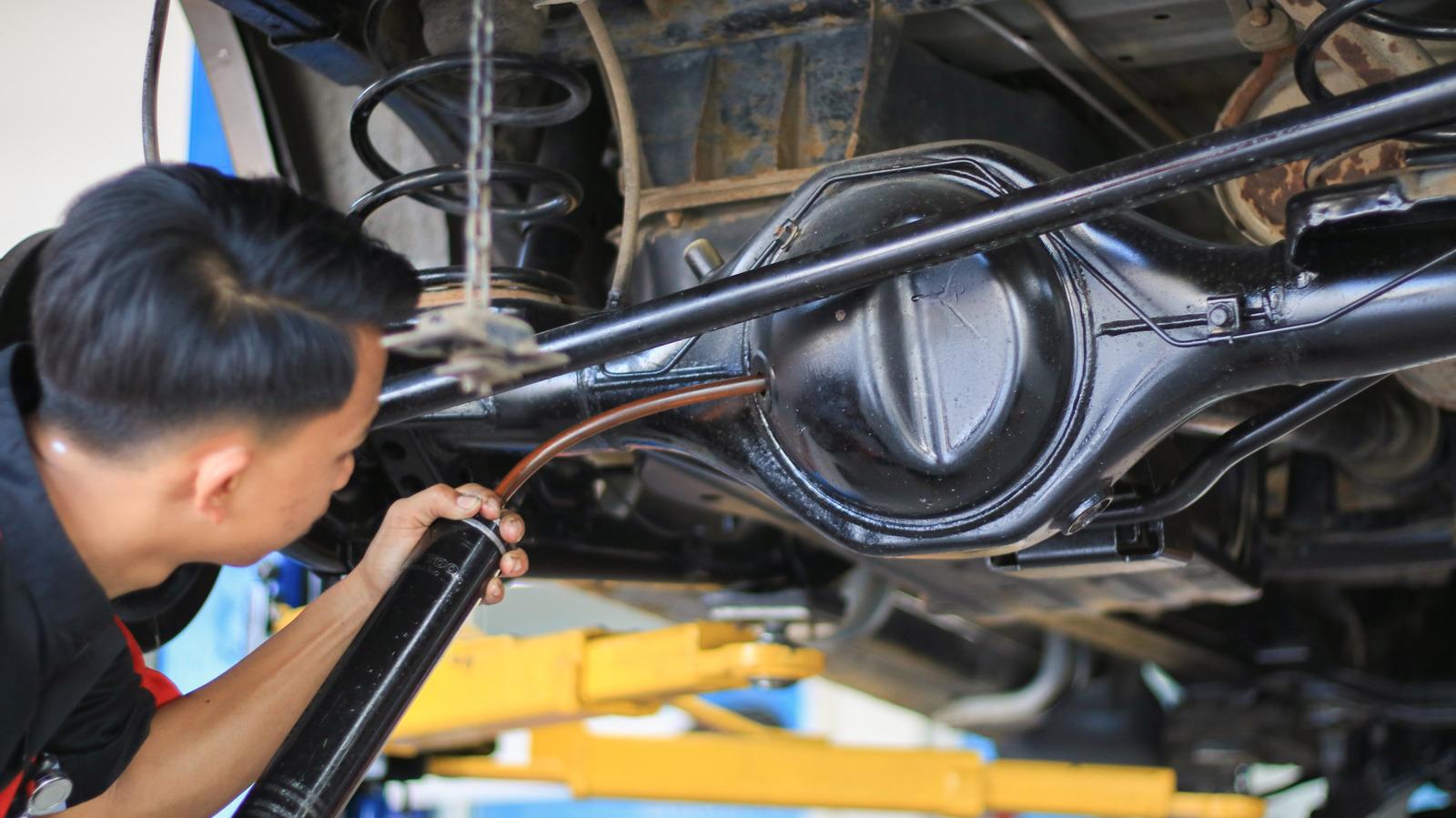
2026 Guide: What Is A Limited-Slip Differential (LSD) And Why Your Car Needs One?
- Advertisement -
Image: 2026 Guide: What Is A Limited-Slip Differential (LSD) And Why Your Car Needs One? – Performance and Specifications
To understand a Limited-Slip Differential, we must first look at the standard ‘Open Differential.’ When a car turns, the outside wheel travels a longer distance than the inside wheel. A differential allows them to rotate at different speeds. However, the open diff always sends equal torque to both wheels. If one wheel loses traction (on ice or mud), the torque required to spin that wheel is nearly zero. Consequently, the wheel with grip also receives zero torque, leaving you stranded.
- Advertisement -
The Open Differential Limitation
While cheap to manufacture, the open differential is the enemy of performance. In high-torque 2026 models, even dry pavement can cause an inner wheel to lift and spin during aggressive cornering. This is where the ‘Limited-Slip’ mechanism intervenes, bridging the gap between a completely free-spinning open diff and a fully locked axle.
Mechanical LSD: The Purist’s Choice
Mechanical LSDs, such as the Torsen (Torque-Sensing) or Clutch-type units, use physical friction or gear geometry to transfer power. In 2026, many track-focused variants of the Volkswagen Tayron R-Line and the Toyota Fortuner GR-Sport utilize these for their predictable, instant response. When one wheel starts to slip, the internal clutches compress, forcing torque to the wheel with more resistance (grip).
Performance, Design, and NCAP Safety Integration
The design of modern LSDs has shifted toward compact, lightweight alloys to offset the weight of hybrid batteries. From a safety perspective, LSDs are now integral to achieving high Stability Control ratings in NCAP testing. By preventing sudden wheel spin, they minimize the risk of ‘power-oversteer’ or ‘plowing’ understeer, keeping the vehicle on its intended path during emergency maneuvers.
- Advertisement -
The Rise of e-LSD and Torque Vectoring
The biggest update for 2026 is the democratization of the Electronic Limited-Slip Differential (e-LSD). Unlike mechanical versions, an e-LSD uses an array of sensors and an electric actuator to proactively lock the differential before a slip even occurs. This ‘predictive’ traction is a game-changer for heavy EVs, allowing for surgical precision in power delivery.
Interior Integration: Tech at Your Fingertips
Modern vehicles now allow drivers to adjust LSD ‘lockup’ intensity via the touchscreen infotainment system. In the 2026 Tayron, for instance, switching from ‘Eco’ to ‘Sport+’ physically alters the hydraulic pressure within the e-LSD, providing sharper turn-in and more aggressive exit speeds.
Comparison: Differential Types and Performance
| Feature | Open Differential | Mechanical LSD | Electronic LSD (e-LSD) |
|---|---|---|---|
| Traction Level | Low (Single wheel) | High (Both wheels) | Predictive / Adaptive |
| Maintenance | Very Low | Moderate (Clutch wear) | Low (Sensor based) |
| 2026 Availability | Standard Budget Cars | Off-roaders/Track Cars | Luxury / High-Perf EVs |
| Cost Impact | Base Price | + ₹80,000 – ₹1.2L | + ₹2.5L – ₹4.0L |
Technical Specifications: 2026 LSD Standards
| Parameter | Specification Detail | ||
|---|---|---|---|
| Torque Bias Ratio (TBR) | Up to 4:1 (Torsen Type) | Response Time | < 50 milliseconds (e-LSD) |
| Weight | 8kg – 15kg (Carbon fiber housing options) | ||
| Lubrication | 75W-90 Synthetic with Friction Modifiers | ||
| Compatible Layouts | FWD, RWD, and AWD (Central Diff) |
People Also Ask (FAQ)
- Is an LSD better than Traction Control? Yes, LSD is a hardware solution that redirects power, while Traction Control is a software solution that usually cuts power or applies brakes.
- Can I install an LSD in my 2026 budget car? Yes, aftermarket units like those from Quaife are available, but they may void your drivetrain warranty.
- Does an LSD improve fuel economy? Generally, no. The added friction and weight can slightly decrease MPG, but the difference is negligible in 2026 models.
- What are the signs of a failing LSD? Chattering noises during tight turns or uneven tire wear on the drive axle.
- Is a Limited-Slip Differential the same as a Locked Differential? No. A locker forces wheels to spin at the exact same speed (off-road use only), whereas an LSD allows for some speed variance.
- Which 2026 SUVs come with standard LSD? The Toyota Fortuner, VW Tayron R-Line, and Ford Endeavour (Global-spec) often include them in higher trims.
- Do electric cars need LSDs? While dual-motor EVs use motors to simulate LSD, high-performance single-motor EVs absolutely require them.
- Is LSD good for snow? Yes, it is significantly better than an open diff for starting on slippery inclines.
- How often should LSD fluid be changed? For 2026 models, manufacturers suggest every 40,000 to 60,000 km depending on usage.
- Why are e-LSDs becoming more common? They integrate better with ADAS and Autonomous Emergency Braking systems.
Verdict: Should You Buy a Vehicle with an LSD?
In 2026, if you are purchasing a vehicle with over 200 BHP or plan on driving in diverse weather conditions, the answer is a resounding YES. While the upfront cost is higher, the benefits in safety, tire longevity, and driving pleasure are unmatched.
- Advertisement -
Pros:
– Superior grip in wet/icy conditions.
– Faster cornering speeds and better exit stability.
– Reduced brake wear (Electronic systems don’t need to ‘brake’ the spinning wheel).
– Better resale value for enthusiast vehicles.
Cons:
– Higher initial purchase price.
– Requires specialized gear oil.
– Slight mechanical complexity compared to open diffs.
- Advertisement -