The 2026 Roadmap: Why These Vehicles Are Worth the Wait
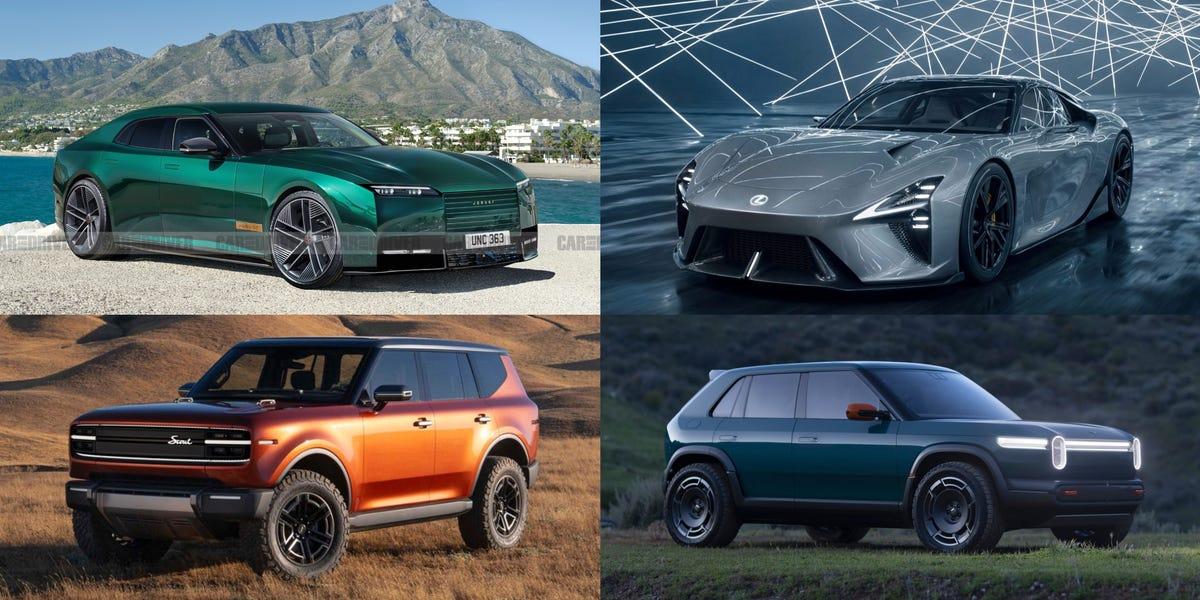
Future Cars Worth Waiting For: 2026–2030 Guide to the Most Anticipated SUVs and EVs
Image: Future Cars Worth Waiting For: 2026–2030 Guide to the Most Anticipated SUVs and EVs – Performance and Specifications
- Advertisement -
The automotive landscape is undergoing a seismic shift. As we look toward the 2026–2030 horizon, the industry is transitioning from traditional internal combustion to high-performance hybrids and dedicated EV platforms. If you are planning a vehicle purchase, patience might be your greatest asset. For many, the sweet spot lies in 2026, where manufacturers expect to solve current battery range anxieties and refine autonomous driving suites. Prices for these next-gen vehicles are expected to start from ₹25 Lakh for entry-level premium crossovers, scaling up to ₹1.5 Crore for flagship electric SUVs.
The Return of a Legend: 2026 Toyota Stout
Toyota is expected to disrupt the compact pickup segment with the revival of the ‘Stout’ nameplate. Based on the TNGA-K platform (the same as the RAV4), the Stout aims to offer truck utility with car-like handling. Enthusiasts on forums are already praising the potential for a ‘Hybrid Max’ powertrain, though some fear it may lack the towing capacity of traditional body-on-frame rivals. Expected to launch in late 2025 as a 2026 model, it will target the urban adventurer.
- Advertisement -
The European Powerhouse: 2026 Volkswagen Tayron
Replacing the Tiguan Allspace, the Volkswagen Tayron is set to become the brand’s global mid-size SUV benchmark. It features a more aggressive R-Line design language and a sophisticated PHEV (Plug-in Hybrid) system capable of 100km of pure electric range. Early feedback suggests users love the refined cabin but are wary of the ‘all-touch’ haptic controls that have plagued recent VW models.
Performance Revolution: 2026 Chevrolet Corvette SUV
Taking a page out of the Porsche Cayenne playbook, Chevrolet is spinning off the Corvette name into a high-performance SUV sub-brand. Expect a twin-turbo V6 or V8 in the base trims, with a range-topping EV variant. It’s designed to offer supercar acceleration with family-sized cargo space.
Technology, Interior, and Safety Standards
By 2026, the ‘Software-Defined Vehicle’ (SDV) will be the standard. We are moving away from simple infotainment screens toward immersive AI-driven cockpits. Brands are prioritizing sustainability, utilizing recycled ocean plastics and mushroom leather for interiors.
- Advertisement -
Interior Innovation and AI Integration
The 2026 models will likely feature Level 3 autonomous driving capabilities, allowing for hands-off driving in specific highway conditions. Expect augmented reality (AR) heads-up displays that project navigation lines directly onto the road. Connectivity will be driven by 5G and satellite integration, ensuring your vehicle is a rolling high-speed hotspot.
Safety and NCAP Ratings
Safety is non-negotiable for the 2026–2030 era. Most vehicles listed here are being engineered to meet the stringent ‘Euro NCAP 2026’ and ‘Bharat NCAP’ 5-star requirements. This includes advanced side-impact protection and pedestrian-detecting AEB (Autonomous Emergency Braking) that works in low-light conditions.
Comparison: 2026 Toyota Stout vs Rivals
| Feature | 2026 Toyota Stout (Est.) | Ford Maverick Hybrid | Hyundai Santa Cruz |
|---|---|---|---|
| Engine | 2.5L Hybrid / 2.4L Turbo | 2.5L Hybrid | 2.5L Turbo GDI |
| Horsepower | 245 – 326 hp | 191 hp | 281 hp |
| Fuel Economy | 40+ MPG City | 37 MPG Combined | 22 MPG Combined |
| Platform | Unibody (TNGA-K) | Unibody (C2) | Unibody (N3) |
| Max Towing | 5,000 lbs | 2,000 – 4,000 lbs | 5,000 lbs |
Technical Specifications & Pricing
| Specification | Details (Average 2026 Premium Class) | ||
|---|---|---|---|
| Battery Capacity (EVs) | 85 kWh – 110 kWh | Charging Speed | 10% to 80% in 18 mins (DC Fast) |
| Standard Safety | 9 Airbags, ADAS Level 2+, 360 Camera | ||
| Transmission | e-CVT or 9-Speed Automatic |
Variant-Wise Expected Pricing (Ex-Showroom)
| Model Variant | Estimated Price (INR) | Target Segment |
|---|---|---|
| Toyota Stout (Base) | ₹28,00,000 | Compact Lifestyle Pickup |
| VW Tayron R-Line | ₹45,00,000 | Luxury 7-Seater SUV |
| Corvette SUV (V6) | ₹1,20,00,000 | Ultra-Performance SUV |
| Apple Car (Base) | ₹85,00,000 | Autonomous Luxury EV |
People Also Ask (FAQ)
- What is the best car coming out in 2026? The Toyota Stout and VW Tayron are the most anticipated for mass-market buyers due to their versatility.
- Will there be an Apple Car in 2026? Recent reports suggest a shift toward a highly autonomous EV, though a full release may lean toward 2027.
- Should I buy an EV now or wait for 2026? Waiting until 2026 might yield better solid-state battery tech and improved charging infrastructure.
- What is the expected price of the 2026 Toyota Stout? It is expected to start around $25,000 – $30,000 USD (Approx. ₹25-30 Lakh in India).
- Which SUVs are launching in 2026? Notable launches include the Chevy Corvette SUV, the next-gen Honda Passport, and the VW Tayron.
- Will 2026 cars have physical buttons? Manufacturers like VW are returning to physical buttons following customer backlash against touch-only interfaces.
- Are 2026 cars safer than 2024 models? Yes, they will comply with updated NCAP protocols focusing on better AI-collision avoidance.
- How much range will 2026 EVs have? Average ranges are expected to jump to 500-600 km per charge.
- Is the Toyota Stout coming to India? While not confirmed, Toyota’s focus on the ‘IMV 0’ platform suggests a lifestyle pickup is likely.
- What fuel will 2026 cars use? A mix of Petrol-Hybrids, Hydrogen FCEVs (limited), and pure Battery Electric (BEV).
Verdict: Should You Wait?
Buying a car in 2026 means investing in the ‘Goldilocks’ era of automotive tech—where software is stable and hybrid efficiency is at its peak. If you currently own a reliable vehicle, waiting two years will grant you access to significantly better battery density and autonomous features that are currently in beta testing.
- Advertisement -
Pros & Cons
- Pros: Higher range (EVs), standardized ADAS Level 3, more sustainable materials, and the return of iconic nameplates.
- Cons: Higher initial purchase price, complex electronics may lead to higher long-term repair costs, and ‘Subscription-based’ features.