The Great Leap Forward: How China Conquered the Global Car Market by 2026
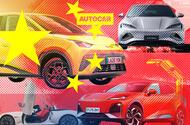
From ‘What on Earth’s That?’ to World-Beaters: The New Chinese Automotive Hierarchy in 2026
Image: From ‘What on Earth’s That?’ to World-Beaters: The New Chinese Automotive Hierarchy in 2026 – Performance and Specifications
- Advertisement -
Twenty-five years ago, the mention of a Chinese car elicited laughter. The Lubao CA6410, a bizarre Frankenstein of Austin Montego and Maestro parts, was the pinnacle of Beijing’s ambition. Fast forward to 2026, and the laughter has stopped. The joke is now on the traditional automotive establishment. China hasn’t just joined the race; it is setting the pace. With prices starting as low as ₹12 Lakhs for entry-level EVs and scaling up to ₹1.2 Crore for hyper-sedans like the Xiaomi SU7 Ultra, the hierarchy has been completely rewritten.
Today, the ‘copycat’ era is dead. In its place stands a ruthless, laser-focused industry that has mastered electrification and software integration years ahead of its European and American rivals. Whether it is BYD’s vertical integration or Xiaomi’s ecosystem connectivity, the new Chinese hierarchy is here to stay.
- Advertisement -
The 2026 Power Players: Ranking the New Hierarchy
1. BYD (Build Your Dreams): The New Global King
By 2026, BYD has solidified its position as the world’s largest EV producer. The 2026 BYD Seal and the Atto 3 facelift feature the 3rd Generation Blade Battery, offering energy densities that provide a real-world range of over 700km. Users on forums like Reddit and Team-BHP praise the ‘Ocean Aesthetics’ design language but occasionally complain about the overly complex infotainment menus and the ‘Build Your Dreams’ lettering on older batches.
2. Xiaomi & Zeekr: The Tech Disruptors
Xiaomi has done in three years what Apple couldn’t do in ten: launch a world-class EV. The SU7 and the 2026 SU8 SUV have become the gold standard for ‘Smart Cockpits.’ Meanwhile, Geely’s Zeekr brand has dominated the premium segment. The Zeekr 001 is now a frequent sight in global markets, praised for its Porsche-beating handling and 800V ultra-fast charging capabilities.
3. MG (Morris Garages): The Heritage Reborn
MG remains the spearhead for Chinese tech wrapped in a Western cloak. In 2026, the MG Cyberster has become the halo car that changed perceptions, while the MG4 remains a best-seller in Europe and India. Proponents love the tactile steering and UK-tuned suspension, though some critics still point toward inconsistent dealer service experiences in emerging markets.
- Advertisement -
4. Nio & Xpeng: The Premium Contenders
Nio’s Battery-as-a-Service (BaaS) and their 3-minute battery swapping stations have solved range anxiety for the luxury segment. The 2026 Nio ET7 is now a genuine competitor to the BMW i7, featuring interior materials made from sustainable rattan and a literal AI companion, NOMI, sitting on the dashboard.
5. The Newcomers: Onvo and Yangwang
2026 marks the global expansion of Yangwang, BYD’s ultra-luxury arm. The U8 SUV, capable of ‘tank turns’ and floating in water for short periods, has proven that Chinese engineering can now tackle the most extreme niches once reserved for Land Rover and Mercedes-Benz.
Performance, Interior Tech, and Safety: Breaking the Stigma
In 2026, Chinese cars are no longer ‘budget’ alternatives; they are tech leaders. Most flagship models now come standard with LiDAR sensors and Level 3 Autonomous driving capabilities. Inside, the quality of materials—Nappa leather, Alcantara, and real crystal—often surpasses what is found in entry-level Audi or Mercedes models. Safety is no longer a question mark; almost every major Chinese export to Europe and Australia in 2026 carries a 5-star Euro NCAP or ANCAP rating, thanks to high-strength steel cages and advanced ADAS suites.
- Advertisement -
Technical Specifications Comparison: 2026 Leaders
| Feature | BYD Seal (2026) | Xiaomi SU7 Ultra | MG4 EV |
|---|---|---|---|
| Battery Capacity | 82.5 kWh (Blade) | 101 kWh (Kirin) | 64 kWh |
| Range (WLTP) | 570 km | 630 km | 450 km |
| 0-100 km/h | 3.8 Seconds | 1.98 Seconds | 6.5 Seconds |
| Max Power | 523 bhp | 1548 bhp | 201 bhp |
| Charging Speed | 150 kW DC | 480 kW DC | 135 kW DC |
Variant-Wise Pricing (Estimated Ex-Showroom 2026)
| Model Variant | Estimated Price (INR) | Key Highlight |
|---|---|---|
| MG Comet EV (City) | ₹7.99 Lakh | Ultra-compact urban mobility |
| BYD Atto 3 Dynamic | ₹28.50 Lakh | Rotating Screen & Level 2 ADAS |
| BYD Seal Premium | ₹48.00 Lakh | Performance-to-price champion |
| Xiaomi SU7 Standard | ₹55.00 Lakh | Hyper-connectivity with MIUI |
| Zeekr 001 Luxury | ₹72.00 Lakh | Air Suspension & Premium Audio |
The Comparison: 2026 Chinese Flagship vs. Global Rivals
How do the top Chinese contenders stack up against the old guard in 2026?
| Aspect | BYD Seal (China) | Tesla Model 3 (USA) | Hyundai Ioniq 6 (Korea) |
|---|---|---|---|
| Interior Quality | High (Soft touch/Crystal) | Minimalist (Vegan Leather) | Modern (Recycled Plastics) |
| Software | Proprietary Android-based | Industry-leading OTA | Solid but traditional |
| Value for Money | Excellent | Good | Moderate |
| Service Network | Rapidly Expanding | Established | Very Strong |
Frequently Asked Questions (People Also Ask)
1. Are Chinese cars reliable in 2026?
Yes, major brands like BYD and Geely now offer 8-year warranties and have shown reliability scores comparable to Japanese manufacturers in recent JD Power surveys.
2. Which is the best Chinese car brand in India?
As of 2026, MG and BYD are the market leaders in India, offering the most robust service networks and localized spare parts.
- Advertisement -
3. Do Chinese cars have good resale value?
Resale value is improving but still lags behind brands like Toyota. However, the high demand for used EVs is narrowing the gap.
4. Is Xiaomi making a car in 2026?
Yes, Xiaomi has released the SU7 sedan and the SU8 SUV, both of which are considered top-tier tech-focused EVs.
5. Are Chinese cars safe in crashes?
Modern Chinese cars for export undergo rigorous testing and consistently achieve 5-star ratings in Euro NCAP and Global NCAP.
- Advertisement -
6. Does BYD use Tesla batteries?
Actually, it’s often the other way around; Tesla uses BYD’s Blade Battery technology in several of its Model Y units produced in Germany.
7. What is the cheapest Chinese EV in 2026?
The MG Comet and the Wuling Hongguang Mini EV variants remain the most affordable, starting around ₹7-9 Lakhs.
8. Can Chinese EVs be serviced anywhere?
While major cities have dedicated centers, rural service remains a challenge compared to Maruti or Hyundai.
- Advertisement -
9. Are there any privacy concerns with Chinese car tech?
Most manufacturers have established local data centers (e.g., in India or the EU) to comply with regional data privacy laws.
10. Should I buy a BYD Seal or a Tesla Model 3?
The BYD Seal offers a more traditional luxury interior and better range for the price, while the Tesla offers a superior charging network and software ecosystem.
Verdict: Should You Buy One?
In 2026, the answer is a resounding ‘Yes,’ provided you choose from the top-tier brands. The new Chinese hierarchy has proven that they can build cars that are not just cheap, but genuinely better than the competition in terms of battery tech and interior features.
- Advertisement -
Pros
- Unbeatable value-for-money and feature lists.
- Industry-leading battery tech (Blade and Solid-state).
- Superior software and smartphone integration.
Cons
- Depreciation is still slightly higher than German or Japanese rivals.
- Service network density in rural areas is still catching up.
- Lingering brand perception issues in some premium circles.