The Shocking Collapse of Honda’s 2026 EV Ambitions
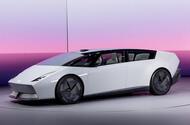
Honda 0 Series Cancelled: The Radical 2026 EV Strategy U-Turn Explained
Image: Honda 0 Series Cancelled: The Radical 2026 EV Strategy U-Turn Explained – Performance and Specifications
- Advertisement -
In a move that has sent shockwaves through the global automotive industry, Honda has officially pulled the plug on its highly anticipated 0 Series Saloon and SUV just months before they were slated to hit production lines. This radical U-turn comes as the Japanese giant announces a massive investment write-down, signaling a retreat from a ‘pure-EV’ aggressive roadmap in the face of cooling demand and shifting regulations. While enthusiasts expected a 2026 launch with a starting price point targeting the $45,000 – $60,000 range, those plans are now in the rearview mirror.
Why Honda Scrapped the 0 Series Just Before Launch
The decision wasn’t made lightly. Honda cited ‘uncertainty in the global EV market’ and a significant ‘slackening of EV legislation’ in the United States as the primary drivers. By writing off the heavy development costs now, Honda aims to stem further losses. This move highlights a growing trend among legacy automakers who are finding the transition to full electrification more volatile than predicted back in 2020.
- Advertisement -
Design Philosophy: The ‘Thin, Light, and Wise’ Dream
The 0 Series was meant to debut a completely new design language. Unlike the bulky EVs currently saturating the market, Honda’s concepts focused on a low-floor aerodynamic profile. The Saloon featured a sleek, one-motion silhouette that looked like it belonged in a sci-fi film, while the SUV aimed to maximize interior volume without the exterior heft.
Aerodynamics and Aesthetic Impact
The 0 Series Saloon concept, first showcased in 2024, utilized advanced aero-management to reduce drag, which is the enemy of EV range. Honda’s engineers had worked on a ‘Thin’ battery pack to allow for a lower seating position, which would have offered a sportier driving dynamic compared to the Tesla Model 3 or the Hyundai Ioniq 6.
Performance and the New e-Axle Technology
Before the cancellation, the 0 Series was promised to feature high-density batteries with ‘stress-free’ charging capabilities. Honda was targeting a 15% to 80% charge time of just 10-15 minutes. The performance was driven by a compact e-Axle system—integrating the motor, inverter, and gearbox into one unit to maximize cabin space.
- Advertisement -
Safety Standards and ADAS Integration
Safety was a cornerstone of the 2026 0 Series. It was set to feature the next generation of Honda SENSING 360, utilizing AI and advanced sensors to provide Level 3 autonomous driving capabilities in certain conditions. Honda was aiming for top-tier 5-star NCAP ratings globally, banking on a new high-rigidity frame designed specifically for battery protection.
The Competition: How Honda 0 Series Stacked Up
Before its demise, the 0 Series Saloon was aimed directly at the heart of the premium EV market. Here is how the projected 2026 Honda Saloon compared to its two closest rivals.
| Feature | Honda 0 Series Saloon (Proj.) | Tesla Model 3 (2026) | Hyundai Ioniq 6 |
|---|---|---|---|
| Range (WLTP) | 500+ km | 550 km | 545 km |
| 0-100 km/h | 4.5 Seconds | 4.2 Seconds | 5.1 Seconds |
| Platform | Bespoke 0-Series | Tesla Unboxed | E-GMP |
| AI Integration | Advanced Honda AI | FSD Beta | SmartSense |
Technical Specifications and Expected Pricing
Although production is cancelled, the technical data gathered during development shows what Honda was capable of. Below are the finalized specs before the programme was mothballed.
- Advertisement -
| Specification | Details |
|---|---|
| Battery Capacity | 80 kWh – 100 kWh Li-ion |
| Drivetrain | AWD / RWD Options |
| Max Power | Approx 480 hp (Performance trim) |
| Charging Speed | 350kW DC Fast Charge |
| Wheelbase | 3000 mm |
| Variant | Estimated Price (USD) | Estimated Price (INR Equiv.) |
|---|---|---|
| 0 Series Saloon Base | $46,000 | ₹38.5 Lakh |
| 0 Series Saloon Sport | $55,000 | ₹46.0 Lakh |
| 0 Series SUV Elite | $62,000 | ₹51.8 Lakh |
People Also Ask (FAQ)
- Why did Honda cancel the 0 Series? Honda cited market uncertainty, high development costs, and changing EV regulations in the US.
- Will Honda launch any EVs in 2026? Honda will likely focus on Hybrid models and the existing Prologue SUV rather than the bespoke 0 Series.
- What happens to the 0 Series concepts? They will remain as technology demonstrators for future software and design elements.
- Is Honda abandoning EVs entirely? No, they are restructuring but still aim for a carbon-neutral lineup by 2040.
- What was the range of the Honda 0 Series? It was projected to exceed 300 miles (480 km) per charge.
- Did the 0 Series have an interior screen? Yes, it featured a full-width digital ‘panorama’ cockpit.
- How much did Honda lose on this project? The company is writing off billions in development and specialized platform costs.
- Is the Honda e:Ny1 also cancelled? No, that model belongs to a different platform and market strategy.
- Will there be a 0 Series Hybrid? Honda has not confirmed this, but they are pivoting back toward hybrid-first architectures.
- What is the alternative to the Honda 0 Saloon? The Tesla Model 3 and BMW i4 remain the top competitors in that segment.
Verdict: Should You Be Disappointed?
The cancellation of the Honda 0 Series is a blow to fans of futuristic design and Japanese engineering. It was a bold attempt to rethink the electric car from the ground up. However, from a consumer standpoint, Honda’s pivot might result in more affordable and reliable Hybrid options in the short term.
Pros (What we’ll miss)
- Unique ‘one-motion’ futuristic design.
- Low-slung driving dynamics unlike top-heavy SUVs.
- Advanced AI-driven safety tech.
Cons (Why it failed)
- Prohibitively high development costs.
- Lack of charging infrastructure readiness in key markets.
- Economic cooling in the premium EV sector.
Final Thoughts: If you were waiting for the 0 Series, it’s time to look at the Tesla Model 3 or wait for Honda’s revamped Hybrid lineup for 2026. The dream of the ‘Thin, Light, and Wise’ EV is on hold—for now.
- Advertisement -