The 2026 Hyundai Verna: Redefining the Mid-Size Sedan Segment
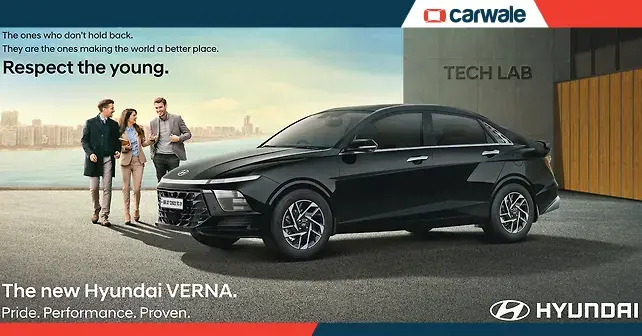
2026 Hyundai Verna Facelift: Is This the Ultimate Sedan for India? Price, Specs, and Full Photo Gallery
Image: 2026 Hyundai Verna Facelift: Is This the Ultimate Sedan for India? Price, Specs, and Full Photo Gallery – Performance and Specifications
- Advertisement -
In an era dominated by SUVs, the Hyundai Verna remains a beacon for those who crave the elegance, aerodynamics, and driving dynamics of a true sedan. Starting at a competitive base ex-showroom price of Rs. 10.98 lakh, the 2026 Hyundai Verna isn’t just a car; it is a statement on wheels. With its futuristic ‘Parametric Dynamics’ design and a cabin that rivals luxury cars, this facelift aims to solidify its position as the segment leader.
A Glimpse into the Future: Exterior Design
The 2026 Hyundai Verna continues to polarize and fascinate with its bold design language. The most striking feature remains the full-width Horizon LED positioning lamps and DRLs that give it a robo-futuristic look. The ‘Parametric Shield’ grille has been subtly refined for 2026, offering better airflow and a more aggressive stance. For those opting for the Turbo variants, blacked-out alloys and red brake calipers add a much-needed sporty flair.
- Advertisement -
Interior Tech: The Dual-Screen Revolution
Step inside, and you are greeted by a cabin that feels leagues ahead of its price point. The centerpiece is the integrated dual-screen setup—a 10.25-inch infotainment system and a digital cluster that provides crystal-clear telemetry. The 2026 model introduces updated software with OTA (Over-the-Air) capabilities and wireless smartphone connectivity across more trims. The switchable controller for infotainment and climate control remains a clever, space-saving touch that users love.
Performance and Engine Options
Hyundai hasn’t messed with a winning formula under the hood. The 2026 Verna offers two distinct petrol powertrains, catering to both the commuter and the enthusiast.
The 1.5L MPi Naturally Aspirated Petrol
Ideal for city driving and fuel efficiency, this engine produces 115 PS and 144 Nm of torque. It is smooth, reliable, and pairs perfectly with either a 6-speed manual or an IVT (Intelligent Variable Transmission).
- Advertisement -
The 1.5L Turbo GDi: The Enthusiast’s Choice
If you crave adrenaline, the 1.5L Turbo GDi engine is the crown jewel. Delivering a class-leading 160 PS and 253 Nm of torque, it can propel the Verna from 0 to 100 km/h in just 8.1 seconds. This engine is paired with a lightning-fast 7-speed Dual Clutch Transmission (DCT) or a 6-speed manual for those who prefer total control.
Ride Quality and Handling
Hyundai has recalibrated the suspension for the 2026 model year to address feedback regarding high-speed stability. The car feels more planted on highways, though it retains the soft cushioning that makes it a favorite for city potholes. The steering feedback is light, making it effortless to maneuver in tight traffic.
Safety: 5-Star Assurance and Level 2 ADAS
Safety is no longer an afterthought for Hyundai. The Verna maintains its 5-star Global NCAP rating, bolstered by a reinforced chassis and 6 airbags as standard across all variants. The 2026 update sees a more refined calibration of its Hyundai SmartSense Level 2 ADAS (Advanced Driver Assistance Systems), which includes Forward Collision-Avoidance Assist, Lane Keeping Assist, and Smart Cruise Control with Stop & Go.
- Advertisement -
Comparison with Rivals (2026)
To understand the Verna’s value, we must look at its primary competitors: the Volkswagen Virtus and the Honda City.
| Feature | Hyundai Verna (2026) | Volkswagen Virtus | Honda City |
|---|---|---|---|
| Base Price (Ex-Showroom) | ₹10.98 Lakh | ₹11.56 Lakh | ₹11.82 Lakh |
| Max Power | 160 PS (Turbo) | 150 PS (GT) | 121 PS (NA) |
| Safety Rating | 5-Star GNCAP | 5-Star GNCAP | 5-Star ASEAN NCAP |
| ADAS Features | Level 2 (Radar + Camera) | Basic Camera Based | Honda Sensing (Camera) |
| Sunroof Type | Electric | Electric | Electric |
Technical Specifications
| Specification | Details | ||
|---|---|---|---|
| Engine Options | 1.5L MPi / 1.5L Turbo GDi | Transmission | 6-MT, IVT, 7-DCT |
| Fuel Tank Capacity | 45 Liters | ||
| Boot Space | 528 Liters | ||
| Ground Clearance | 170 mm (Unladen) | ||
| Wheelbase | 2670 mm |
Variant-Wise Pricing (Estimated Ex-Showroom)
| Variant | Engine / Transmission | Price (Approx) |
|---|---|---|
| EX | 1.5L MPi MT | ₹10,98,000 |
| S | 1.5L MPi MT | ₹11,99,000 |
| SX | 1.5L MPi MT / IVT | ₹13,05,000 – ₹14,25,000 |
| SX Turbo | 1.5L Turbo MT / DCT | ₹14,89,000 – ₹16,10,000 |
| SX(O) | 1.5L MPi IVT | ₹16,30,000 |
| SX(O) Turbo | 1.5L Turbo DCT | ₹17,42,000 |
People Also Ask (FAQ)
- What is the starting price of the 2026 Hyundai Verna? The base EX variant starts at Rs. 10.98 lakh (ex-showroom).
- Does the Hyundai Verna have a diesel engine option? No, Hyundai has discontinued diesel for the Verna, focusing on Turbo-petrol and NA petrol engines.
- What is the mileage of the Verna 1.5 Turbo? The Turbo DCT variant offers approximately 18.60 kmpl under test conditions.
- Is the Hyundai Verna 2026 safe? Yes, it holds a 5-star Global NCAP safety rating and features Level 2 ADAS.
- How much boot space does the Verna offer? It has a massive 528-liter boot, the largest in its class.
- What are the color options for 2026? Popular colors include Abyss Black, Atlas White, and the striking Tellurian Brown.
- Does it have ventilated seats? Yes, the top-end SX(O) variants come with both ventilated and heated front seats.
- What is the ground clearance? The unladen ground clearance is 170 mm.
- Does it feature a 360-degree camera? No, it currently offers a rear-view camera with guidelines and front/rear parking sensors.
- Who are the main rivals? The Volkswagen Virtus, Skoda Slavia, and Honda City.
Verdict: Should You Buy It?
The 2026 Hyundai Verna is a masterclass in packaging. It offers more tech than the Honda City and more performance than the Volkswagen Virtus 1.0. While the exterior design remains a point of debate, there is no denying the value for money at Rs. 10.98 lakh.
Pros
- Most powerful engine in the segment (160 PS Turbo).
- Feature-loaded cabin with heated/ventilated seats.
- Top-tier safety with 5-star GNCAP and Level 2 ADAS.
- Massive boot space for long trips.
Cons
- Polarizing design may not age well for everyone.
- Rear headroom is slightly tight for very tall passengers due to the sloping roof.
- No 360-degree camera system.
- Advertisement -