The Great Ferrari Reversal: Returning to Physical Controls in 2026
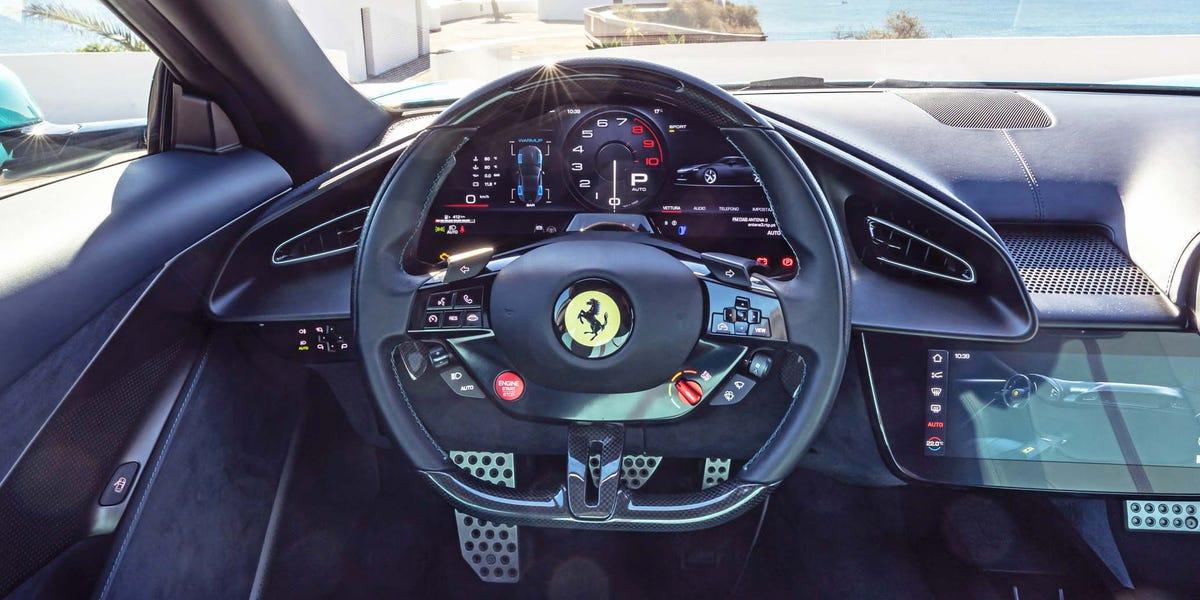
2026 Ferrari Steering Wheel Retrofit: Goodbye Haptics, Hello Real Buttons!
Image: 2026 Ferrari Steering Wheel Retrofit: Goodbye Haptics, Hello Real Buttons! – Performance and Specifications
- Advertisement -
For years, the automotive world has been locked in a battle between futuristic aesthetics and functional ergonomics. Ferrari, the pinnacle of Italian performance, was at the forefront of the ‘haptic revolution,’ replacing traditional switches with capacitive touchpads on the SF90, Roma, and 296 GTB. However, the feedback from the Tifosi was loud and clear: they wanted their buttons back. As we move into 2026, Ferrari has officially launched a Steering Wheel Retrofit Kit that allows owners of haptic-equipped models to swap those touch-sensitive pads for physical, tactile buttons. The price for this upgrade is expected to hover around $5,000 to $7,000 including installation at authorized dealers, making it a premium solution for a premium frustration.
The Hook: Why Haptics Failed the Supercar Test
Driving a Ferrari is an emotional, high-stakes experience. When you are carving through a mountain pass at 8,000 RPM, you need to know—without looking—that your thumb has successfully activated the turn signal or adjusted the voice command. Haptic pads provided inconsistent feedback, often requiring a double-tap or leading to accidental activations during spirited driving. By 2026, Ferrari has realized that ‘innovation’ shouldn’t come at the cost of driver focus.
- Advertisement -
Detailed Breakdown: The 2026 Retrofit Design and Ergonomics
Design: A Marriage of Carbon Fiber and Clicky Switches
The new retrofit wheel isn’t just a parts bin swap. Ferrari engineers have redesigned the internal wiring harness of the steering wheels found in the 296 GTB and Roma. The 2026 retrofit features high-quality plastic and aluminum switches that provide a satisfying ‘click.’ The layout remains familiar to maintain the ‘Eyes on the Road, Hands on the Wheel’ philosophy, but the execution is purely mechanical. The iconic Manettino dial remains, but the surrounding touch-sensitive areas for volume and menu navigation are now physically tactile.
Interior Tech and Integration
The retrofit is fully compatible with the existing digital instrument clusters. Ferrari’s software update, bundled with the hardware swap, ensures that the physical inputs map perfectly to the UI. Owners report that the response time feels faster because there is no ‘ghosting’—a common issue where the haptic sensor would fail to register a swipe in humid or cold conditions.
Safety and Performance Impact
While NCAP does not specifically rate steering wheel button types, ergonomic safety is a growing concern. The ability to operate vehicle functions without taking eyes off the road is a primary safety metric. Ferrari’s move back to physical buttons is seen as a win for active safety. Performance-wise, the weight difference is negligible, though the tactile feedback allows for more precise control of the vehicle’s hybrid settings and infotainment while under high G-loads.
- Advertisement -
| Feature | Haptic Control (Old) | Retrofit Physical Buttons (2026) | |||
|---|---|---|---|---|---|
| Feedback Type | Vibration (Haptic) | Tactile Click (Mechanical) | Usability with Gloves | Poor | Excellent |
| Accidental Activations | High | Zero | |||
| Installation Time | N/A (Factory) | 4-6 Hours (Dealer) | |||
| Customization | Software-based | Hardware-fixed |
2026 Technical Specifications: Ferrari Retrofit Compatibility
| Specification | Details |
|---|---|
| Compatible Models | Roma, Roma Spider, 296 GTB, 296 GTS, SF90 Stradale, SF90 Spider, Purosangue (Early Models) |
| Material Options | Carbon Fiber, Alcantara, Perforated Leather |
| Connectivity | Updated CAN-bus Wiring Harness Included |
| Control Mapping | 100% OEM Integration with Digital Dash |
| Availability | Global Ferrari Dealer Network (Q1 2026) |
The 2026 Rivalry: Ferrari vs. The Competition
As Ferrari pivots back to buttons, how do its closest rivals in 2026 compare? Lamborghini and McLaren have taken different paths regarding interior ergonomics.
| Feature | Ferrari 296 (Retrofit) | Lamborghini Temerario | McLaren Artura Spider |
|---|---|---|---|
| Steering Controls | Physical Buttons | Mixed (Button/Haptic) | Minimalist (Clean Wheel) |
| Infotainment Size | Part of Driver Display | 8.4-inch Vertical Touch | 8-inch Floating Touch |
| Tactile Feedback | High (New Swtiches) | Moderate | High (Stalks) |
| Driver Focus | Extreme | High | Maximum |
Estimated Pricing: Variant-wise Upgrade Costs
| Retrofit Package | Estimated Price (Ex-Showroom/Part) |
|---|---|
| Standard Leather/Button Kit | $4,800 |
| Carbon Fiber + LED Shift Lights Kit | $6,500 |
| Purosangue Specific Luxury Trim Kit | $7,200 |
| Installation & Software Labor | $800 – $1,200 |
People Also Ask: Ferrari Steering Wheel Retrofit FAQ
- Why is Ferrari replacing haptic buttons? Due to customer complaints regarding accidental touches and lack of tactile feedback during driving.
- Can I install the 2026 retrofit on a 2021 Ferrari Roma? Yes, the kit is designed for all Roma models produced with haptic wheels.
- Is the retrofit covered under Ferrari warranty? If installed by an authorized dealer, it typically carries its own parts warranty and does not void the vehicle warranty.
- How much does the Ferrari button retrofit cost? Estimated between $5,000 and $8,000 depending on materials.
- Does the new wheel include the LED shift lights? Yes, carbon fiber versions include the signature Ferrari LED shift indicator.
- Will this improve the resale value of my Ferrari? Most enthusiasts prefer physical buttons, so a factory-backed retrofit could likely increase desirability and resale value.
- Is the Manettino dial changed in the retrofit? No, the physical Manettino remains, but the surrounding touchpads are replaced.
- How long does the installation take? Usually a one-day service (4-6 hours) at a Ferrari workshop.
- Will the Purosangue get physical buttons from the factory now? Yes, 2026 production models are shifting toward the 12Cilindri-style physical interface.
- Can I switch back to haptics later? Technically yes, as it is a modular swap, but it is unlikely most owners would want to.
Verdict: Should You Buy the Retrofit?
Pros:
– Restores the legendary tactile feel of a Ferrari.
– Eliminates frustration with accidental volume or menu changes.
– Increases safety by reducing ‘eyes-off-road’ time.
– High-quality materials consistent with Ferrari standards.
Cons:
– Significant financial investment for a control swap.
– Requires professional dealer installation and software coding.
- Advertisement -
Final Thoughts: If you plan on keeping your 296 or Roma for the long term, the 2026 Steering Wheel Retrofit is an essential upgrade. It fixes the only major ‘con’ in an otherwise near-perfect driving machine. Ferrari’s willingness to admit a mistake and offer a solution is a testament to their commitment to the driving experience. It’s a ‘Must Buy’ for the purist.