The Revolutionary DNA: How a 1915 Horseshoe Magnet Defined the 2026 Hybrid Landscape
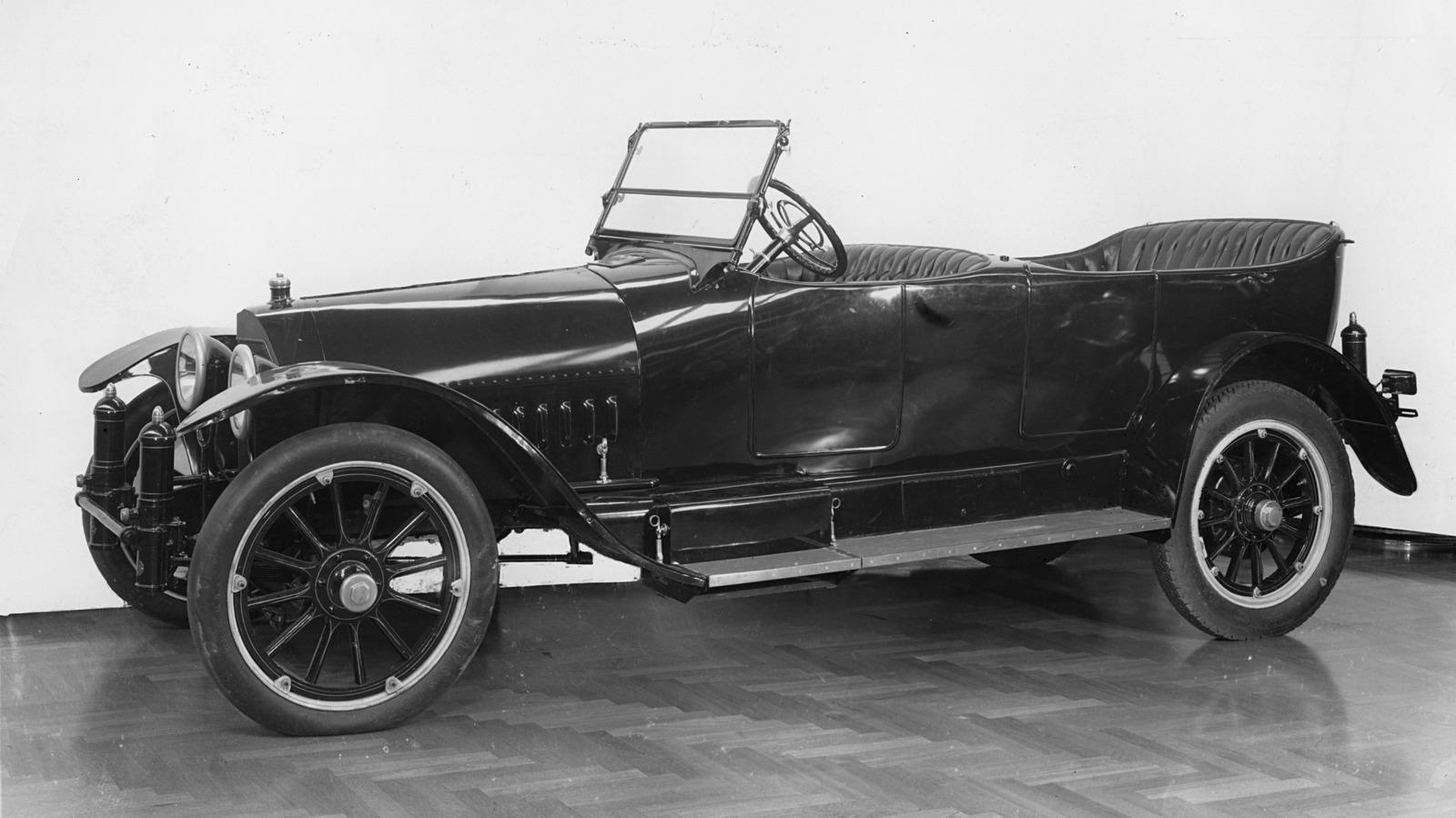
2026 Chevy Volt Legacy: Did the 1915 Owen Magnetic Predict the Future of GM Hybrids?
Image: 2026 Chevy Volt Legacy: Did the 1915 Owen Magnetic Predict the Future of GM Hybrids? – Performance and Specifications
- Advertisement -
Before the first lithium-ion battery was ever conceived for a passenger car, and long before Elon Musk became a household name, there was the Owen Magnetic. Often cited as the ‘OG Chevy Volt,’ this 1915 marvel didn’t just move; it glided on the principles of electromagnetic induction. Today, as we look toward the 2026 automotive lineup, the ghost of the Owen Magnetic is more relevant than ever. With GM recently announcing a pivot back to Plug-in Hybrid Electric Vehicles (PHEVs) for the 2026 model year, the legacy of the Volt is being resurrected. While a brand new 2026 Chevy Volt hasn’t been officially stickered yet, the technology expected in GM’s upcoming PHEV fleet—rumored to start around $35,000 to $42,000—is a direct descendant of these two engineering icons.
Design: From Brass Era Elegance to Kammback Aerodynamics
The Owen Magnetic was the pinnacle of ‘Brass Era’ luxury. Its design was dictated by the massive Entz magnetic transmission, requiring a long, stately hood that signaled wealth and innovation. Fast forward to the Chevy Volt’s second generation, and design became a slave to the wind tunnel. The Volt’s ‘Kammback’ tail and closed-off grille were designed for a 0.28 drag coefficient. In 2026, GM’s new hybrid design language is expected to blend the sleekness of the discontinued Volt with the aggressive ‘Ultium’ styling seen on the Blazer EV, prioritizing cooling for the high-output battery packs while maintaining that signature aerodynamic efficiency.
- Advertisement -
Performance: The Horseshoe Magnet vs. Voltec Drive
The heart of the Owen Magnetic was a 24-volt electrical system and a massive horseshoe-shaped magnet. There was no mechanical connection between the engine and the wheels—power was transferred via a magnetic field. This provided a ‘stepless’ acceleration that felt like modern CVTs, but without the drone. The Chevy Volt refined this with the ‘Voltec’ drive unit, allowing for 53 miles of pure electric range. For 2026, GM’s upcoming PHEV powertrains are rumored to target 60-70 miles of EV range, finally surpassing the Volt’s benchmark by utilizing higher energy-density cells and more compact dual-motor setups.
Interior Tech and Safety: A Century of Progress
In 1915, ‘tech’ meant a lever on the steering wheel that controlled the magnetic clutch. In the Volt, it meant twin LCD screens and a haptic-touch center console. The 2026 GM hybrids are set to feature the ‘Virtual Cockpit’—a 33-inch diagonal LED display powered by Google Built-in. Safety has also evolved exponentially. While the Owen Magnetic relied on the driver’s reflexes and basic mechanical brakes, the Volt earned a consistent 5-star NCAP rating. The 2026 models will come standard with Super Cruise, GM’s hands-free driving assistance, and 360-degree sensor fusion.
Technical Specifications Comparison
| Feature | 1915 Owen Magnetic | 2019 Chevy Volt (Gen 2) | 2026 GM PHEV (Projected) |
|---|---|---|---|
| Powertrain | 6-Cylinder Engine + Magnetic Trans | 1.5L I4 + Dual Electric Motors | 2.0L Turbo + Ultium Hybrid Drive |
| Horsepower | Approx. 75 hp | 149 hp | 215 hp |
| EV Range | 0 Miles (Series Hybrid) | 53 Miles | 65+ Miles |
| Transmission | Electromagnetic Induction | Voltec Multi-mode | Dedicated Hybrid Drive (DHT) |
| Top Speed | 60 mph | 102 mph | 130 mph |
Market Positioning and 2026 Pricing
| Variant/Model | Estimated Ex-Showroom Price (2026) | Key Highlight |
|---|---|---|
| GM PHEV ‘LT’ Equivalent | $34,500 | Standard Safety Suite, 60-mile EV range |
| GM PHEV ‘Premier’ Equivalent | $39,200 | Leatherette Interior, Bose Audio |
| GM PHEV ‘RS’ Performance | $43,500 | Sport Suspension, Dual-Motor AWD |
The 2026 Rivals: How Does the Volt Legacy Stack Up?
| Vehicle | 2026 Toyota Prius Prime | 2026 Honda Civic Hybrid | 2026 GM PHEV (Volt Successor) |
|---|---|---|---|
| Pure EV Range | 44 Miles | N/A (HEV Only) | 65 Miles |
| 0-60 MPH | 6.6 Seconds | 6.2 Seconds | 6.0 Seconds |
| Infotainment | 12.3-inch Toyota Audio | 9-inch Honda Link | 33-inch Ultium Display |
| Charging Speed | 3.5 kW AC | N/A | 7.7 kW AC (Level 2) |
Frequently Asked Questions (People Also Ask)
1. Will GM bring back the Chevy Volt in 2026?
While the ‘Volt’ nameplate hasn’t been officially confirmed for 2026, GM CEO Mary Barra has confirmed that Plug-in Hybrid technology is returning to North America in 2026, using technology evolved from the Volt.
- Advertisement -
2. Why was the Owen Magnetic called the ‘Car of a Thousand Speeds’?
Because it used magnetic induction instead of gears, it offered an infinite number of ratios, providing a seamless acceleration curve that was unheard of in 1915.
3. What is the common complaint about the Chevy Volt?
Most users on forums like GM-Volt.com complain about the ‘Becky’ (the front air dam) scraping on driveways and the cramped middle seat in the rear.
4. How long does it take to charge a 2026 PHEV?
With an upgraded 7.7 kW onboard charger, a 2026 GM PHEV is expected to charge from 0 to 100% in approximately 3 hours on a Level 2 charger.
- Advertisement -
5. Is the Owen Magnetic transmission reliable?
While complex for its time, Jay Leno (who owns one) notes that they are remarkably robust because there are no touching parts in the ‘clutch’ to wear out.
6. Does the 2026 GM PHEV qualify for a tax credit?
Under the current Inflation Reduction Act, PHEVs with a battery capacity over 7kWh may qualify for a partial credit of up to $3,750, depending on mineral sourcing.
7. What happened to the Owen Magnetic company?
The company suffered from high production costs and the complexity of the Entz system, leading to its demise in 1922 after producing about 700-1,000 cars.
- Advertisement -
8. Can the Chevy Volt run without gas?
Yes, as long as the battery has a charge, the Volt operates as a pure electric vehicle. The gas engine only kicks in when the battery is depleted.
9. Is a hybrid better than a full EV in 2026?
For many users, hybrids offer the ‘best of both worlds’—electric commuting for daily use and gas convenience for long road trips without charging anxiety.
10. What is the NCAP rating for the new GM hybrids?
GM aims for a full 5-star NCAP rating across all new 2026 models, utilizing high-strength steel cages and advanced pedestrian detection systems.
- Advertisement -
Verdict: Should You Wait for the 2026 GM Hybrids?
The Owen Magnetic was a century too early, and the Chevy Volt was perhaps a decade too early. But in 2026, the market is finally ready for the ‘Volt’ philosophy. If you want a car that handles 90% of your driving on electricity but can still handle a cross-country trek without stopping for hours at a charger, GM’s upcoming 2026 PHEVs are the ones to watch.
Pros: Leading EV range in the PHEV segment, seamless ‘Ultium’ tech integration, and a legacy of reliability.
Cons: Potential ‘first-year’ model bugs, dealership markup concerns, and GM’s history of discontinuing successful models too early.
- Advertisement -