The Great EV Shift: How BYD Claimed the Throne in 2026
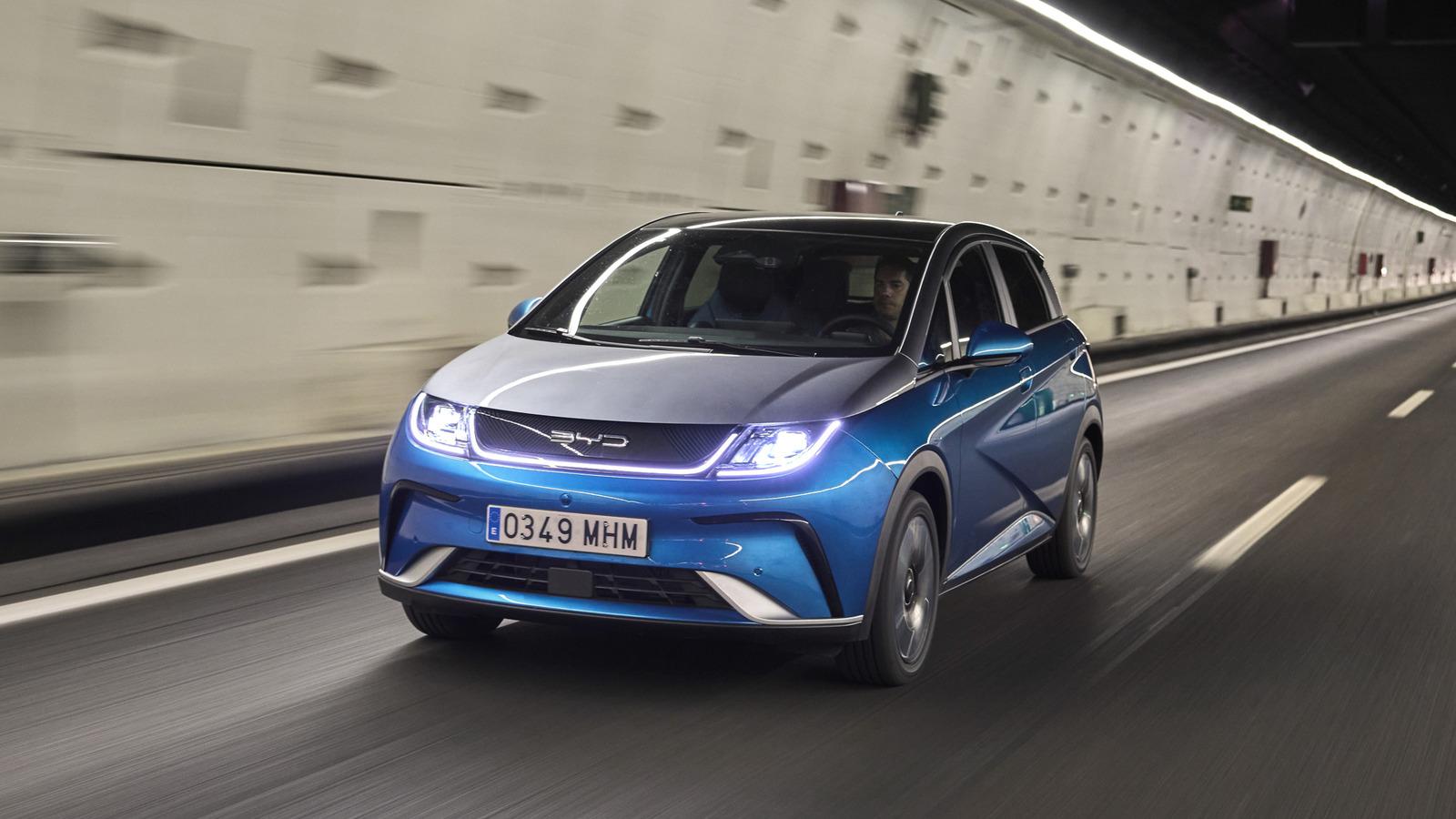
10 Reasons Why BYD Is Dominating The 2026 EV Market: Better Than Tesla?
Image: 10 Reasons Why BYD Is Dominating The 2026 EV Market: Better Than Tesla? – Performance and Specifications
- Advertisement -
The automotive landscape has undergone a seismic shift. As we navigate through 2026, the question is no longer whether electric vehicles (EVs) will take over, but rather who will lead the charge. While Tesla once held an iron grip on the market, the crown has officially moved East. BYD (Build Your Dreams) has not just caught up; it has surpassed the competition through sheer scale, innovation, and aggressive pricing. With entry-level models like the Seagull starting as low as $12,500 (approx. ₹10.5 Lakh) and premium performance sedans like the Seal 06 challenging the $50,000 bracket, BYD offers a spectrum Tesla simply cannot match.
1. Vertical Integration: The Masterstroke
Unlike most manufacturers that rely on a complex web of third-party suppliers, BYD is a tech company that happens to build cars. In 2026, they manufacture nearly 90% of their components in-house, including the most expensive part of any EV: the battery. This vertical integration allows them to bypass supply chain bottlenecks and maintain profit margins that would make legacy automakers weep. By making their own semiconductors and battery cells, BYD controls its destiny and its pricing.
- Advertisement -
2. The Blade Battery: Safety and Longevity Redefined
One of the primary reasons users are flocking to BYD in 2026 is the 2nd Gen Blade Battery technology. Utilizing Lithium Iron Phosphate (LFP) chemistry, these batteries are virtually immune to the thermal runaway issues (fire risks) that plague traditional NCM batteries. Owners on forums like Reddit and Team-BHP consistently praise the ‘peace of mind’ and the battery’s ability to handle over 3,000 charge cycles without significant degradation, ensuring the car lasts as long as a traditional petrol engine.
3. Unmatched Design and Interior Luxury
While Tesla maintains a minimalist—some would say ‘stark’—aesthetic, BYD has leaned into ‘accessible luxury.’ The 2026 BYD Seal and Han models feature rotating 15.6-inch infotainment screens, premium vegan leather upholstery, and physical buttons for essential functions—a major ‘Pro’ cited by users who find touch-only interfaces distracting. The ‘Ocean Aesthetics’ design language, led by former Audi designer Wolfgang Egger, gives these cars a European flair that resonates globally.
4. Global Expansion and Manufacturing Footprint
In 2026, BYD is no longer just a ‘Chinese brand.’ With fully operational mega-factories in Thailand, Brazil, Hungary, and Mexico, they have successfully bypassed many of the trade tariffs that previously hindered their growth. This local manufacturing has reduced shipping costs and allowed for localized tuning of suspension and software, making the cars feel native to their respective markets.
- Advertisement -
| Feature | BYD Seal (2026 Premium) | Tesla Model 3 (Highland) | Xiaomi SU7 (Standard) |
|---|---|---|---|
| Battery Capacity | 82.5 kWh (Blade) | 75 kWh (NCM) | 73.6 kWh (LFP) |
| Range (WLTP) | 570 km | 513 km | 500 km |
| 0-100 km/h | 3.8 Seconds | 4.4 Seconds | 5.28 Seconds |
| Starting Price (Est) | $46,000 | $49,000 | $42,000 |
| V2L (Vehicle to Load) | Yes (Standard) | No | Yes |
5. DM-i 5.0: The Hybrid Bridge
While the world transitions to full electric, BYD’s Dual Mode (DM-i) 5.0 technology has become a best-seller in 2026. These plug-in hybrids offer a combined range of over 2,000 km. For users with ‘range anxiety,’ this technology serves as the perfect gateway, offering 100km+ of pure electric driving for city commutes and a high-efficiency petrol engine for cross-country trips.
6. Technical Specifications and Performance
Performance is no longer a compromise. The 2026 BYD lineup features 800V high-voltage platforms that allow for DC fast charging from 10% to 80% in just 18 minutes. Their e-Platform 3.0 Evo integrates the motor, gearbox, and inverter into a single ‘8-in-1’ powertrain, significantly increasing efficiency and reducing weight.
| Technical Specification | BYD Seal 2026 Details |
|---|---|
| Powertrain | Dual Motor AWD (Performance Variant) |
| Max Power | 523 hp (390 kW) |
| Max Torque | 670 Nm |
| Charging Speed | 150 kW DC Fast Charging |
| Safety Rating | 5-Star Euro NCAP / ANCAP |
| Suspension | Double Wishbone (Front) / Five-link (Rear) |
7. Variant-wise Pricing (Ex-Showroom)
BYD’s aggressive pricing strategy for 2026 ensures there is a vehicle for every tax bracket. Below is the projected pricing for their core 2026 lineup.
- Advertisement -
| Model Variant | Battery Type | Price (Ex-Showroom Est.) |
|---|---|---|
| BYD Dolphin Mini (Standard) | 38 kWh Blade | ₹12.50 Lakh |
| BYD Atto 3 (Extended Range) | 60.48 kWh Blade | ₹34.90 Lakh |
| BYD Seal (Dynamic) | 61.44 kWh Blade | ₹41.00 Lakh |
| BYD Seal (Performance AWD) | 82.56 kWh Blade | ₹55.00 Lakh |
| BYD Yangwang U8 (Luxury SUV) | 49.05 kWh + Range Extender | ₹1.20 Crore |
8. Smart Features and ADAS
The DiPilot ADAS (Advanced Driver Assistance System) has evolved significantly by 2026. Utilizing a suite of LiDAR, high-definition cameras, and ultrasonic sensors, BYD vehicles now offer Level 2.5 autonomous driving capabilities. Features like automated valet parking and ‘Summon Mode’ are now standard on the Premium and Performance trims, rivaling Tesla’s Autopilot in reliability, especially in dense urban environments.
9. Connectivity and OTA Updates
Every 2026 BYD comes with a built-in 5G eSIM. The software ecosystem allows for seamless integration with Apple CarPlay, Android Auto, and even a built-in Karaoke system (a fan favorite in Asian markets). Over-the-air (OTA) updates are frequent, often bringing improvements to power management and UI layouts based on user feedback from the BYD app community.
10. Sustainability Beyond the Tailpipe
BYD’s commitment to ‘Cool the Earth by 1°C’ isn’t just a slogan. By 2026, their manufacturing plants are 100% powered by renewable energy. They have also implemented a comprehensive battery recycling program, ensuring that the lithium and cobalt used in their cars are reclaimed, making them a top choice for ESG-conscious investors and buyers.
- Advertisement -
People Also Ask (FAQ)
- Is BYD better than Tesla in 2026? While Tesla leads in software and Supercharger infrastructure, BYD offers better build quality, diverse model ranges, and more affordable pricing.
- Are BYD batteries safe? Yes, the Blade Battery (LFP) is considered one of the safest in the industry, passing the rigorous ‘nail penetration test’ without fire.
- What is the cheapest BYD car in 2026? The BYD Seagull (known as Dolphin Mini in some markets) remains the entry-level leader starting around ₹12 Lakh.
- Does BYD have 4WD models? Yes, the Seal Performance and the Yangwang U8 offer advanced AWD systems.
- How long does a BYD battery last? They are rated for 3,000 to 5,000 charge cycles, which can easily translate to 500,000+ kilometers.
- Is BYD available in the USA? As of 2026, BYD primarily focuses on commercial vehicles in the US, with passenger cars available via Mexico or specific import channels due to tariffs.
- What is the range of the 2026 BYD Seal? The Seal offers up to 570 km (WLTP) on a single charge.
- Does BYD support fast charging? Yes, the 2026 models support up to 150kW-200kW DC fast charging.
- What are the cons of buying a BYD? Users mention that software UI can feel cluttered compared to Tesla, and brand recognition is still building in Western markets.
- Where are BYD cars made? They are manufactured in China, Thailand, Brazil, and Hungary.
Verdict: Should You Buy a BYD in 2026?
If you are looking for a vehicle that balances cutting-edge battery safety, premium interior materials, and exceptional value for money, BYD is currently the smartest choice in the EV market. While Tesla still wins on brand prestige and charging network, BYD has closed the gap in every other metric.
Pros
- Industry-leading Blade Battery safety.
- Exceptional price-to-feature ratio.
- High-quality interior finishes.
- Vertical integration leads to faster parts availability.
Cons
- Rapidly evolving models can lead to faster depreciation of older units.
- Infotainment system can be overwhelming for some.
- Geopolitical factors may affect long-term resale in certain regions.