The Allure of the $7,000 Porsche: A 2026 Reality Check
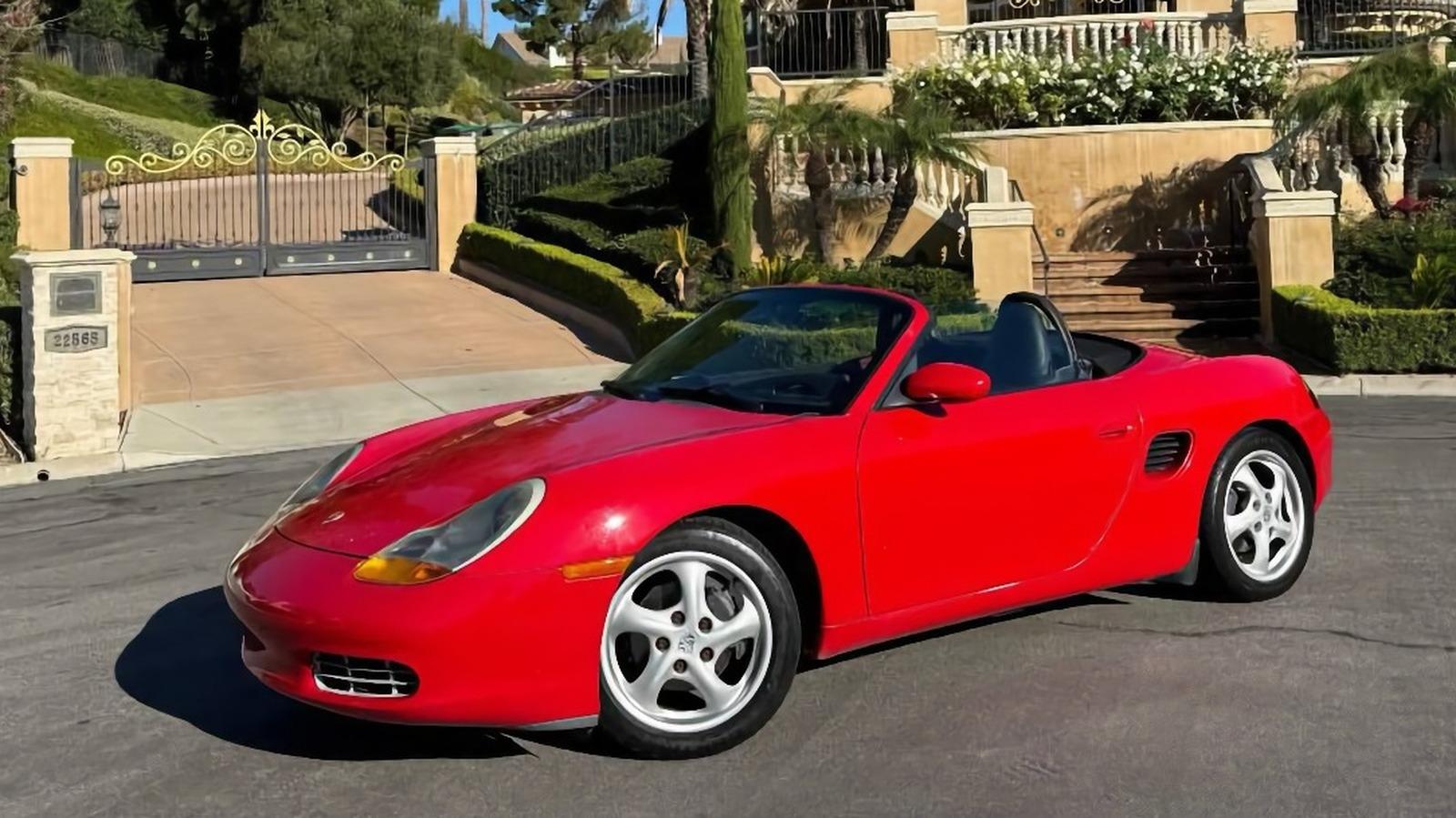
1997 Porsche Boxster Review: Is a $6,950 Mid-Engine Icon Worth the Risk in 2026?
Image: 1997 Porsche Boxster Review: Is a $6,950 Mid-Engine Icon Worth the Risk in 2026? – Performance and Specifications
Advertisement
It is the ultimate automotive temptation. You’re scrolling through the classifieds, and there it is: a sleek, mid-engine German roadster with the crest of Stuttgart on the hood, all for the price of a well-used 2015 Honda Civic. At exactly $6,950, this 1997 Porsche Boxster (internally known as the 986) presents a value proposition that feels almost dangerous. In 2026, as the automotive world pivots toward heavy EVs and digital interfaces, the prospect of a lightweight, analog, mid-engine Porsche for under $7k is enough to make any enthusiast ask: ‘I’d be stupid not to, right?’
However, the ‘Cheap Porsche’ is a double-edged sword. While the entry price is low, the cost of entry is only the first installment. In this comprehensive review, we dive deep into the 2026 reality of owning a 90s icon, analyzing whether the smiles-per-dollar ratio outweighs the potential for a mechanical heartbreak.
Advertisement
Design and Aesthetics: The 986 Legacy
When the Boxster first arrived in late 1996, it saved Porsche from financial ruin. Its design was heavily inspired by the 550 Spyder, featuring a mid-engine layout that offered near-perfect weight distribution. In 2026, the 986’s styling has aged into ‘neo-classic’ status. Those ‘fried egg’ headlights, once hated by 911 purists, are now viewed with nostalgic affection. The low-slung silhouette and the side air intakes remain distinctive markers of a pure sports car.
Handling: The Mid-Engine Magic
The 1997 Boxster isn’t about raw straight-line speed; it’s about the corners. With the 2.5-liter flat-six mounted right behind the driver, the center of gravity is exceptionally low. In 2026, where even compact cars weigh over 3,500 lbs, the Boxster’s sub-2,900 lb curb weight feels transformative. The hydraulic steering provides a level of feedback that modern electric power steering systems simply cannot replicate. You feel every ripple in the asphalt, every change in grip, making it one of the most communicative chassis ever built for the mass market.
The Infamous IMS Bearing: Truth or Myth in 2026?
If you mention a 986 Boxster on any forum today, the first three letters you’ll see are ‘IMS.’ The Intermediate Shaft (IMS) bearing failure is the bogeyman of the early Boxster era. By 2026, most surviving 1997 models have either had the bearing replaced with a ceramic retro-fit or have survived long enough that they are likely ‘good ones.’ However, at a $6,950 price point, you must verify service records. A failure here means total engine destruction, turning your $7k dream into a $10k paperweight instantly.
Advertisement
Performance, Interior, and Tech
Under the rear decklid sits a 2.5-liter naturally aspirated flat-six producing 201 horsepower. By 2026 standards, this is modest—many modern four-cylinder SUVs will outrun it in a 0-60 mph sprint. But the Boxster isn’t about the numbers; it’s about the 7,000 RPM wail of a flat-six and the mechanical precision of the 5-speed manual transmission.
The Cockpit: Analog in a Digital World
Step inside, and you’re transported back to 1997. There are no touchscreens, no lane-keep assist, and no digital gauge clusters. You get three overlapping analog dials with a prominent tachometer in the center. In 2026, this ‘tech-free’ zone is actually a selling point for enthusiasts looking to escape screen fatigue. However, be prepared for ’90s Porsche plastics.’ Common complaints include sticky buttons, sagging headliners on the removable hardtops, and plastic rear windows that turn opaque with age.
Safety and Reliability
While the 986 Boxster was advanced for its time, featuring dual front and side airbags, it lacks the sophisticated driver-assistance systems of 2026. NCAP ratings from the era are dated, but the chassis is robust. Reliability is a mixed bag: the engines are solid if maintained, but cooling system refreshes (water pumps, radiators) are mandatory every 60,000 miles to prevent overheating.
Advertisement
| Feature | 1997 Porsche Boxster (986) | 2026 Market Rival (Used) |
|---|---|---|
| Engine | 2.5L Flat-6 | 2.0L Inline-4 (Mazda Miata ND) | Horsepower | 201 hp | 181 hp | Layout | Mid-Engine, RWD | Front-Engine, RWD | 0-60 MPH | 6.7 Seconds | 5.7 Seconds | Transmission | 5-Speed Manual / Tiptronic | 6-Speed Manual / Automatic |
Technical Specifications & Pricing
Understanding the hardware is key to knowing what you’re buying. Below is the technical breakdown for the 1997 model year as it stands in the collector market of 2026.
| Component | Specification |
|---|---|
| Engine Type | Water-cooled Flat-6, Aluminum Block | Displacement | 2,480 cc | Torque | 181 lb-ft @ 4,500 rpm | Top Speed | 149 mph | Curb Weight | 2,822 lbs | Brakes | 4-Piston Monobloc Calipers (Ventilated) |
| Condition Grade | Price Range (USD) | Notes |
|---|---|---|
| Project Car | $3,500 – $5,500 | Needs mechanical/cosmetic work | Driver Quality | $6,500 – $9,500 | High miles, some service history | Collector Grade | $12,000 – $18,000 | Low miles, IMS documented, Mint |
Frequently Asked Questions (People Also Ask)
1. Is the 1997 Porsche Boxster reliable for daily driving?
In 2026, it is risky. While the engine is durable, age-related failures of rubber seals, plastic cooling lines, and electronics make it better suited as a weekend toy than a primary commuter.
2. How much does a Porsche Boxster IMS bearing replacement cost?
Typically, expect to pay between $2,000 and $3,500, as it is usually done alongside a clutch replacement due to the labor involved in dropping the transmission.
Advertisement
3. Does the 1997 Boxster have a glass rear window?
No, the 1997-2002 models came with a plastic rear window. Many owners upgrade to the 2003+ glass-window top, which is a popular 2026 modification.
4. What is the fuel economy of a 986 Boxster?
You can expect around 19 MPG in the city and 26 MPG on the highway, provided the oxygen sensors and MAF are in good condition.
5. Why is the 1997 Boxster so cheap?
High production numbers, the ‘fried egg’ headlight stigma, and fears regarding the IMS bearing keep prices lower than the 911 or later 987 models.
Advertisement
6. Can I fit a tall person in a 1997 Boxster?
Drivers up to 6’2″ usually fit comfortably, but anyone taller may find legroom cramped and their head hitting the soft top.
7. Is the 5-speed manual better than the Tiptronic?
For enthusiasts, yes. The Tiptronic automatic of that era is slow by modern standards and saps much of the 2.5L engine’s limited power.
8. What are common 986 Porsche Boxster problems?
Beyond the IMS bearing, watch for Rear Main Seal (RMS) leaks, cracked coolant expansion tanks, and failing window regulators.
Advertisement
9. Does the 1997 Boxster have a trunk?
It actually has two! A ‘frunk’ (front trunk) and a rear trunk behind the engine, making it surprisingly practical for road trips.
10. Will the 986 Boxster increase in value?
Prices have bottomed out and are starting to rise for clean, low-mileage examples. It is widely considered a ‘future classic’ in the 2026 market.
Final Verdict: Should You Buy It?
The 1997 Porsche Boxster at $6,950 is a calculated gamble. It offers a level of prestige and driving purity that nothing else at this price point can touch. However, it requires a ‘Porsche Tax’—maintenance will always be priced for a $50,000 car, not a $7,000 one.
Advertisement
Pros:
- Exceptional mid-engine balance and handling.
- The soulful sound of a naturally aspirated flat-six.
- Low entry price for the Porsche brand.
- Analog driving experience that is disappearing in 2026.
Cons:
- Potential for catastrophic IMS bearing failure.
- Aging interior materials and plastic rear window.
- Maintenance costs can easily exceed the car’s value.
- Modest power by modern standards.
Verdict: Buy it if you have an extra $3,000 in the bank for immediate maintenance. If it’s your last $7,000, walk away and buy a Miata. But for the brave enthusiast, this is the most fun you can have on four wheels for under ten grand.
Advertisement