Tesla’s Autonomous Ambitions: A Reality Check in Texas
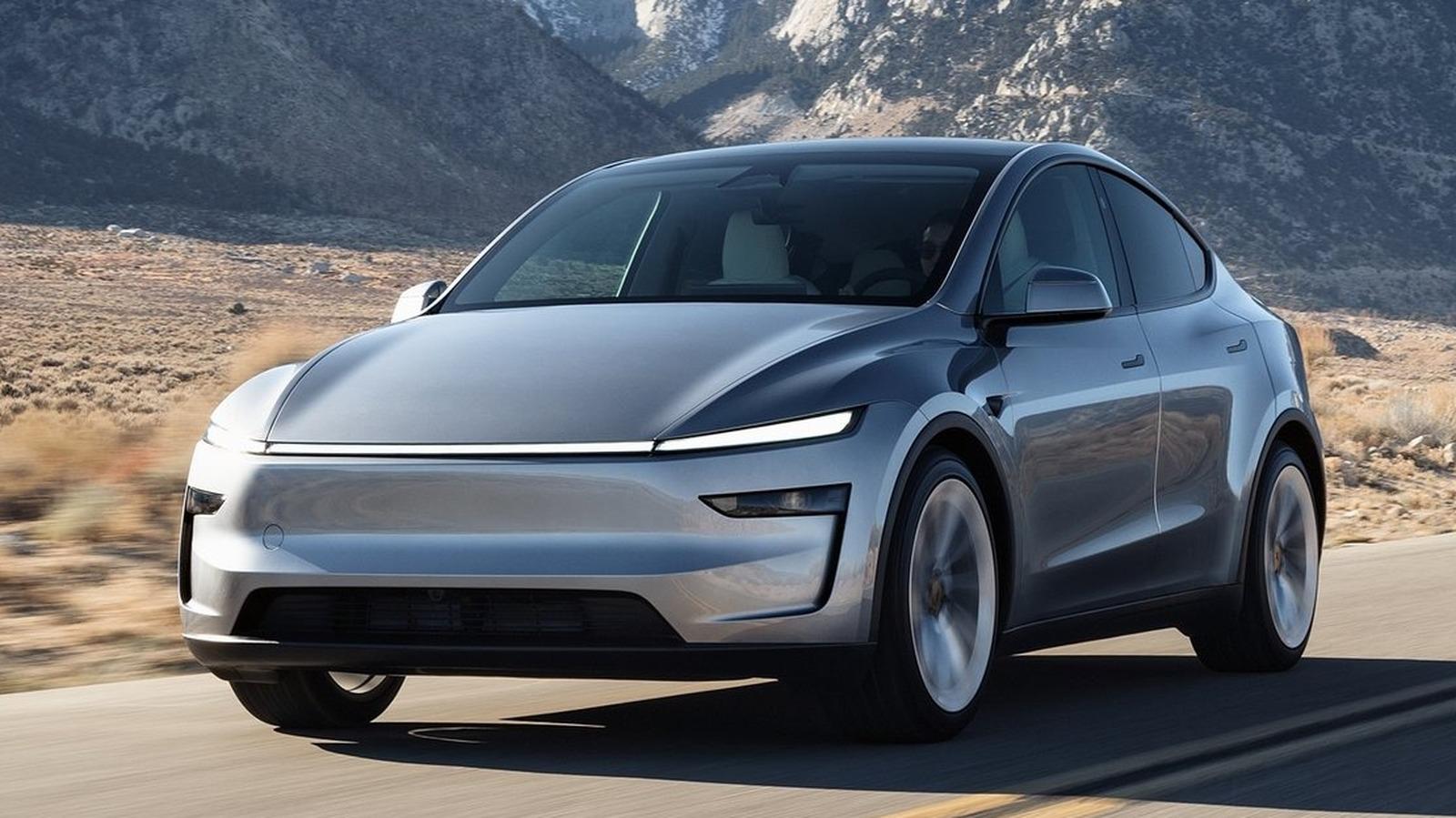
Tesla Robotaxi 2026: Texas Fleet Cut to 4 Units as Cybercab Launch Approaches—Better Than Waymo?
Image: Tesla Robotaxi 2026: Texas Fleet Cut to 4 Units as Cybercab Launch Approaches—Better Than Waymo? – Performance and Specifications
- Advertisement -
Is the dream of a driverless future hitting a speed bump? While Elon Musk has promised a world dominated by autonomous ‘Cybercabs’ by 2026, the current reality on the ground in Texas tells a more cautious story. Tesla’s fleet of ‘unsupervised’ robotaxis, which recently received permits for testing in Austin, has reportedly been scaled back from eight vehicles to just four. With a target entry price of under $30,000 (approx. ₹25 Lakhs) for the dedicated Cybercab model, the stakes for Tesla’s FSD (Full Self-Driving) technology have never been higher.
The Texas Downsizing: What’s Happening with the Fleet?
Recent filings and reports indicate that Tesla has halved its active testing fleet for unsupervised operations in its home state of Texas. While the initial permit allowed for eight vehicles to roam the streets without a human safety driver, only four units are currently operational. This move has sparked intense debate on forums like Reddit and X (formerly Twitter), with some enthusiasts claiming it’s a recalibration of sensors, while critics argue it points to persistent software hurdles in complex urban environments.
- Advertisement -
Design and Aesthetics: The 2026 Cybercab Vision
By 2026, the robotaxi fleet is expected to transition from modified Model 3s and Model Ys to the purpose-built Tesla Cybercab. The design is radically minimalist—no steering wheel, no pedals, and two butterfly doors. The exterior features a Cybertruck-inspired light bar and a compact, aerodynamic silhouette designed to maximize efficiency in city traffic. Users on forums praise the futuristic look but express concerns about the practicality of a two-seater configuration for family use.
Performance and Autonomy Specs
The 2026 Tesla Robotaxi is expected to offer a range of approximately 200-250 miles on a single charge. Since these vehicles are intended for short-haul urban trips, battery weight is minimized to improve energy consumption. Tesla is also pioneering Inductive Charging, meaning these cars will park over a pad to charge wirelessly, eliminating the need for a charging plug—a first for the brand.
Interior Tech: The Ultimate Mobile Lounge
Inside, the 2026 Robotaxi is less of a car and more of a mobile theater. A massive 20-inch central touchscreen dominates the dashboard area, providing entertainment, trip progress, and climate controls. Without the need for driving controls, legroom is cavernous. However, early testers of the FSD v13 software (which will power the fleet) have noted that the lack of a steering wheel to grab in emergencies is ‘terrifying’ for first-time users.
- Advertisement -
Safety and NCAP Ratings
While the Cybercab has not yet undergone official Euro NCAP or Global NCAP testing, Tesla’s existing fleet consistently scores 5-star ratings. The challenge for 2026 lies in the ‘Unsupervised’ certification. Tesla’s vision-only approach (relying solely on cameras) continues to be scrutinized by regulators who favor the Lidar-based systems used by rivals like Waymo.
FSD V13 and the ‘Unsupervised’ Goal
The success of the 2026 fleet depends entirely on FSD V13. This version aims to reduce the ‘miles between interventions’ significantly. Despite the fleet reduction in Texas, Tesla continues to gather millions of miles of data daily, which Musk claims will eventually make the Robotaxi 10x safer than a human driver.
Comparison: Tesla Robotaxi vs. Rivals (2026)
| Feature | Tesla Cybercab (2026) | Waymo (Jaguar I-Pace) | Zoox (Amazon) |
|---|---|---|---|
| Sensor Suite | Vision-Only (Cameras) | Lidar, Radar, Cameras | Lidar, Radar, Cameras |
| Steering Wheel | None | Retained (Safety Driver) | None (Carriage Style) |
| Seating Capacity | 2 Adults | 4-5 Adults | 4 Adults |
| Ownership | Private & Fleet | Fleet Only | Fleet Only |
| Target Price/Ride | $0.20 per mile | Variable (Premium) | Variable (City-based) |
Technical Specifications & Variant Pricing
| Specification | Details |
|---|---|
| Drive Type | RWD (Rear Wheel Drive) |
| Estimated Range | 320 – 400 KM (WLTP) |
| Charging | Inductive (Wireless) Only |
| 0-100 km/h | ~7.0 Seconds |
| AI Hardware | Tesla AI 5 (HW5) |
| Variant | Price (USD) | Price (INR Est.) |
|---|---|---|
| Cybercab Standard | $29,990 | ₹25,10,000 |
| Tesla Robotaxi Fleet Edition | $25,000 (Bulk Buy) | ₹21,00,000 |
People Also Ask (FAQs)
- When will the Tesla Robotaxi be available? Production is slated to begin by late 2026.
- Can I buy a Tesla Robotaxi for personal use? Yes, Elon Musk stated the Cybercab will be available for purchase by individuals.
- Is Tesla FSD really unsupervised? Currently, it requires human supervision, but Tesla aims for full ‘unsupervised’ regulatory approval by 2026.
- Why did Tesla cut the Texas fleet from 8 to 4? Official reasons haven’t been shared, but it likely relates to testing cycles or hardware upgrades.
- Does the Robotaxi have a steering wheel? No, the dedicated Cybercab is designed without a wheel or pedals.
- What is the cost per mile of a Tesla Robotaxi? Tesla targets a cost of roughly $0.20 per mile.
- How does the Robotaxi charge? It uses wireless inductive charging pads instead of a traditional NACS plug.
- Is the Tesla Robotaxi legal in India? Currently, autonomous driving laws in India do not permit unsupervised vehicles on public roads.
- What happens in an emergency without a steering wheel? The vehicle uses redundant AI systems and sensors to pull over safely.
- Will Tesla Robotaxi compete with Uber? Yes, Tesla plans to launch its own ride-hailing app to compete directly with Uber and Lyft.
Verdict: Should You Wait for the 2026 Tesla Robotaxi?
If you are a tech enthusiast or looking for a passive income stream through a fleet of autonomous cars, the 2026 Tesla Robotaxi is a revolutionary prospect. However, the recent downsizing of the Texas fleet suggests that the path to full autonomy is still fraught with regulatory and technical hurdles. For now, it remains a ‘high-reward’ but ‘high-uncertainty’ investment.
- Advertisement -
Pros:
– Unbeatable price point for an EV.
– Minimalist, futuristic design.
– Potential for passive income through the Tesla Network.
– Advanced wireless charging tech.
Cons:
– Limited 2-seater practicality.
– Regulatory approvals are still pending in most regions.
– Vision-only system faces criticism in poor weather conditions.
– Fleet reductions indicate potential software delays.
- Advertisement -