The $30,000 Future: Testing? Who Needs It?
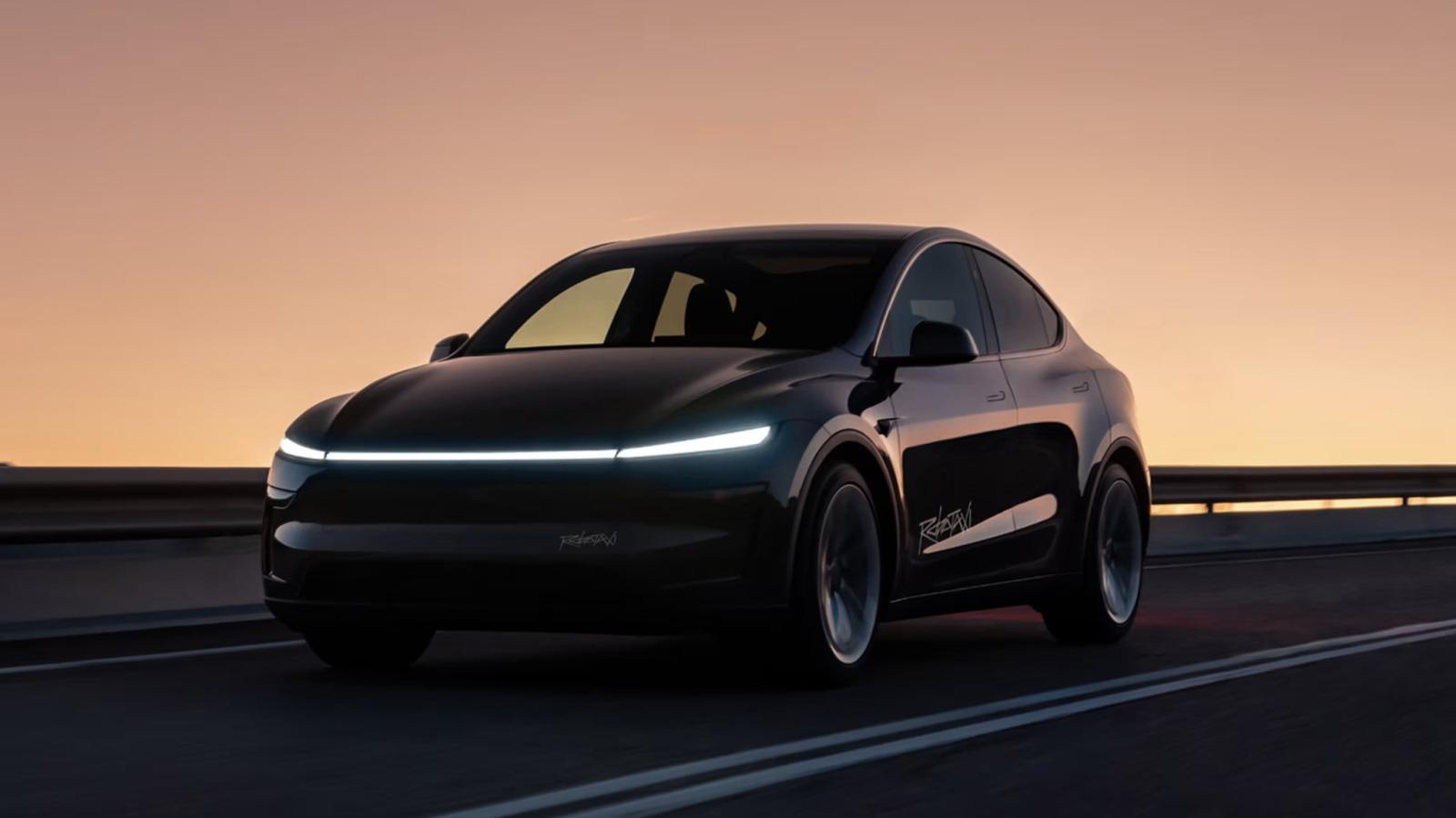
Tesla Cybercab 2026: Is Elon Musk’s California Robotaxi Dream Finally Crashing into Reality?
Image: Tesla Cybercab 2026: Is Elon Musk’s California Robotaxi Dream Finally Crashing into Reality? – Performance and Specifications
Advertisement
Imagine a car with no steering wheel, no pedals, and a price tag of under $30,000 (approx. ₹25 Lakhs). That is the promise of the Tesla Cybercab in 2026. However, while Elon Musk doubles down on an April 2026 production start at Giga Texas, a massive regulatory storm is brewing in California. Recent reports suggest that while rivals like Waymo have logged millions of driverless miles, Tesla’s permitted testing in the Golden State remains shockingly thin. Is the Robotaxi a revolutionary product or another case of ‘vaporware’ meeting a hard regulatory wall?
Design: Butterfly Doors and the ‘No-Control’ Gamble
The 2026 Tesla Cybercab is a radical departure from traditional automotive design. It is a strictly two-passenger vehicle featuring dramatic butterfly doors and a smooth, windowless rear profile. Inside, the dashboard is non-existent, replaced by a massive 20.5-inch central touchscreen that serves as the command center for every passenger need.
Advertisement
Interior Tech: A Mobile Living Room
Without the need for a driver’s seat, the cabin space has been optimized for ‘urban relaxation.’ Passengers enjoy vegan leather seats, wireless inductive charging for devices, and a premium audio system. The vehicle even features a robotic cleaning system designed to keep the interior spotless between rides.
Performance & Autonomy: AI5 and the Vision-Only Bet
The Cybercab runs on Tesla’s latest Hardware 5 (AI5) computer. Unlike Waymo or Zoox, which rely on expensive LiDAR sensors, Tesla is betting entirely on high-resolution cameras and neural networks. This ‘vision-only’ approach is what allows Tesla to target a $30,000 price point, though it remains the primary point of contention with California regulators.
Battery and Inductive Charging
The Cybercab is equipped with a 50-60 kWh battery pack, offering a range of roughly 200 to 300 miles. Perhaps its most futuristic feature is inductive charging; the car has no charge port and instead parks over a wireless pad to refuel its battery autonomously.
Advertisement
Safety and NCAP Ratings: The Data Gap
While the Tesla Model 3 and Model Y received record-breaking 5-star ratings under the stricter 2025 Euro NCAP protocols, the Cybercab remains unrated. Early 2026 data from NHTSA on Tesla’s ‘Supervised’ Robotaxi fleet in Austin shows a crash rate roughly 4 to 8 times higher than human drivers, raising questions about whether the software is ready for a vehicle without a steering wheel.
Technical Specifications & Variants
Tesla plans to offer the Cybercab in a streamlined lineup to maximize production speed at Giga Texas.
| Feature | Tesla Cybercab (2026 Expected) |
|---|---|
| Seating Capacity | 2 Adults |
| Range (EPA Est.) | 200 – 300 Miles |
| Charging Method | Wireless Inductive Only |
| Autonomy Level | Level 4 (Geofenced) / Level 5 (Target) |
| Hardware | Tesla AI5 (Vision-Only) |
Variant-wise Pricing (Ex-Showroom Est.)
| Variant | Estimated Price (USD) | Estimated Price (INR Equivalent) |
|---|---|---|
| Standard Range (Autonomous) | $29,990 | ₹25.10 Lakhs |
| Long Range (Autonomous) | $34,500 | ₹28.90 Lakhs |
The Battle of the Bots: Tesla vs. Waymo vs. Zoox
By 2026, the robotaxi market is no longer a monopoly. Here is how Tesla stacks up against its two biggest rivals.
Advertisement
| Feature | Tesla Cybercab | Waymo (Jaguar I-Pace) | Zoox (Amazon) |
|---|---|---|---|
| Sensors | Cameras Only (Vision) | LiDAR + Radar + Cameras | LiDAR + Radar + Cameras |
| Steering Wheel | No | Yes (Removed in some) | No |
| Ownership | Private & Fleet | Fleet Only | Fleet Only |
| Service Area | Limited (Austin/California) | 10+ Major US Metros | Vegas/San Francisco |
Frequently Asked Questions (People Also Ask)
1. What is the Tesla Cybercab price in 2026?
Elon Musk has stated a target price of under $30,000 for the Cybercab, which is approximately ₹25 Lakhs.
2. Does the Tesla Cybercab have a steering wheel?
No, the production-intent Cybercab is designed without a steering wheel or pedals, relying entirely on FSD software.
3. Is the Tesla Robotaxi available in California?
While testing is underway, Tesla currently lacks the specific ‘Driverless Deployment’ permits held by rivals like Waymo to operate a commercial service in California.
Advertisement
4. How do you charge a Tesla Cybercab?
It uses wireless inductive charging. There is no physical plug; the car simply parks over a charging pad.
5. Can I buy a Tesla Cybercab for personal use?
Yes, Tesla intends to sell the Cybercab to private owners who can then choose to put their car on the Tesla Network to earn money.
6. Is Tesla FSD Level 4 or Level 5 in 2026?
As of early 2026, Tesla is aiming for Level 4 (unsupervised in specific areas), though most current systems are still considered Level 2 (Supervised).
Advertisement
7. How many passengers can the Cybercab fit?
The Cybercab is a dedicated two-seater designed for urban commuting.
8. What is the top speed of the Tesla Robotaxi?
While not officially released, prototypes are expected to be electronically limited for urban safety, with a top speed around 85 mph.
9. Has the Tesla Cybercab passed crash tests?
Official NHTSA or Euro NCAP crash test results for the steering-wheel-free configuration are still pending as of early 2026.
Advertisement
10. When will Tesla Robotaxi be available in India?
There is no official timeline for India, as the service requires advanced infrastructure and specific regulatory approvals for autonomous driving.
Verdict: Should You Buy It?
The Tesla Cybercab is the most ambitious vehicle of the decade. If you are an early adopter or looking to participate in the ‘Airbnb for cars’ ride-hailing economy, the $30,000 price point is unbeatable. However, the lack of traditional controls and the current regulatory gridlock in California mean it might be a ‘bricks-and-mortar’ showpiece for some time before it becomes a true daily driver.
Pros
- Unbeatable price point for an EV ($30,000).
- Stunning futuristic design with butterfly doors.
- Potential for passive income via the Tesla Network.
Cons
- Zero manual overrides (No steering wheel/pedals).
- High regulatory risk and missing testing miles in CA.
- Only fits two passengers; limited utility for families.
Advertisement