Meta Description: London begins retiring the New Routemaster ‘Boris Bus’ as diesel‑hybrid double‑deckers are replaced by zero‑emission models. This article reviews the bus’s design, hybrid performance, price, and upcoming rivals while noting its 20‑year legacy.
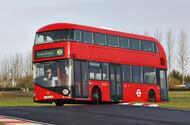
New Routemaster (Boris Bus) Retirement: Design, Performance & Rivals
Advertisement
Image: New Routemaster (Boris Bus) Retirement: Design, Performance & Rivals – Performance Comparison and Specifications
Design & Looks
The New Routemaster launched in 2012 with a nod to the classic AEC Routemaster. Its red livery, three doors and rear open platform echo the original, while a modern asymmetric front and black strip give a contemporary edge. Inside, the upper deck features a curved ceiling, LED soft‑light pods and shallow windows that keep the cabin cool. Two staircases speed boarding, and the interior can hold 87 passengers – 40 seated downstairs, 22 upstairs and 25 standing.
Advertisement
Performance & Mileage
Built by Wrightbus, the bus uses a 4.5‑litre Cummins turbodiesel generator paired with a 75 kWh lithium‑ion battery and a Siemens electric motor driving the rear axle. It delivers 174 bhp and 1,844 lb‑ft of torque from zero revs, giving smooth start‑off. Fuel economy reaches 11.6 mpg (640 g/km CO₂), noticeably better than a conventional diesel double‑decker (5.8 mpg, 1,295 g/km). The hybrid system runs the generator only when the battery needs topping up, and regenerative braking recovers energy on stops.
Price & Rivals
While exact pricing is not public, the New Routemaster’s hybrid technology and design make it pricier than standard diesel buses. London’s push for zero‑emission fleets has highlighted newer alternatives: the all‑electric Wrightbus Electroliner and BYD BD11, both already on TfL routes and contributing to the city’s 30 % electric bus share. These rivals promise lower operating costs and no local emissions, positioning them as the next‑generation choice as the Routemaster phases out.
| Engine | 4‑cyl 4.46 L turbodiesel generator + Siemens electric motor |
|---|---|
| Mileage | 11.6 mpg (640 g/km CO₂) |
| Price | Higher than standard diesel double‑deckers (exact figures undisclosed) |
| Top Features | Three doors, open rear platform, LED interior lighting, hybrid series drive, 87‑passenger capacity |
FAQ
- What is the fuel economy of the New Routemaster? It averages about 11.6 mpg, delivering roughly 640 g/km of CO₂.
- When will the last New Routemaster leave service? TfL forecasts 2034 as the final year for diesel‑powered buses, though the youngest units may run past 2030.
- Are there electric alternatives to the ‘Boris Bus’? Yes – the Wrightbus Electroliner and BYD BD11 are fully electric models already operating on London routes.
What do you think of the New Routemaster’s legacy? Share your thoughts in the comments below.
Advertisement
Image source: Autocar
Expert Summary: London is retiring the New Routemaster “Boris Bus” as diesel‑hybrid double‑deckers give way to electric models. Launched in 2012, the bus blended classic design with modern hybrid tech, achieving 11.6 mpg and 640 g/km CO₂. Its interior offers LED lighting, three doors, and 87‑passenger capacity. While pricier than standard diesel buses, it faces competition from fully electric rivals like the Wrightbus Electroliner and BYD BD11, aligning with TfL’s goal of a cleaner, zero‑emission fleet by the mid‑2030s.
Source: Read Official News
Advertisement